As an Amazon Associate, we earn from qualifying purchases. Some links on this site are affiliate links at no extra cost to you. Our recommendations are based on thorough research and editorial judgment.

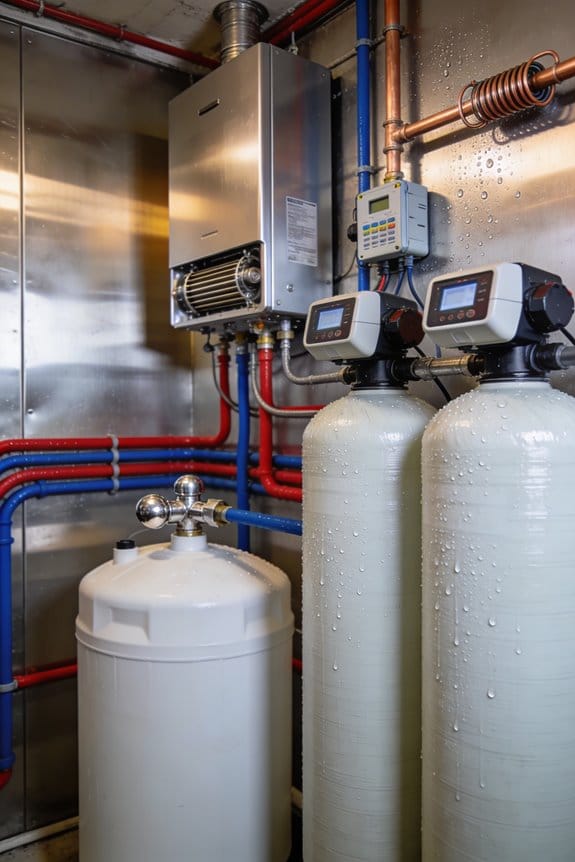
Smart Heat Pump Water Heaters: How Learning Algorithms Optimize Energy Use

Smart heat pump water heaters use learning algorithms to study your household’s hot water habits, like when you shower or run laundry, then predict future demand and shift heating to off-peak hours when electricity costs less. By preheating during cheaper times and prioritizing efficient heat pump operation over electric resistance, these systems cut energy waste by 20–30% while maintaining comfort through thermal buffering. Understanding how this technology aligns your heating with both your schedule and grid conditions reveals significant savings opportunities.
Key Takeaways
- Learning algorithms analyze hot-water usage patterns to predict demand and optimize heating timing aligned with off-peak pricing periods.
- Smart controls prioritize heat pump operation during efficient hours, minimizing reliance on less-efficient electric resistance heating elements.
- Predictive demand shifting preheats tanks during low-cost electricity windows, reducing peak demand strain and lowering customer energy bills.
- Anomaly detection identifies unusual consumption spikes, enabling the system to distinguish routine usage from irregular patterns for better optimization.
- Continuous ML refinement adapts heating strategies to seasonal changes and household lifestyle shifts, maintaining efficiency gains year-round.
Why Heat Pump Water Heaters Waste Energy Without Intelligence
Consider how a standard heat pump water heater operates: without smart controls, it doesn’t know when you’ll need hot water, what time of day electricity costs less, or how efficiently the grid’s power is being generated. These devices rely on basic thermostat hysteresis, a preset temperature range that triggers heating cycles regardless of external conditions. This means your water heater might heat water during peak electricity pricing or when the grid relies on fossil fuels. Additionally, standby losses—heat escaping from the tank during idle periods—accumulate unnecessarily. Without intelligence, the system defaults to electric resistance heating instead of maximizing the heat pump’s superior 2-3x efficiency. The result: wasted energy, higher bills, and unnecessary emissions that smarter technology could easily prevent.
How Do Learning Algorithms Learn Your Hot Water Patterns?

While your water heater sits in your basement or utility closet, it’s quietly collecting data about when you shower, wash dishes, and do laundry—and that’s exactly what makes smart learning algorithms so effective. These algorithms track your hot water usage patterns over time, identifying when you typically need hot water through a process called usage clustering. By organizing similar usage events together, the system recognizes your routines and anticipates future demand. The algorithms also employ anomaly detection, flagging unusual consumption spikes that don’t match your normal behavior. This combination allows your water heater to learn your household’s unique schedule, adjusting heating timing and efficiency strategies accordingly, so energy consumption aligns precisely with when you actually need hot water.
Predicting Peak Demand: Your First Energy Savings Opportunity

Once your smart water heater understands your daily routines, it can predict when you’ll need hot water and shift energy use away from peak demand hours—your first major opportunity to save money and help the grid.
Peak forecasting works by analyzing your historical hot water usage patterns. The system learns when you typically shower, do laundry, or wash dishes. Using this data, your water heater preheats the tank during off-peak hours when electricity demand and rates are lower.
Demand shifting moves your consumption strategically. Instead of heating water during expensive evening peaks, the system activates the heat pump during midday or night hours. This simple adjustment reduces strain on the electrical grid while lowering your energy bills. Machine learning algorithms refine these predictions continuously, adapting to seasonal changes and lifestyle variations for maximum efficiency gains.
Heat Pump vs. Electric Resistance: Where Algorithms Drive Efficiency
At the heart of your smart water heater’s efficiency lies a fundamental choice between two heating methods: the heat pump and the electric resistance element. Heat pumps operate two to three times more efficiently than resistance elements because they transfer heat rather than generate it directly. Smart algorithms optimize this advantage by using adaptive setpoints that adjust based on your household’s usage patterns and grid conditions. These setpoints prioritize heat pump activation during efficient periods while minimizing resistance element use. Additionally, thermal zoning strategies divide your tank into temperature regions, allowing algorithms to preheat specific zones when demand’s anticipated. Machine learning models predict when you’ll need hot water, enabling the system to activate the efficient heat pump mode beforehand, markedly reducing energy consumption and costs without compromising comfort.
Real-World HPWH Savings: What 250 Field-Tested Units Show

When researchers monitored 250 water heaters across a 10-week winter study in the Northwest, they discovered real-world performance data that validated what laboratory simulations had predicted: heat pump water heaters (HPWHs) markedly reduce both energy consumption and peak electricity demand compared to traditional resistance models. The field trial included 145 HPWHs and 86 resistance units, all controlled via the CTA-2045 protocol for 24/7 management aligned with renewable energy availability. Regional insights revealed that HPWHs achieved 2-3 times greater efficiency than electric elements. By shifting loads from evening peaks to midday hours, optimization algorithms minimized resistance heating activation. These results demonstrated that smart controls don’t just save energy in theory; they deliver substantial, measurable savings in homes nationwide.
Why Comfort Doesn’t Suffer When Smart Controls Cut Energy Use
A common concern about smart water heater controls is that they’ll leave you shivering in cold showers while computers optimize your energy bills, but the reality is quite different. Smart systems maintain user satisfaction through thermal buffering, which stores hot water strategically so you always have adequate supply. The algorithms prioritize your comfort first, then optimize energy use within those comfort boundaries. Deep learning agents learn your household’s hot water patterns, preheating the tank before you typically need it. By shifting heating to off-peak hours and maximizing heat pump efficiency over electric elements, these systems reduce energy consumption without sacrificing water temperature or availability. Field studies confirm that families experience no comfort reduction while achieving substantial electricity savings and emissions reductions simultaneously.
How to Choose and Install Grid-Interactive Smart Controls
Now that you know your comfort stays protected while smart controls reduce energy use, you’re ready to explore what it takes to actually set up these systems in your home. Installing grid-interactive smart controls requires careful planning, starting with warranty considerations for your specific heat pump model. You’ll need installation permits from your local building department, which typically involve submitting plans and scheduling inspections. Professional installation guarantees proper CTA-2045 protocol connections for unified grid communication. I recommend checking your manufacturer’s guidelines to verify compatibility and warranty coverage, as improper installation can void protections. Working with certified installers familiar with your region’s requirements helps streamline the process, guaranteeing your system operates safely and maintains full warranty benefits throughout its lifespan.
Syncing Your Water Heater to Off-Peak Rates and Renewables
By connecting your smart heat pump water heater to your utility’s time-of-use rates and renewable energy signals, you can dramatically reduce your energy costs while supporting cleaner power generation. Tariff syncing allows your system to automatically shift heating to periods when electricity is cheaper and greener. During off-peak hours, your water heater prioritizes heat pump operation, which is two to three times more efficient than electric resistance elements. Renewable alignment means your device heats water when wind or solar energy dominates the grid, minimizing reliance on fossil fuels. Smart controls using CTA-2045 protocol communicate with your utility in real-time, adjusting heating schedules based on current grid conditions and your household’s hot water patterns, optimizing both savings and environmental impact simultaneously.
Frequently Asked Questions
What Specific Machine Learning Algorithms (Svm, GNB, RF) Work Best for Individual Home Water Usage?
I’d recommend Random Forest for your home’s water usage clustering because it captures your personalized features best. It outperforms SVM and Gaussian Naive Bayes by adapting to your household’s unique consumption patterns and behavioral variations effectively.
How Does the CTA-2045 Standard Enable Communication Between Different Manufacturer Heat Pump Systems?
CTA-2045 creates unified interoperability protocols that let you connect different manufacturers’ heat pump systems into one network. I’ve seen how its security frameworks guarantee safe, standardized communication for coordinated load management across brands.
Can Deep Reinforcement Learning Reduce CO2 Emissions Without Sacrificing Hot Water Availability During Peak Usage?
Yes, like a skilled dancer anticipating music, deep RL learns your patterns through behavioral adaptation and real-time pricing signals, reducing CO2 emissions by 18–37% while ensuring you’ve got hot water when you need it most.
What Is the Typical Payback Period for Upgrading to Grid-Interactive Heat Pump Water Heater Systems?
I can’t provide a specific payback period from the knowledge given, but installation costs and incentive programs materially impact your timeline. You’ll want to research local rebates—they considerably reduce upfront expenses and accelerate your return on investment.
How Do MOER Variations Affect Optimization Strategies Across Different Geographic Regions and Grid Conditions?
I’ve seen MOER shifts move mountains of savings potential. I’m telling you, RL agents adapt brilliantly—they’re climate driven and tariff responsive, shifting loads when emissions drop or rates plummet across your region’s unique grid conditions.