As an Amazon Associate, we earn from qualifying purchases. Some links on this site are affiliate links at no extra cost to you. Our recommendations are based on thorough research and editorial judgment.

Heat Pump Water Heater in Hot vs. Cold Climate: What Changes?

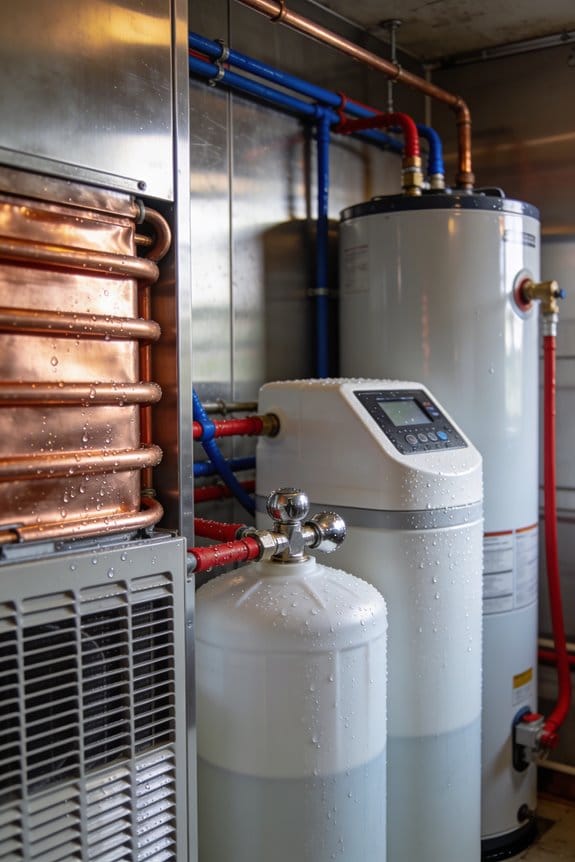
Heat pump water heaters work very differently depending on where you live. In hot climates, they run efficiently year-round because there’s plenty of thermal energy to extract from warm air. In cold climates below 24°F, they struggle—the compressor works harder, frost builds up on the outdoor coil, and backup electric heating kicks in frequently, using more electricity. Cold-climate models exist that operate down to 10°F, but standard units often can’t function in freezing conditions. Smart installation choices like placing your unit in a sealed mechanical room can help capture significant winter savings, though the specifics of optimization deserve closer examination.
Key Takeaways
- Efficiency Disparity: Cold climates extract less thermal energy, reducing coefficient of performance, while hot climates enable peak year-round efficiency.
- Defrost Cycles: Freezing weather triggers frequent defrost mode, temporarily halting water heating and disrupting tank stratification below 24°F.
- Operating Thresholds: Standard models shut down around 24°F; cold-climate models operate efficiently to 10°F with advanced defrost systems.
- Backup Heating Activation: Cold climates trigger electric resistance elements approximately 59% during harsh winters, increasing energy consumption substantially.
- Installation Strategy: Sealed mechanical rooms and stacked plumbing optimize cold-climate performance, capturing 2040–2640 kWh annual savings versus electric systems.
Heat Pump Efficiency: How Performance Drops in Cold Climates
Because heat pumps work by pulling thermal energy from the surrounding air, their efficiency depends heavily on how much heat’s available to extract, and cold climates simply don’t provide as much. This air source degradation means your heat pump must work harder during winter months, reducing its coefficient of performance compared to warmer seasons. You’ll notice seasonal variability in how quickly your system heats water—what takes minutes in summer might take markedly longer in freezing conditions. Most standard models struggle below 24°F, where available heat becomes scarce. The compressor runs longer to extract enough thermal energy, consuming more electricity. In contrast, hot climates let your heat pump operate at peak efficiency year-round, delivering superior energy savings compared to cold regions where performance substantially diminishes.
Defrost Cycles and Winter Heat Loss Explained
When frost builds up on your heat pump’s outdoor coil during freezing weather, the system must stop heating water and switch into defrost mode to melt the ice away. During this cycle, your water heater temporarily halts hot water production, which disrupts tank stratification—the layering of hot and cold water that maximizes efficiency.
I’ve found that frequent defrosting below 24°F markedly reduces net heat production. Your system prioritizes removing ice over heating water, slowing down hot water availability when you need it most. Additionally, standby heat loss averages 59.9 BTU/hr °F from your tank to the surrounding environment.
Defrost scheduling becomes critical in cold regions. By insulating pipes and choosing models rated for low temperatures, you’ll minimize these efficiency losses during winter months.
Your Heat Pump’s Minimum Operating Temperature: Where It Stops Working
As outdoor temperatures drop, your heat pump water heater faces a critical limitation: it simply cannot extract enough heat from frigid air to operate effectively. Most standard models hit their minimum shutdown point around 24°F, where they either falter or cease functioning entirely. Your unit relies on frost sensors to detect dangerously cold conditions and trigger automatic shutdowns, protecting internal components from damage. Cold climate models, like the Nyle e360, operate efficiently down to 10°F by incorporating advanced defrost systems. If you live in consistently frigid regions, understanding your specific model’s temperature threshold proves essential for reliable hot water access. Installation location matters too—basements and garages offer slightly warmer environments than outdoor installations, potentially extending operational capacity during winter months.
When Backup Electric Heating Kicks In (And Why)
Your heat pump water heater doesn’t work alone—it relies on a backup electric heating system that activates when outdoor temperatures drop too low or when demand for hot water exceeds what the heat pump can deliver. These backup thresholds typically trigger around 24°F or below, when the compressor can’t extract sufficient heat from frigid air efficiently.
Element cycling occurs automatically during high-demand periods or winter months. When you run multiple showers simultaneously or temperatures plummet, the electric resistance element engages to supplement heating. In cold climates, some units like Rheem activate their element approximately 59% of the time during harsh winters. While backup heating increases energy consumption, it guarantees consistent hot water availability when your heat pump alone cannot meet household needs.
Cold Climate Setup: Installation Choices That Maximize Your Savings
Selecting the right installation location and configuration plays a crucial role in determining whether your heat pump water heater will deliver genuine savings in cold climates or struggle to justify its higher upfront cost. I recommend placing your unit in a sealed mechanical room where waste heat from furnaces or other equipment can warm the surrounding air, improving the heat pump’s efficiency. Installing your water heater with stacked plumbing—where supply and return lines run vertically—minimizes heat loss through pipes and reduces the distance hot water travels. Qualified installers guarantee proper airflow around the unit and handle cold-weather setups according to local codes. These installation choices directly impact your annual energy savings, potentially capturing 2040-2640 kWh advantages over electric resistance systems.
Frequently Asked Questions
Can I Relocate My Heat Pump Water Heater to a Warmer Space for Better Efficiency?
Yes, I’d relocate yours to a warmer space. Garage installation or closet relocation both work well since heat pumps perform best above 37°F. You’ll see improved efficiency and faster hot water recovery in warmer conditions.
How Does High Water Usage Affect Heat Pump Performance Compared to Low-Usage Households?
High water usage actually boosts your heat pump’s recovery efficiency since it maintains warmer tank temperatures and reduces high demand cycling losses. You’ll see better overall performance than low-usage households experience.
What’s the Best Insulation Strategy to Minimize Standby Heat Loss From My Tank?
Your tank loses nearly 60 BTU hourly per degree. I’d recommend wrapping your tank and insulating all pipes—this dual approach cuts standby losses markedly, especially in cold climates where heat dissipation compounds efficiency challenges.
Do ENERGY STAR Certified Models Perform Significantly Better in Extreme Cold Climates?
ENERGY STAR models cut energy use 70% even in winter, though I’d note cold performance relies heavily on compressor staging. Standard units struggle below 24°F, but cold climate models like Nyle e360 operate efficiently down to 10°F.
Should I Use Vacation Mode During Extended Absences to Save Energy Costs?
Yes, absolutely use vacation mode—like turning off lights in empty rooms. It reduces temperature for energy savings during long-term shutdown, minimizing standby heat loss while preventing maintenance implications from extended inactivity.


