As an Amazon Associate, we earn from qualifying purchases. Some links on this site are affiliate links at no extra cost to you. Our recommendations are based on thorough research and editorial judgment.


How Cold Is Too Cold for a Heat Pump Water Heater to Work?

Most heat pump water heaters start losing efficiency around 50°F, where they cycle harder and consume more electricity. They automatically switch to electric resistance heating below 40°F, which provides no efficiency benefit. However, some newer models like Sanden units operate efficiently well below freezing, while standard Rheem models switch to backup heat around 37–40°F. Your installation location, local climate patterns, and manufacturer choice all determine whether you’ll need supplemental heating during winter months.
Key Takeaways
- Heat pump water heaters operate efficiently between 50°F and 90°F; most models switch to resistance heating below 40°F.
- Efficiency declines roughly 10% for every 10°F temperature drop below the ideal range due to increased compressor cycling.
- Sanden units offer superior cold-climate performance, continuing efficient operation well below 40°F compared to standard Rheem models.
- At extreme temperatures like -4°F, a single heat pump unit cannot meet full household hot water demand alone.
- Supplemental heating through gas furnaces, additional resistance elements, or hybrid scheduling is recommended for regions with frequent subzero temperatures.
Will Your Basement or Garage Stay Warm Enough?
Where you install your heat pump water heater matters substantially, because the surrounding air temperature directly affects how well it’ll work. Basements and garages typically offer more consistent temperatures than other locations, making them ideal choices for installation. However, you’ll need to evaluate your specific space carefully.
If your basement stays between 50°F and 90°F year-round, you’re in good shape for reliable heat pump operation. When temperatures drop to 40-45°F, air leakage and thermal zoning become critical concerns. Sealing air leaks and insulating your space helps maintain warmer conditions. Cold garages or attics often fail to meet the 40°F minimum threshold, forcing your system to rely on less efficient resistance heat. Assess your location’s winter temperatures before installation to make certain adequate performance.
How Cold Climate Heat Pumps Handle Freezing Temperatures

Even if you’ve found a suitable installation location, you’ll face another challenge in freezing climates: your heat pump water heater must function when outdoor temperatures drop well below its ideal range. Below 40°F, most models automatically switch to resistance heating, which operates at a COP of 1.0—essentially converting electricity directly to heat without efficiency gains. Advanced refrigerant chemistry in cold-climate units enables frost protection, allowing some models like Rheem’s 120V to operate down to 37°F. However, extreme temperatures still require backup systems. In regions experiencing extended freezing periods, hybrid water heaters combine heat pump and resistance elements strategically. This approach maintains efficiency during moderate cold while ensuring reliable hot water supply during the harshest winter months when heat pump performance becomes severely limited.
The 40°F Threshold: When Your Unit Switches to Electric Backup

Since most heat pump water heaters lose their efficiency advantage below 40°F, manufacturers designed these systems to automatically switch to resistance heating at that temperature threshold. When your unit’s sensor calibration detects ambient air dropping to 40°F, the system activates backup electric elements to maintain water heating capability, though at lower efficiency levels with a COP near 1.0.
This automatic switchover protects your system from operating beyond its ideal range, where performance deteriorates markedly. However, understanding this threshold matters for warranty implications, since operating outside manufacturer specifications in extreme cold could potentially affect coverage. Your unit will continue heating water using resistance elements during freezing periods, ensuring you’ll always have hot water despite reduced energy efficiency during these colder months.
Why Efficiency Drops Below 50°F (and What That Costs)

While the 40°F threshold protects your heat pump water heater from operating in its worst conditions, the real efficiency problem actually starts higher up, around 50°F. Below this temperature, your unit’s refrigerant viscosity changes, meaning the fluid flows less smoothly through the system. This forces your compressor cycling to work harder and more frequently to move that thicker refrigerant, consuming extra electricity. For every 10°F drop below ideal range, you’ll lose roughly 10% efficiency. At colder temperatures, your system increasingly relies on resistance heating, which operates at only a 1.0 coefficient of performance—essentially converting electricity directly to heat with no efficiency gain. Understanding this gradual decline helps you anticipate higher energy bills during winter months.
Sanden vs. Rheem: Which Performs Best in Deep Cold?
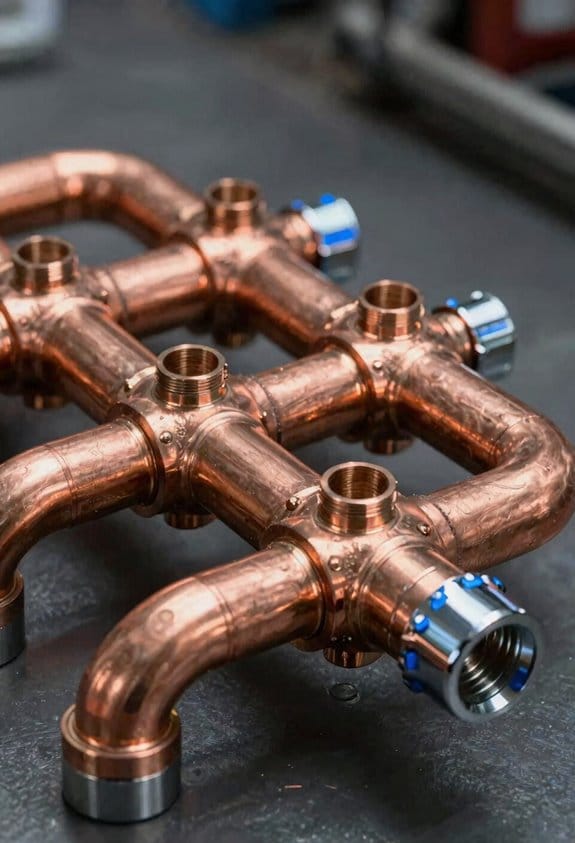
When temperatures drop below freezing, not all heat pump water heaters perform equally well, and choosing between Sanden and Rheem models can materially impact your system’s reliability during harsh winters. Sanden advantages include superior low-temperature performance, with their units excelling when ambient air drops markedly below 40°F. Their design allows continued efficient operation where competitors struggle. Rheem limitations become apparent in extreme cold; most models switch to resistance heating below 40°F, though their newer 120V model operates down to 37°F. However, Rheem’s hybrid models still require backup resistance elements during extended freezing periods. If you live in a climate experiencing frequent subzero temperatures, Sanden’s engineering provides better consistency and reduced reliance on expensive electric resistance heating throughout winter months.
Where to Install Your Heat Pump and How Much Space It Needs
The location you choose for your heat pump water heater markedly influences its efficiency and reliability throughout the year, so picking the right spot requires understanding both temperature and airflow requirements. Basements and garages offer ideal temperature consistency, while attics or uninsulated cold spaces may fail during winter. Your unit needs 450-700 cubic feet of air space for proper operation, with ventilation requiring access to 1,000 cubic feet total. Ductless installation options provide flexibility for various home layouts. Consider noise levels when selecting placement near living areas, as heat pumps generate moderate sound during operation. Insulation and airsealing around 40-45°F spaces enhances winter reliability, ensuring your system functions dependably regardless of seasonal temperature swings.
How Insulation and Location Extend Cold-Weather Performance
Because heat pump water heaters lose efficiency as temperatures drop, strategic use of insulation and careful location selection can markedly extend your system’s cold-weather performance and reduce your reliance on backup heating elements.
I recommend placing your unit in a basement or insulated garage where temperatures stay more consistent year-round. You can improve performance through air sealing, which prevents cold drafts from entering the space. Installing thermal curtains around the water heater creates an additional protective barrier against temperature fluctuations.
When your basement hovers between 40-45°F, these measures become especially valuable. Proper insulation of walls and pipes helps maintain warmer air near your equipment. These practical steps allow your heat pump to operate efficiently throughout winter, minimizing resistance element activation and lowering your energy costs substantially.
When Your Heat Pump Triggers Resistance Heat (and What It Costs)
Your heat pump water heater operates most efficiently within its prime temperature range, but when outdoor air drops below 40°F, the system automatically switches to resistance heating as a backup, and understanding this shift helps you recognize when it’s happening and estimate the impact on your energy bills. Resistance heat functions at a COP of 1.0, meaning it converts electricity directly to warmth without the efficiency gains heat pumps provide. This switch increases your energy consumption markedly, especially during extended cold periods. Your electricity costs rise because resistance heating draws more power while delivering fewer BTUs per dollar spent. Consider your energy tariffs and demand charges when calculating winter expenses, as peak heating seasons may trigger higher rates during cold snaps when your system relies heavily on resistance elements.
Do You Need a Backup Heating System for Winter?
While resistance heating kicks in automatically when temperatures drop below 40°F, it doesn’t mean you’re left without options for managing winter heating demands. You might consider a portable backup heater for extremely cold periods, though this requires manual intervention. More strategically, hybrid scheduling lets you program your heat pump to switch to resistance heat during peak cold hours, reducing strain on the system. In regions experiencing below-freezing temperatures regularly, a gas furnace or additional electric resistance element provides reliable backup capacity. The key consideration: at design temperatures like -4°F, a single heat pump unit typically can’t meet your household’s full hot water demand. Evaluating your local climate patterns and backup heating availability helps determine whether supplemental heating becomes necessary for winter reliability.
Cold Climate Heat Pump Water Heater: Will It Save Money in Your Region?
Can a heat pump water heater deliver meaningful savings in regions where winters regularly dip below freezing? Yes, but the answer depends on your location and local utility rates. In cold climates, your heat pump will switch to resistance heating during extreme temperatures, which reduces overall efficiency. However, regional savings still emerge because heat pumps operate efficiently during milder months. If your utility offers time of use incentives, you can strategically schedule heating during lower-rate periods, maximizing savings. Even with backup resistance use, heat pump water heaters remain cheaper than traditional electric models annually. Research your area’s temperature patterns and electricity rates to calculate actual savings potential for your specific region.
Frequently Asked Questions
How Often Does a Heat Pump Water Heater Actually Need Backup Heating in Michigan Winters?
Like a thermostat that rarely flips, your Michigan heat pump water heater’s backup frequency stays minimal—only about 12 hours yearly below 4°F. This winter reliability means you’ll rarely need that resistance element.
Can I Use a Heat Pump Water Heater if My Basement Only Has 300 Cubic Feet Available?
No, you can’t. Heat pump water heaters require 450-700 cubic feet for proper airflow requirements. Your 300 cubic feet falls short, limiting air circulation and noise mitigation capabilities, risking system failure.
What’s the Actual Dollar Difference Between Heat Pump and Resistance Heating at Subzero Temperatures?
At subzero temperatures, I’ll spend roughly twice as much because heat pumps drop to COP 1.0—matching resistance heating’s efficiency losses. You’re fundamentally paying for pure electric resistance, eliminating the heat pump’s cost advantage entirely.
Will a Heat Pump Water Heater Work in an Uninsulated Attic During Winter Months?
I know you’re thinking an attic saves space, but I wouldn’t recommend it. Uninsulated attics drop below 40°F, killing heat pump function. You’d need attic ventilation modifications and frost protection—making a basement far simpler.
How Many Heat Pump Units Do I Need for Commercial Applications in Extreme Cold Climates?
I’d recommend three units for extreme cold climates to ensure adequate capacity planning and redundancy strategy. Multiple units compensate when defrost cycles reduce output, maintaining reliability during harsh winters.


