As an Amazon Associate, we earn from qualifying purchases. Some links on this site are affiliate links at no extra cost to you. Our recommendations are based on thorough research and editorial judgment.

How Hard Water Reduces Your Water Heater’s Efficiency by Up to 30

Hard water’s calcium and magnesium minerals accumulate on your heating elements and tank walls, creating an insulating scale layer that blocks heat transfer. Your heater must work harder and run longer to reach desired temperatures, consuming up to 30% more energy. Even thin scale buildup—just 1/16 inch—causes a 12% efficiency loss and raises your energy bills accordingly. Understanding how this mineral buildup progresses reveals why prevention through softening and regular flushing matters so much for your wallet and system’s lifespan.
Key Takeaways
- Mineral scale acts as an insulating barrier, forcing heaters to work harder and consume significantly more energy to heat water.
- Even thin scale deposits—just 1/16 inch—cause 12% efficiency loss and increase energy bills by 12–15% annually.
- Thicker scale buildup at 1/4 inch or more can spike energy costs by 40–70% due to reduced heat transfer.
- Scale-clogged heating elements create hot spots that overheat and crack, forcing the system to cycle longer and waste energy.
- Overall energy consumption increases 24–34% as the water heater runs longer cycles to reach target temperatures through mineral barriers.
What Is Hard Water and Why It Damages Water Heaters
Hard water builds up in your water heater because it contains high levels of calcium and magnesium minerals, which precipitate—or separate out of the water—when they’re heated to high temperatures. These minerals form rock-hard scale deposits on your heating elements and tank walls, creating an insulating barrier that prevents heat from reaching your water efficiently.
The mineral content in hard water also causes pipe pitting, where corrosive deposits eat through metal surfaces over time. This damage weakens your pipes and can eventually lead to leaks. When scale accumulates, your heater must work much harder to maintain the same water temperature, forcing your system to consume more energy and reducing its overall lifespan considerably.
How Mineral Scale Forms on Heating Elements
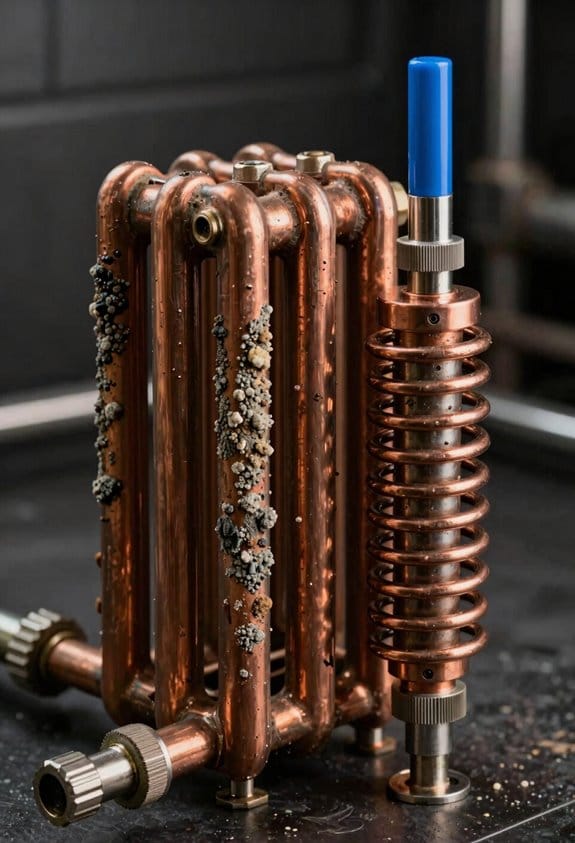
When you heat water containing calcium and magnesium, these minerals separate from the water and stick to your heating elements, creating a hard, crusty buildup called scale. This process, called mineral nucleation, happens because heat causes minerals to lose their solubility in water. As temperatures rise, calcium and magnesium particles cluster together and bond to metal surfaces. Over time, this layer thickens into rocklike deposits. The scale doesn’t just coat surfaces uniformly. It causes element pitting, where corrosive minerals eat into the heating element’s metal, creating tiny holes and weak spots. These damaged areas deteriorate faster, accelerating failure. The combination of mineral accumulation and corrosion markedly compromises your heater’s performance and longevity.
The Efficiency Drop: Why Your Heater Works Harder
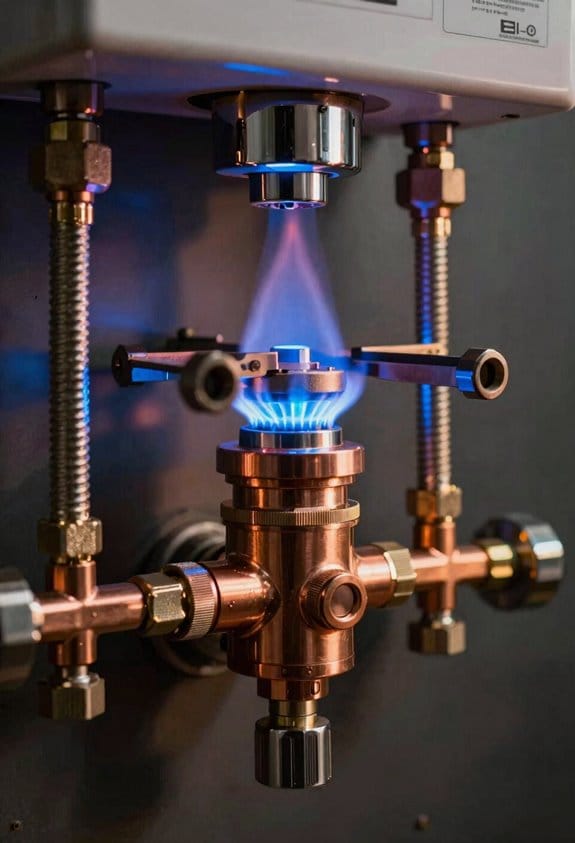
Because scale buildup acts as an insulator between your heating element and water, your heater must work considerably harder to transfer heat efficiently. This mineral barrier forces your system into increased cycling, meaning it turns on and off more frequently than normal to maintain your desired temperature. You might also experience thermostat drift, where your water temperature fluctuates unpredictably because mineral deposits interfere with temperature sensors. As your heater struggles against this insulation layer, it consumes markedly more energy—up to 24-34% additional usage. Even minimal scale accumulation of just 1/16 inch causes a 12% efficiency loss and raises your utility bills accordingly. The harder your system works, the faster its components wear out and fail.
Scale Thickness and Your Rising Costs
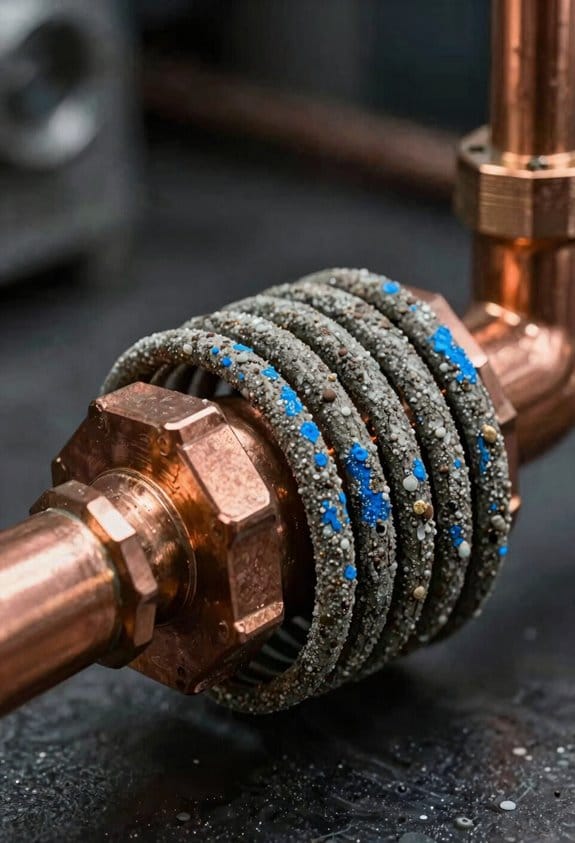
Now that you understand how scale forces your heater to work overtime, you’ll want to know exactly how much that effort costs you in real dollars and cents. Even thin scale deposits create significant insulation buildup between your heating element and the water. Just 1/16 inch of scale causes 12% efficiency loss, raising your energy bills by 12-15% annually. At 1/8 inch, you’re facing 25-30% higher costs. The mineral layer acts like a blanket, trapping heat and causing energy leakage that wastes your money. Thicker deposits—1/4 inch or more—can spike your bills by 40-70%. Your heater runs longer trying to reach desired temperatures, consuming 24-34% more energy. These expenses accumulate quickly, making water treatment an investment that pays for itself through lower utility bills.
Signs Your Water Heater Is Suffering From Hard Water
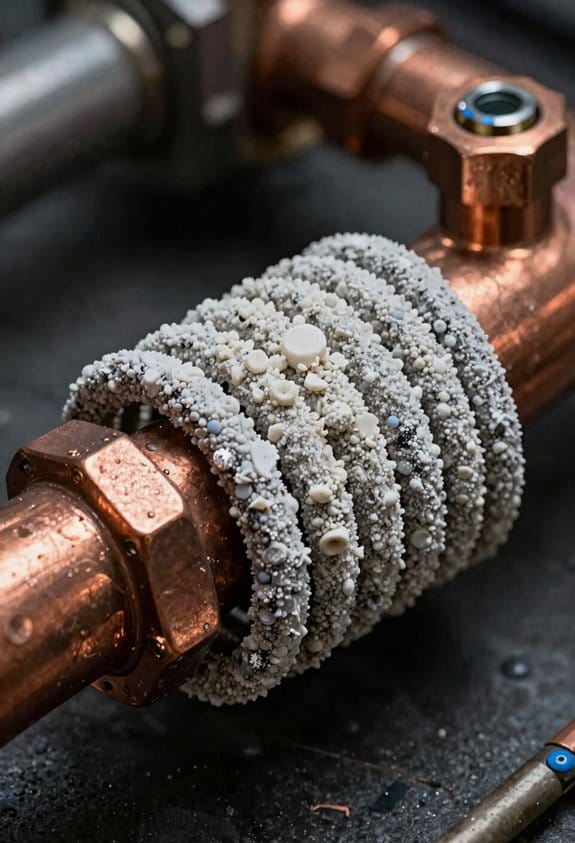
You’ve likely noticed some warning signs around your home that indicate hard water’s damaging effects on your water heater, though you might not have connected them to mineral buildup. One common indicator is reduced water flow from your showerhead and faucets, which occurs when scale clogs the openings. You might also detect a rotten egg smell detection from your water, signaling bacterial growth in sediment layers. Additionally, you’ll notice inconsistent temperatures during showers, caused by mineral interference with temperature sensors. Visible chalky residue on fixtures and appliances further confirms hard water problems. If your hot water capacity has decreased noticeably or your heating cycles have become longer, your water heater is working harder against accumulated scale, struggling to maintain efficiency and performance.
How Scale Cuts Heater Lifespan From 15 Years to 6–8
While a water heater typically lasts 12–15 years with proper maintenance, hard water dramatically accelerates its decline by roughly 40–50%, cutting the lifespan down to just 6–8 years. Scale buildup creates hot spots that cause heating elements to overheat and crack in electric models. The mineral layer also promotes corrosion, eating through tank walls and causing leaks. This accelerated deterioration has significant warranty implications, since many manufacturers won’t cover damage from hard water mineral buildup. A prematurely failing water heater also reduces your home’s resale value, as potential buyers view it as a costly replacement liability. Understanding hard water’s destructive effects helps you plan for earlier replacement and protect your investment through preventative water softening measures.
Hard Water and Why Your Hot Water Runs Cold
Mineral deposits don’t just reduce your water heater’s efficiency—they also interfere with the sensors and components that regulate water temperature, causing your hot water to arrive lukewarm or inconsistently warm. When scale accumulates on temperature sensors, these devices can’t accurately detect water heat levels, leading to erratic heating cycles. This malfunction means you might experience cold showers without warning, as the system fails to maintain consistent temperatures. Additionally, mineral buildup creates hot spots on heating elements, causing temperature fluctuations throughout your tank. You’ll also notice stained fixtures from mineral residue, which indicates system-wide hard water damage. These temperature inconsistencies force your heater to work harder, consuming more energy while delivering unreliable hot water performance.
Corrosion and Overheating: When Components Fail
The temperature fluctuations and sensor failures we just discussed represent only the beginning of hard water’s destructive cycle, because scale buildup doesn’t just interfere with your heater’s performance—it actively damages the physical components that keep your system running. When mineral deposits accumulate on heating elements, they create insulating barriers that trap heat, causing elements to reach dangerously high temperatures. This thermal runaway damages the element’s surface and can trigger electrical arcing, where electricity jumps across gaps in corroded metal. Meanwhile, minerals eating through tank walls cause corrosion that weakens structural integrity. These combined failures force your heater into harder operation, accelerating component breakdown and shortening your system’s lifespan from 12-15 years to just 6-8 years.
Flushing and Softening: Preventing Hard Water Damage
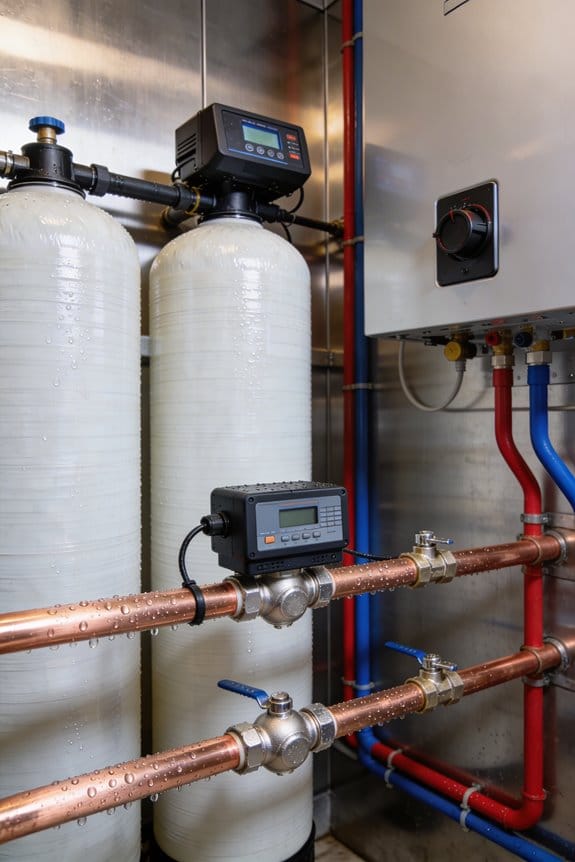
Given the severe damage that mineral scale causes to your water heater’s components, you’ve likely realized that prevention becomes far more cost-effective than repair or replacement. Two primary methods combat hard water effectively. First, ion exchange systems work by swapping calcium and magnesium ions for sodium, removing minerals before they enter your heater. Second, magnetic descalers use magnetic fields to alter mineral structure, potentially reducing scale formation. Regular flushing every three months removes accumulated sediment from your tank’s bottom, maintaining efficiency and extending your heater’s lifespan from 6-8 years back toward the standard 12-15 years. Combining these approaches—softening your water supply and scheduling consistent maintenance—prevents the 40-60% efficiency losses that untreated hard water causes.
Water Softeners and Tank Maintenance: Your Action Plan
Now that you’ve learned how prevention outweighs costly repairs, it’s time to put together a concrete action plan that addresses both water softening and regular maintenance. Installing salt based systems removes calcium and magnesium ions before they damage your heater, markedly extending its lifespan. You’ll need to establish maintenance scheduling that includes flushing your tank every three months, which prevents sediment accumulation and maintains efficiency. Set calendar reminders for inspections and cleanings so you don’t forget these critical tasks. By combining a water softener with consistent upkeep, you’re protecting your investment and reducing energy costs. Start today by researching softening options suited to your water hardness level, then contact a technician to schedule your first professional flush.
Frequently Asked Questions
How Often Should I Flush My Water Heater to Prevent Mineral Buildup?
I’d recommend flushing your water heater every three months in hard water areas instead of annual flushing. Regular sediment inspection prevents rapid mineral buildup and maintains your system’s efficiency effectively.
What Are the Specific Energy Cost Increases for Different Scale Thicknesses?
I’ll break down the energy penalties you’ll face. At 1/16 inch, you’re looking at 12-15% increases. Quarter-inch scale jumps to 40-45%, while half-inch deposits hit 60-70%. Shorter maintenance intervals prevent these costly buildup scenarios.
Can Water Softeners Completely Eliminate Hard Water Damage to Heaters?
I’d say water softeners dramatically reduce hard water damage, but they don’t completely eliminate it. You’ll still need regular system maintenance since the chemical composition changes require ongoing monitoring and occasional repairs.
How Do I Know if My Water Heater Has Reached Critical Scale Levels?
Like a blocked artery restricting blood flow, scale accumulation signals critical levels through cold spots in your shower and drastically reduced hot water capacity. You’re experiencing system failure.
What’s the Average Cost Difference Between Prevention and Replacing a Damaged Heater?
I’d spend $150–300 yearly on routine maintenance versus $1,200–2,500 replacing a damaged heater. You’ll also preserve your warranty savings by preventing scale buildup before it causes irreversible damage.