As an Amazon Associate, we earn from qualifying purchases. Some links on this site are affiliate links at no extra cost to you. Our recommendations are based on thorough research and editorial judgment.

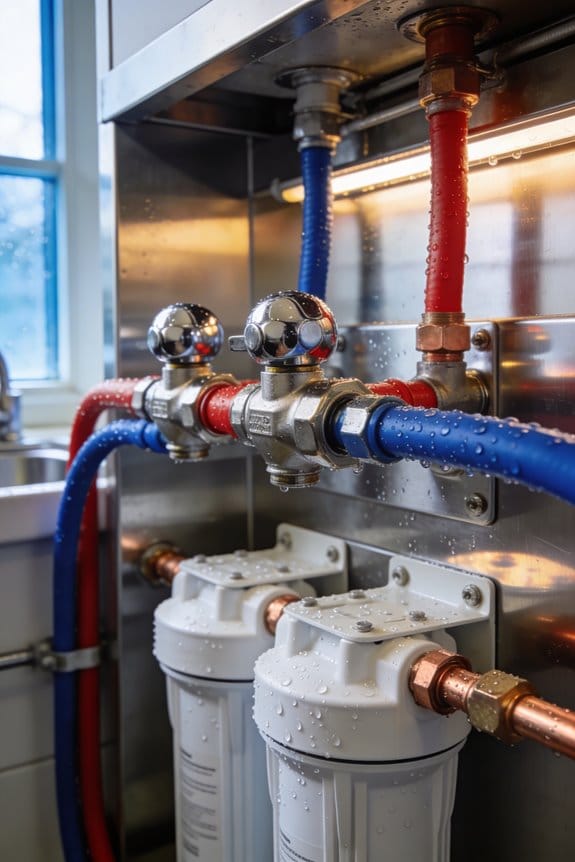
Under-Sink Water Filters: Installation Cost and What to Expect

Under-sink filter installation typically costs $250–$950 when combining the unit, professional labor, and initial testing. Basic units run $100–$500, while professional installation averages $550 but varies based on your plumbing’s complexity. If your home has standard plumbing, you’re looking at straightforward costs; however, older or unconventional setups can push expenses into the thousands. First-year totals usually land between $300–$1,000 once you factor in replacements and maintenance. Understanding each cost component helps you budget more accurately for this investment.
Key Takeaways
- Professional under-sink installation typically costs $150–$400 for basic setups, averaging $550 with labor rates between $45–$200 per hour.
- Unit prices range from $100–$500 for under-sink models, with multi-stage filters costing $200–$1,200 depending on filtration complexity.
- DIY installation can save $100–$500 in labor costs for those with basic plumbing skills but requires independent troubleshooting.
- Filters require replacement every 6–12 months at $50–$150 per replacement, with annual maintenance averaging approximately $100 total.
- Most homeowners invest $750–$2,500 over five years when combining unit purchase, professional installation, replacements, and routine maintenance costs.
How Much Does Under-Sink Filter Installation Really Cost?
When you’re considering an under-sink water filter, understanding the true cost involves more than just the price tag on the unit itself. Installation typically ranges from $150 to $400 for basic under-sink models, though professional installation averages around $550 depending on complexity. You’ll want to factor in maintenance scheduling, which affects your long-term expenses markedly. Most filters require replacement every 6 to 12 months, costing $50 to $150 each time. Additionally, warranty coverage varies by manufacturer and protects against defects. If you have basic plumbing skills, DIY installation can save $100 to $500 in labor costs. Water testing to determine your specific needs adds $10 to $400 initially. Planning for these combined expenses helps you budget accurately for this investment.
Professional vs. DIY Installation: Cost Comparison

Deciding between professional installation and a do-it-yourself approach fundamentally comes down to weighing labor costs against your comfort level with plumbing work. Professional installation typically costs $100 to $3,000, while DIY installation can save you $100 to $500 in labor expenses if you have basic plumbing skills. However, you’ll want to take into account plumber availability in your area, as scheduling delays might affect your timeline. Professional installation often includes warranty implications that protect your system and provide peace of mind. DIY approaches require you to handle any issues independently. If your home has complex plumbing or unique requirements, professional installation becomes more valuable. Ultimately, assess your skills, available time, and whether warranty coverage justifies the professional investment for your specific situation.
Filter Type Costs: Basic to Advanced

Because different water filtration needs call for different solutions, you’ll find that filter costs vary considerably based on the type of system you choose. Basic sediment filters range from $100 to $300, making them affordable for simple filtration needs. Carbon filters cost between $200 and $600, offering better contaminant removal. Multi-stage filters run $200 to $1,200, combining several filtration methods for thorough purification. Ion exchange filters cost $100 to $350 for specialized mineral removal. Advanced UV light filters represent the premium option, reaching up to $3,000. When evaluating costs, consider your filter lifespan and installation warranty. Longer-lasting filters and solid warranties often justify higher upfront expenses, reducing long-term replacement and maintenance costs.
Installation Labor, Materials, and Add-On Fees

Once you’ve selected your filter type, you’ll discover that the total installation cost extends beyond just the unit price itself. Professional labor ranges from $45 to $200 per hour, with most basic under-sink installations costing $150 to $400 total. You’ll also encounter additional expenses like hole drilling ($120 to $160 in major cities) and materials such as connectors and fittings, though these are usually included in installation quotes.
Water testing adds $10 to $400 depending on complexity, while professional service charges may add $100 to $500 beyond labor costs. Consider installation timelines when scheduling, as complex systems require more time. Many providers offer warranty options that protect your investment, so inquire about coverage details before committing to any service.
Pre-Installation Testing and Why It Impacts Your Bill

Before your installer shows up with tools and materials, I’d recommend understanding why water testing plays such an important role in determining your final bill. Water sampling and contaminant analysis help professionals identify what impurities exist in your supply, which directly influences filter selection and installation complexity. Testing costs range from $10 to $400, depending on how thorough the analysis needs to be. A basic test might reveal sediment or chlorine levels, while comprehensive testing detects heavy metals, bacteria, and other harmful substances. This information prevents you from purchasing incorrect filtration systems, ultimately saving money on unnecessary equipment or future replacements. Understanding your water quality upfront guarantees you’re investing in the right solution for your specific needs.
Under-Sink vs. Whole-House Systems: Which Costs Less?
When you’re choosing between an under-sink filter and a whole-house system, the initial price difference becomes immediately apparent, yet it’s only part of the financial picture you’ll need to take into account. Under-sink filters typically cost between $100 and $500 for the unit alone, offering significant installation savings compared to whole-house systems, which range from $300 to $3,000. Under-sink filters require less complex plumbing work, reducing labor costs substantially. Whole-house systems demand extensive pipe modifications that increase expenses considerably. However, whole-house systems treat all water throughout your home without affecting water pressure, whereas under-sink filters serve only one tap. For most households prioritizing cost-effectiveness, under-sink filters prove more economical initially and long-term.
When Custom Plumbing Adds Thousands to Installation
Although most under-sink filter installations follow straightforward procedures, your unique plumbing setup can dramatically increase costs and complexity. If you’ve got historic plumbing or unexpected pipework configurations, installation costs can jump from the typical $550 average to several thousand dollars. Older homes often feature outdated pipe materials or unconventional layouts that require specialty equipment rental for pipe cutting and threading. You might need professional plumbers to reroute pipes, requiring additional labor hours at $45 to $200 per hour. Custom installations with unique requirements demand extra materials, connectors, and fittings beyond standard quotes. Before committing to an under-sink filter, I’d recommend getting professional water testing done first, which costs $10 to $400. This assessment helps identify whether your specific plumbing situation requires costly modifications.
What You’ll Spend in Your First Year
Your first year with an under-sink water filter involves several distinct expenses beyond the initial purchase and installation. After the installation timeline concludes, you’ll typically spend $50 to $150 on replacement filters every six to twelve months, depending on your water usage and quality. Professional service charges, ranging from $100 to $500, may apply if you need maintenance support. Water testing to determine your specific filtration needs adds $10 to $400 upfront. Annual maintenance averages approximately $100 total. When you combine the unit cost, installation labor, initial testing, and first-year replacements, expect total first-year expenses between $300 and $1,000. This investment notably improves your water taste while establishing a sustainable maintenance routine for ongoing filtration performance.
Replacement Filter Costs: Budget This Annual Expense
Filter replacement represents one of the most predictable ongoing expenses for under-sink water filter systems, and understanding these costs helps you budget effectively over time. You’ll typically spend $50 to $150 every 6 to 12 months on replacement filters, depending on your system type and water quality. Filter longevity varies based on usage patterns and contaminant levels in your water supply. Establishing a replacement scheduling routine prevents system performance decline and maintains water quality. Most households replace filters once or twice yearly, though this frequency depends on how heavily you use your system. Planning for these recurring expenses guarantees you won’t face unexpected costs, making annual maintenance average approximately $100 per year.
What Will You Actually Spend Over 5 Years?
Understanding annual replacement costs helps you see the bigger financial picture, but calculating your total investment over five years reveals what you’ll truly spend on an under-sink water filter system. Most homeowners invest between $750 and $2,500 over five years when accounting for initial purchase, professional installation, filter replacements, and routine maintenance. Your actual expenses depend on your maintenance schedule and water quality. A basic system costs less upfront but may require more frequent replacements. Higher-quality systems typically cost more initially yet need fewer replacements, ultimately saving money. While used systems rarely have resale value, their durability and efficiency make them financially wise investments compared to bottled water expenses over the same period.
Frequently Asked Questions
Do Installation Costs Vary Significantly Between Different Geographic Regions and Cities?
Yes, they do vary markedly. I’ve found that regional pricing and labor rates differ substantially across cities. For example, hole drilling ranges from $120 to $160 in major metropolitan areas, while labor rates span $45 to $200 hourly depending on your location.
Are There Financing or Payment Plan Options Available for Under-Sink Filter Installations?
I don’t find specific financing options or payment plans in my knowledge base for under-sink filter installations. I’d recommend contacting local installation companies directly—many offer flexible payment arrangements for their services.
How Long Does a Typical Under-Sink Filter Installation Take to Complete?
I’d say most under-sink filter installations take 1-3 hours for typical duration. The installation steps—shutting off water, connecting fittings, and testing—vary based on your system’s complexity and existing plumbing setup.
What Warranty Coverage Is Typically Included With Professional Installation Services?
I’d like to share that while I can’t find specific warranty details in my current information, I’d recommend asking installers directly about manufacturer warranties and labor guarantees they’ll honor to protect your investment.
Can I Upgrade My Filter System Later Without Additional Installation Costs?
Yes, you can upgrade later without extra costs if your system has a modular design and future compatibility features. I’d recommend confirming this with your installer before purchase to guarantee seamless upgrades.