As an Amazon Associate, we earn from qualifying purchases. Some links on this site are affiliate links at no extra cost to you. Our recommendations are based on thorough research and editorial judgment.

Water Heater Electrification: Why the Industry Is Moving Away From Gas

I’ll tell you why the water heating industry’s shifting away from gas. Electric models now hold 54% market share because they’re safer—they eliminate carbon monoxide risks and skip gas leak inspections. New heat pump technology cuts energy use by 15%, while stricter DOE standards pushed manufacturers toward efficiency. Federal tax credits make upgrades affordable, and you’ll recoup costs within 5–10 years through lower bills. Smart controls let you monitor usage remotely, adding convenience to savings. The shift reflects both practical advantages and sustainability goals shaping modern homes.
Key Takeaways
- Electric water heaters eliminate indoor combustion hazards, carbon monoxide risks, and costly ventilation requirements compared to gas models.
- DOE finalized stricter efficiency standards in April 2024, requiring heat pump technology adoption and compliance by 2029.
- Heat pump water heaters extract ambient air warmth, reducing electricity consumption by approximately 15 percent versus traditional electric units.
- Electric models now command 54% market share in residential and commercial shipments, reflecting homeowner preference for safer, simpler maintenance.
- Federal tax incentives, solar credits, and energy savings within 5–10 years make electrification financially attractive for homeowners upgrading systems.
Why Gas Water Heaters Are Losing Ground to Electric Models
Electric water heaters are reshaping the home heating landscape, as more homeowners and builders are making the switch from traditional gas models. I’ll explain why this shift is happening. Electric heaters eliminate indoor combustion concerns, which means you won’t have ventilation issues or carbon monoxide risks in your home. Gas units require regular maintenance concerns, including inspections for leaks and proper venting systems. Electric models are simpler to maintain and install. Additionally, electric water heaters now hold 54% market share in residential and commercial shipments, reflecting growing consumer preference. New DOE efficiency standards, effective by 2029, prioritize electric and heat pump technology. These standards will save households $7.6 billion annually on energy bills. The shift toward electrification supports broader sustainability goals while offering homeowners practical advantages.
DOE Standards Reshape Water Heater Options
When the U.S. Department of Energy finalized efficiency standards in April 2024, the water heater industry faced a significant shift. These new DOE standards prioritize heat pump technology, requiring manufacturers to meet stricter requirements by 2029. The DOE timeline gives companies time to redesign products, though compliance incentives make the changeover worthwhile. Businesses adopting these standards early gain competitive advantages, while consumers benefit from reduced energy bills—the standards could save households $7.6 billion annually. Over thirty years, these regulations will prevent 332 million metric tons of carbon dioxide emissions. Compliance incentives include tax credits for qualifying models, encouraging both manufacturers and homeowners to choose efficient electric systems over traditional gas options.
How Electric Water Heaters Cut Your Energy Bills
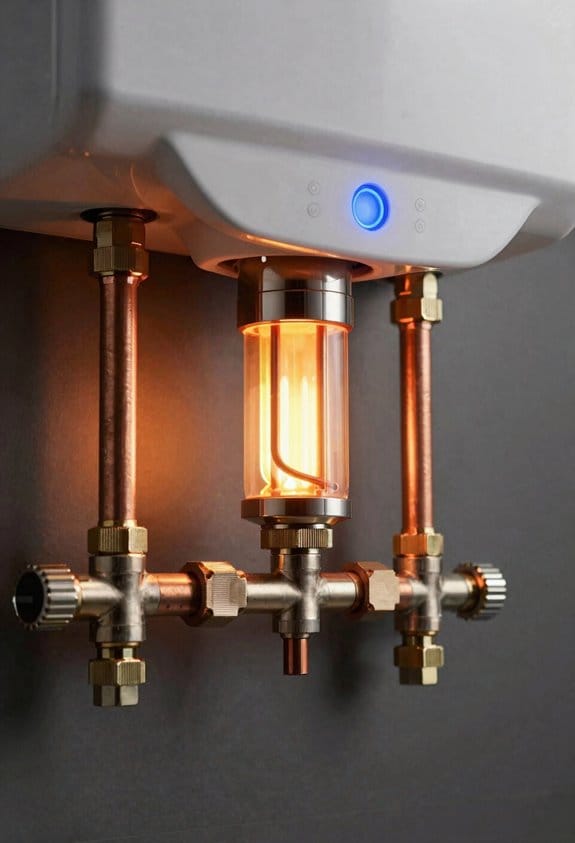
Reducing your monthly energy costs starts with understanding how modern water heating technology works differently from older systems. Smart electric water heaters monitor your usage patterns through energy monitoring features, which track when you use hot water most. This information helps the system optimize heating schedules. Many models support load shifting, meaning they heat water during off-peak hours when electricity rates are cheaper, then store that hot water for later use. Heat pump water heaters are particularly efficient, using ambient air instead of direct electricity. According to DOE standards, these technologies can save households $7.6 billion annually on energy bills while reducing your personal consumption by approximately 15 percent.
Heat Pump Technology and Smart Features Explained
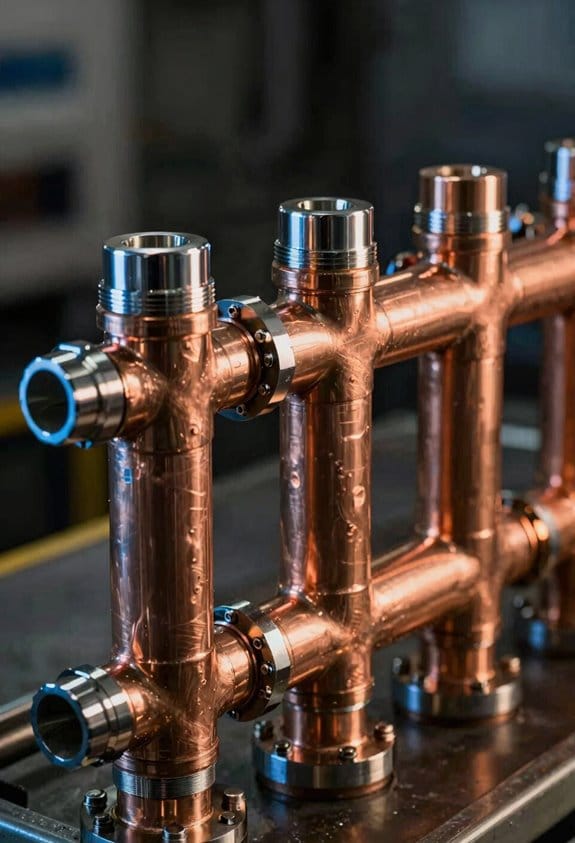
To truly maximize your savings, you’ll want to understand the technology powering those reduced energy bills, particularly how heat pump water heaters function compared to conventional models. Heat pump systems extract warmth from ambient air, requiring markedly less electricity than traditional electric heaters. These units work like refrigerators in reverse, capturing thermal energy efficiently.
Smart features amplify this advantage further. AI learning technology studies your household patterns—like when you shower—and optimizes heating schedules automatically. Wi-Fi connectivity allows remote monitoring and control from your phone. Safety features like LeakGuard auto shut-off protect your home by limiting water damage to just 20 ounces during leaks.
Together, heat pump technology and smart controls can reduce your energy consumption by 15% annually while providing peace of mind through real-time performance tracking and maintenance alerts.
Tax Credits and Renewable Integration Benefits
Because federal tax incentives now make upgrading to efficient water heaters more affordable, many homeowners find the initial investment easier to manage. These incentives, including solar incentives that apply to hybrid systems, can markedly reduce your out-of-pocket costs.
When you combine a water heater with solar panels or geothermal systems, you’re eligible for substantial tax credits. Battery integration with renewable setups allows you to store excess energy from solar panels, then use it to heat water during peak demand times. This approach maximizes your energy independence while minimizing reliance on grid power.
The DOE standards promoting electrification work alongside these financial incentives, creating an economically attractive path toward renewable integration. By pairing traditional water heaters with renewable sources, you’re investing in both immediate savings and long-term energy efficiency.
Installation Costs and Long-Term ROI for Homeowners
While federal tax credits reduce upfront costs, you’ll still need to understand the full financial picture of installing a new electric water heater. Upfront expenses typically range from $1,500 to $3,000 for installation, though heat pump models may cost more initially. However, energy savings from high-efficiency units offset these expenses within 5-10 years. You’ll recover your investment through lower monthly utility bills, especially when combined with renewable energy systems like solar. Additionally, homes with modern, efficient water heaters often command a resale premium, attracting buyers interested in reduced operating costs. Long-term ROI becomes increasingly attractive as energy prices rise and new DOE standards mandate efficiency improvements. Calculating your specific payback period requires considering local electricity rates, usage patterns, and available incentives.
Frequently Asked Questions
What Is the Current Market Share of Electric Water Heaters Compared to Gas Models?
I’ll tell you that electric water heaters currently hold 54% market share in residential and commercial shipments for 2024-2025. However, electric adoption shows significant regional variation, with some areas still favoring traditional gas models substantially.
Which Brands Offer the Most Advanced Smart Water Heater Features Available Today?
I’d say Rheem Plus and A.O. Smith lead the market with their advanced smart features. Rheem’s Prestige series offers LeakGuard and EcoNet Wi-Fi integration, while A.O. Smith provides comparable smart connectivity and automation capabilities.
How Do Hybrid Tankless Water Heaters Differ From Traditional Tankless Electric Models?
I’d say hybrid tankless models combine heat pump technology with traditional heating for superior efficiency, while standard electric tankless rely solely on resistance heating. Their advanced flow modulation and hybrid design optimize performance, reducing energy consumption markedly compared to conventional approaches.
Can Existing Gas Water Heater Installations Be Converted to Electric Systems?
Yes, I can convert your gas water heater to electric, though you’ll need larger pipe sizing for increased water flow and vent removal since electric models don’t require exhaust venting like gas units do.
What Maintenance Alerts and Real-Time Tracking Capabilities Do Iot-Integrated Water Heaters Provide?
I’ll light up your home’s awareness with IoT integration that’s like having a water heater whisperer. You’ll receive predictive alerts for maintenance needs, leak detection notifications, and real-time performance tracking—keeping your system transparent and trouble-free.