As an Amazon Associate, we earn from qualifying purchases. Some links on this site are affiliate links at no extra cost to you. Our recommendations are based on thorough research and editorial judgment.

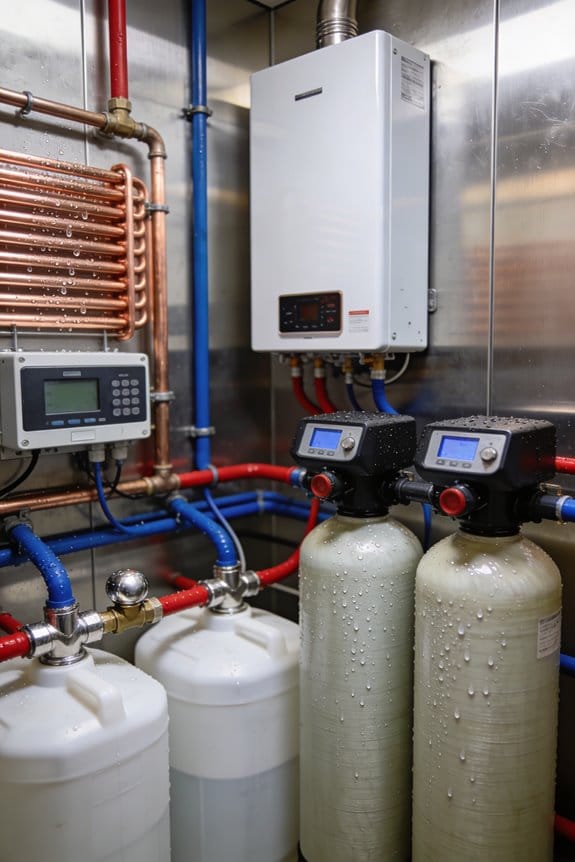
What Contaminants Does a Whole-House Water Filter Remove?

Whole-house water filters remove sediment, rust, and debris through physical straining, while activated carbon traps chlorine and pesticides that affect taste and smell. Reverse osmosis systems eliminate heavy metals like lead and arsenic, plus hard water minerals causing scale buildup. UV technology sterilizes bacteria and viruses with 99.99% effectiveness. Multi-stage systems combine these methods to address chemical disinfectants, industrial solvents, and emerging contaminants like PFAS. Understanding which filtration method targets specific threats helps you choose the right protection strategy.
Key Takeaways
- Whole-house sediment filters remove dirt, sand, rust, and debris from municipal pipes and private wells.
- Activated carbon and KDF media eliminate chlorine and chloramine, improving taste, odor, and appliance longevity.
- Reverse osmosis membranes remove heavy metals like lead and arsenic up to 99% effectiveness.
- Activated carbon adsorbs pesticides, VOCs, and industrial solvents that municipal treatment plants may not eliminate.
- UV filters sterilize bacteria, viruses, and parasitic cysts with up to 99.99% effectiveness depending on dosage.
Physical Contaminants: What Sediment Filters Trap
When you turn on your tap, you’re often getting more than just water—you’re potentially getting dirt, sand, sediment, rust, and debris that shouldn’t be there. Sediment filters capture these physical contaminants before they damage your home’s plumbing and appliances. The initial filtration stage removes larger particles through polyester mesh protection, which acts as a barrier against coarse materials. Sand particles and silt get trapped in the sediment pre-filter, protecting delicate downstream filters from premature clogging. These contaminants commonly come from municipal pipes and private wells, where erosion and corrosion create unwanted particles. By installing a whole-house sediment filter, you’re establishing the first defense line in your water treatment system, ensuring cleaner water flows throughout your entire home.
Chlorine & Chloramine Removal: Activated Carbon vs. KDF Media
After your sediment filter removes the larger particles threatening your pipes and appliances, the next challenge is dealing with chemical disinfectants like chlorine and chloramine, which are intentionally added to municipal water supplies to kill harmful bacteria. Activated carbon filters excel at trapping chlorine in their porous structure, effectively improving your water’s taste and odor while reducing skin irritation. KDF media offers an alternative approach, reducing chloramine through a different chemical process. For stubborn chloramines, catalytic carbon proves particularly effective, combining both filtration methods. When comparing these technologies, consider media longevity—activated carbon typically requires replacement every three to five years, while KDF media lasts longer. Both methods protect your pipes and appliances from chlorine damage, making them essential components in all-encompassing whole-house filtration systems.
Lead, Arsenic & Heavy Metals: Reduced by RO & Whole-House Systems
Heavy metals like lead and arsenic pose serious health risks that you can’t see, taste, or smell in your water, making them particularly dangerous contaminants requiring specialized filtration technology. Whole-house systems reduce lead effectively, while reverse osmosis membranes remove arsenic up to 99%, along with copper and chromium. If you’re concerned about contamination, lead testing through your local water department confirms whether treatment’s necessary. RO systems excel at eliminating dissolved heavy metals that standard carbon filters can’t trap. Some whole-house point-of-entry systems address multiple metals simultaneously, protecting your entire home’s water supply. For metal disposal from cartridge replacements, follow your municipality’s hazardous waste guidelines to guarantee safe removal procedures.
Pesticides, VOCs & Industrial Chemicals Blocked by Activated Carbon
Activated carbon filters serve as your home’s defense against pesticides, volatile organic compounds (VOCs), and industrial chemicals that dissolve in water and slip past basic sediment filtration. These harmful substances, including industrial solvents like TCE and MTBE, get trapped within the porous structure of activated carbon through a process called pesticide adsorption. When contaminated water passes through the filter, chemicals cling to the carbon’s surface, effectively removing them before water reaches your taps. Catalytic carbon proves especially effective for breaking down chloramines alongside VOCs. Since municipal water treatment plants don’t always eliminate all synthetic chemicals and pesticides, whole-house activated carbon systems provide an essential secondary barrier, protecting your family from prolonged exposure to these potentially dangerous compounds.
How UV Filters & Multi-Stage Systems Kill Bacteria & Viruses
While activated carbon excels at trapping chemicals, it can’t eliminate living microorganisms like bacteria, viruses, and parasitic cysts that threaten your water supply. That’s where UV filters and multi-stage systems become indispensable. UV filters use ultraviolet light to sterilize harmful organisms with a 99.99% effectiveness rate. The UV dosage determines how thoroughly microorganisms are neutralized—higher dosages eliminate even chlorine-resistant cysts. Multi-stage systems combine UV technology with other filtration methods, targeting different contaminants simultaneously. System maintenance is vital for peak performance; you’ll need to replace UV bulbs regularly and clean filters according to manufacturer guidelines. Together, these technologies provide all-encompassing protection against biological threats that standard carbon filters alone can’t address.
Hard Water Minerals & Dissolved Solids: What RO Removes
Reverse osmosis systems tackle a problem that affects millions of households: hard water minerals and dissolved solids that accumulate in your pipes, appliances, and fixtures. These systems use semi-permeable membranes to remove up to 99% of dissolved solids, including calcium, magnesium, radium, and sulfate. By reducing mineral scaling, you’ll extend your appliance lifespan and maintain water quality throughout your home. RO filters achieve significant TDS reduction—measuring total dissolved solids in parts per million—ensuring cleaner water reaches every faucet. When mineral-laden water passes through the membrane, contaminants get trapped while purified water flows through. This process addresses both taste and odor issues while preventing the white, crusty buildup that hard water causes on fixtures and inside pipes.
PFAS (Forever Chemicals): How Modern Filters Remove Them
Because PFAS chemicals don’t break down naturally in the environment or in your body, they’ve earned the nickname “forever chemicals,” and they’re increasingly found in drinking water supplies across the country. I want you to understand how modern filters combat this threat.
Two primary methods remove PFAS effectively. PFAS adsorption uses granular activated carbon, which traps these chemicals in its porous structure. Ion exchange systems work differently, using specially designed resins that swap PFAS molecules for harmless ions.
However, both technologies require maintenance. Adsorbent regeneration—replacing or cleaning filter media—ensures continued effectiveness over time. I recommend PFAS testing before and after installation to verify your system’s performance. This confirms your water’s safety and identifies whether your chosen filter meets your household’s specific needs.
Frequently Asked Questions
How Often Should I Replace My Whole-House Water Filter Cartridges?
How often do you check your water quality? I’d recommend replacing cartridges every 6-12 months, though your filter lifespan depends on water usage and contamination levels. Regular cartridge maintenance guarantees peak performance.
Will a Whole-House Filter Reduce Water Pressure in My Home?
Yes, I’ll be honest—a whole-house filter can reduce water pressure slightly. You might experience flow reduction, especially with sediment buildup. That’s why I recommend regular maintenance to prevent pump strain and maintain peak water pressure throughout your home.
Can Whole-House Filters Remove All Contaminants From Well Water?
I won’t sugarcoat it: whole-house filters aren’t your water’s complete shield. You’ll need bacterial testing and arsenic treatment specifically, since standard systems can’t catch everything lurking in well water alone.
Do Whole-House Filters Require Professional Installation or Can I DIY?
You can DIY install most whole-house filters, but I’d recommend hiring a professional since permit requirements vary by location. Professional installation guarantees proper connections and compliance with local codes.
What’s the Difference Between Point-Of-Use and Point-Of-Entry Filtration Systems?
Point-of-entry systems treat water at your home’s main line, offering high flow rates for whole-house filtration. Point-of-use filters install at specific taps, providing targeted treatment with lower flow rates and easier installation.