As an Amazon Associate, we earn from qualifying purchases. Some links on this site are affiliate links at no extra cost to you. Our recommendations are based on thorough research and editorial judgment.

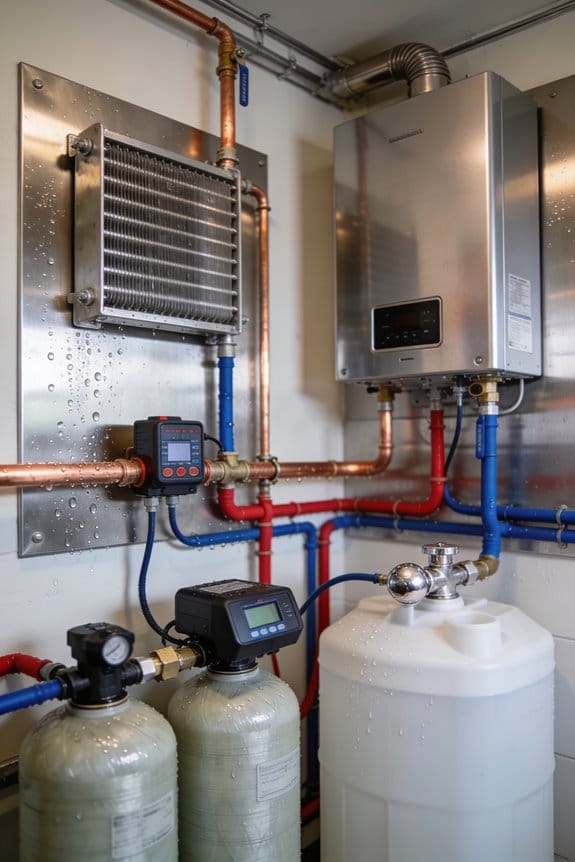
What Is the Best Water Heater Temperature Setting for Efficiency and Safety?

I recommend setting your water heater to 120°F, which balances safety and efficiency for most homes. At this temperature, serious burns require about five minutes of contact, compared to six seconds at 140°F. Lowering from 140°F saves 4–22% annually on water heating costs, which typically accounts for 14–18% of home energy expenses. While 120°F prevents bacteria growth in normal situations, immunocompromised individuals may need higher temperatures with professional mixing valves installed. Understanding your household’s specific needs will help you find the ideal setting.
Key Takeaways
- 120°F is the U.S. Department of Energy’s recommended setpoint, balancing comfort, safety, and energy efficiency for most households.
- Lowering water heater temperature from 140°F to 120°F reduces annual water heating energy consumption by approximately 4% to 22%.
- At 120°F, serious burns require about five minutes of skin contact, compared to six seconds at 140°F.
- Immunocompromised individuals may need 140°F storage temperatures paired with professional mixing valves to prevent both bacterial growth and scalding.
- Check local codes, test faucet temperature annually, and consult professionals for mixing valve installation or thermostat calibration needs.
Why 120°F Is the Recommended Water Heater Temperature
When you’re setting your water heater’s temperature, you’ll frequently encounter 120°F as the recommended standard, and there’s solid reasoning behind this choice. The U.S. Department of Energy identifies 120°F as the ideal balance for most households because it maintains comfort balance while preventing scalding injuries. At this temperature, your water stays hot enough for showers and dishwashing without creating excessive heat risks. Additionally, 120°F guarantees appliance compatibility with most home systems, including dishwashers and washing machines that function most effectively within this range. EPA and ENERGY STAR standards align with this recommendation, reflecting extensive research into household safety and efficiency. While factory defaults often sit at 140°F, adjusting down to 120°F protects vulnerable family members while reducing unnecessary energy consumption.
Water Heater Temperature and Scalding Risk
Understanding the connection between temperature settings and burn injuries helps explain why the 120°F recommendation matters so much for your household’s safety. Water temperature directly affects how quickly scalding occurs, making scald prevention essential, especially for children and elderly family members.
At 140°F, your skin sustains serious burns in just six seconds upon contact. The touch temperature at 120°F requires approximately five minutes to cause comparable injury, providing a vital safety buffer. At 150°F, burns happen almost instantly—within two seconds—for anyone who touches it.
I’d recommend installing thermostatic mixing valves if you need higher temperatures for specific reasons. These devices automatically reduce the actual water temperature delivered to fixtures while maintaining higher storage temperatures. This approach balances scald prevention with your household’s particular needs.
Energy Savings From Lower Water Heater Temperatures
Lowering your water heater from the factory default of 140°F to the recommended 120°F can markedly reduce your monthly energy bills, since every 10-degree temperature decrease cuts your water heating energy use by 3% to 5%. This setpoint optimization translates to annual savings of 4% to 22% on your water heating costs, which typically account for 14% to 18% of your home’s total energy expenses.
Higher temperatures increase standby losses—the heat that continuously escapes from your tank into surrounding spaces. By maintaining 120°F instead of higher settings, you minimize this wasted energy. Additionally, lower temperatures reduce mineral buildup and corrosion within your system, improving long-term efficiency and extending your water heater’s lifespan while maintaining adequate heating for most household needs.
Water Heater Temperature and Bacteria: Finding the Balance
While 120°F provides excellent energy savings and safety benefits, I need to address an important health concern that complicates this recommendation: bacteria growth. At temperatures below 120°F, harmful microorganisms like Legionella can proliferate in your water heater tank, potentially causing serious respiratory infections. However, 120°F remains sufficient for thermal disinfection in most residential situations because it kills most bacteria effectively during normal use. For Legionella prevention in standard households, 120°F balances safety and efficiency well. That said, immunocompromised individuals may require 140°F storage temperatures combined with professional mixing valves to eliminate bacterial risks. I’d recommend consulting your doctor if anyone in your home has compromised immunity, as their health needs might justify the higher temperature despite increased energy costs.
Adjusting Temperature for Vulnerable Households
Because certain household members face greater risks from scalding injuries and bacterial contamination, I’ll explain how to adjust your water heater temperature to protect them.
Homes with young children or elderly residents benefit most from the standard 120°F setting, which prevents dangerous burns. However, immunocompromised individuals require 140°F storage temperatures to prevent Legionella growth, paired with professional thermostatic mixing valves for safety. This caretaker guidance guarantees protection without scalding risk.
Before adjusting, check your appliance compatibility. Older dishwashers may need 130°F–140°F for effective cleaning, while modern Energy Star models work well at 120°F. Assess your household’s specific needs, considering both health vulnerabilities and appliance requirements. Testing your current temperature annually helps maintain peak safety and performance for your family’s protection.
Higher Temperatures for Long Plumbing Runs and High Demand
Beyond the standard 120°F recommendation, certain household situations call for higher water heater temperatures to guarantee adequate hot water delivery and performance. If you have an older home with lengthy plumbing runs, hot water travels through extended pipes before reaching your fixtures, losing heat along the way. Setting your heater to 130°F or 140°F compensates for this heat loss. You can also install pipe insulation around exposed pipes to minimize temperature drops. Large families with simultaneous hot water demands, or homes with older dishwashers requiring hotter water, benefit from slightly elevated settings. For these scenarios, booster pumps can improve water pressure and circulation. However, always install thermostatic mixing valves at the heater to prevent scalding hazards when using higher temperatures.
Testing and Adjusting Your Water Heater Temperature
Once you’ve determined the right temperature for your household—whether that’s the standard 120°F or a higher setting for long pipes and high demand—you’ll need to verify that your water heater is actually delivering that temperature. I recommend testing your water temperature annually or after any repairs to confirm thermostat accuracy. Use a reliable thermometer at your faucet, allowing water to run for several seconds before measuring. If the temperature doesn’t match your thermostat setting, annual calibration may be necessary. Most water heaters have an adjustable dial or digital control panel. Check your manufacturer’s manual for specific adjustment instructions. Professional assessment helps if you’re uncertain about making changes yourself, confirming your system operates safely and efficiently.
Local Codes, Regulations, and When to Call a Pro
While your water heater’s temperature setting is ultimately your choice, local building codes and regulations may establish minimum or maximum requirements that you’re legally required to follow. Many jurisdictions mandate 120°F for residential settings to prevent scalding injuries, though some areas require higher temperatures in specific situations.
Before adjusting your system, check your local codes and permit requirements. If you’re installing a new water heater, you’ll likely need permits and inspection timelines that verify compliance with safety standards. Professional plumbers know these regulations and can guide you through the process.
Call a professional if you’re unsure about your local requirements, need to install a mixing valve, or suspect your water heater isn’t functioning properly. They’ll make certain your system meets all legal standards while optimizing your comfort and safety.
Frequently Asked Questions
How Often Should I Test My Water Heater Temperature for Accuracy and Safety?
I’d recommend you test your water heater’s temperature annually to make certain accuracy and safety. After any repairs, I suggest rechecking it immediately. Professional sensor calibration helps maintain reliable readings and prevents scalding hazards effectively.
Does Water Heater Temperature Affect Mineral Buildup and Corrosion in My Tank?
Yes, it markedly does. Higher temps accelerate mineral deposition and scale formation, while 120°F slows both. I’ll tell you: hard water at 140°F reduces efficiency faster through anode depletion and electrochemical corrosion than cooler settings.
Can I Adjust My Water Heater Temperature Seasonally for Better Efficiency?
While seasonal adjustments are minor, I’d recommend keeping your heater at 120°F year-round for consistency. However, you can save energy during vacation shutdowns or seasonal setbacks by lowering the temperature temporarily.
What Temperature Should Manufactured Homes Maintain for Optimal Performance?
I’d recommend you maintain 120°F in your manufactured home for peak performance. This setting balances your nearly constant thermostat needs, manages indoor humidity levels, and prevents energy waste while ensuring safety for all residents.
How Does Standby Heat Loss From My Tank Increase With Higher Temperatures?
Your tank’s standby losses increase because higher temperatures create greater temperature differences between your water and surrounding air. I’d recommend using thermostat setback features to minimize these losses efficiently.