As an Amazon Associate, we earn from qualifying purchases. Some links on this site are affiliate links at no extra cost to you. Our recommendations are based on thorough research and editorial judgment.

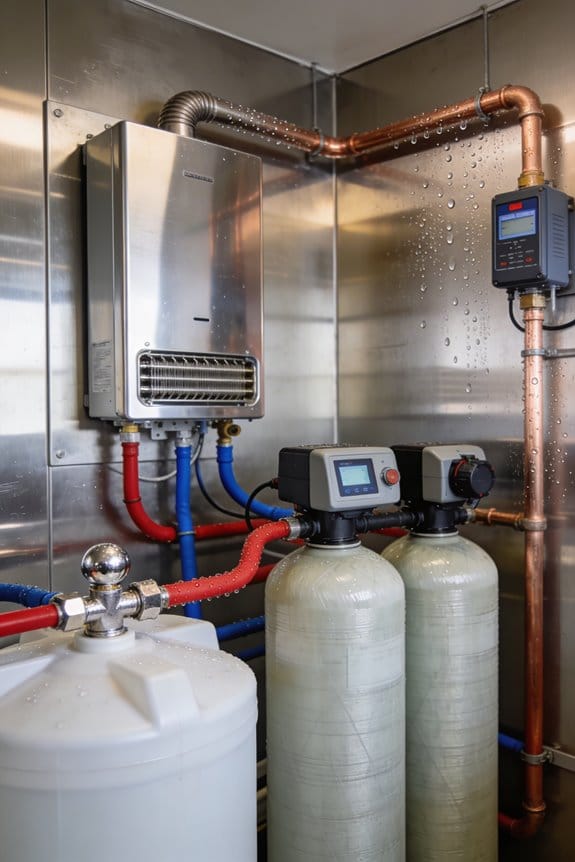
How Smart Water Heaters Use Off-Peak Hours to Cut Energy Costs

Smart water heaters automatically heat water during off-peak hours when electricity rates drop markedly, sometimes costing a quarter of peak prices. These systems learn your hot water usage patterns and schedule heating cycles when rates are lowest, storing thermal energy for later use. By combining this smart scheduling with heat pump technology—which transfers ambient heat rather than generating it directly—you’ll consume roughly 75% less energy than conventional models. This automation captures savings without requiring daily adjustments on your part. The financial benefits become clearer when you explore specific rebate programs and enrollment steps available through your local utility.
Key Takeaways
- Smart water heaters automatically schedule heating cycles during low-rate off-peak periods to minimize electricity costs.
- Preheating during off-peak hours stores thermal energy for use during expensive peak-rate periods, reducing peak demand charges.
- Heat pump water heaters consume 75% less energy than standard electric models by transferring ambient heat efficiently.
- Integration with utility demand-response programs enables grid-aware scheduling that captures maximum off-peak savings opportunities.
- Usage monitoring apps help optimize heating patterns based on household consumption trends and seasonal rate changes.
Why Off-Peak Hours Matter for Your Water Heating Bill
When you’re paying your electric bill, you’ve probably noticed that the amount changes from month to month, and there’s a reason for that variation. Electricity costs more during peak hours when demand is highest, especially during summer when air conditioning runs constantly. Off-peak hours, typically late evening or early morning, cost markedly less because fewer people use electricity then. By shifting your water heating to these cheaper times, you’ll reduce what you pay annually. Seasonal pricing also affects your bills, as winter demands more energy overall. Smart water heaters automate this process, scheduling heating cycles during low-rate periods while storing hot water for later use. Maintenance timing becomes easier too, since you’ll understand your system’s usage patterns better, allowing you to plan repairs when demand is lowest.
Time-of-Use Plans: How Lower Rates Work in Your Area

Because electricity costs vary throughout the day, many utility companies offer time-of-use plans that charge different rates depending on when you use power. These plans divide your billing into rate tiers, meaning you’ll pay less during off-peak hours and more during peak schedules when demand is highest. In summer, peak hours typically occur during afternoon and evening when air conditioning usage surges. Off-peak periods usually fall late at night or early morning. By understanding your area’s specific peak schedules, you can strategically shift water heating to cheaper hours. Smart water heaters automate this process, automatically heating water when rates drop. Check your utility company’s website to find your local rate tiers and peak schedules, enabling you to maximize savings.
Smart Scheduling: Automatic Load Shifting to Off-Peak Hours

Through smart water heater technology, you can automate the process of shifting your heating cycles to off-peak hours without having to manually adjust settings every day. These systems use predictive cycling, which learns your household’s hot water patterns and schedules heating when electricity rates drop. Grid aware sequencing coordinates with utility demand response programs, ensuring your heater activates during periods when the grid experiences lower strain. When you’re enrolled in time-of-use plans, the heater preheats water during cheaper hours, storing thermal energy for peak-rate periods. This automation reduces your monthly bills substantially because you’re avoiding expensive peak-hour charges, particularly during summer months when electricity demand climbs highest.
Smart Water Heater Rebates: What Your Utility Will Pay

Now that you’ve set up automatic load shifting to capture off-peak rates, you might wonder how to offset the upfront costs of installing a smart water heater system. Many utilities offer utility incentives to encourage adoption of energy-efficient technology. These rebate programs typically cover a portion of your installation expenses, reducing your initial investment notably. Some utilities provide income qualified rebates, which offer additional financial assistance to eligible households based on income levels. You can check your local utility’s website or contact their customer service to learn about available programs. Rebate amounts vary by region and utility provider, ranging from $300 to $1,500 depending on the system type. Taking advantage of these programs makes upgrading to smart technology more affordable while supporting grid efficiency goals.
Heat Pumps vs. Conventional: Where the Efficiency Gains Hide

If you’re comparing water heater options, you’ll find that heat pump models operate on an entirely different principle than conventional electric or gas heaters. While traditional heaters generate heat directly, heat pumps transfer existing warmth from surrounding air into your water tank, using a compressor and refrigerant management system to accomplish this efficiently.
The compressor placement in heat pump units pulls ambient air through a coil containing refrigerant. This refrigerant absorbs heat energy, then releases it into your water supply. Because heat pumps move heat rather than create it, they consume roughly one-quarter the energy of standard electric models.
This fundamental difference explains why heat pump water heaters achieve savings of $600 annually for typical households. You’re effectively leveraging free environmental heat, making them substantially more efficient during off-peak scheduling periods.
Your Heater Learns Your Routine: and Cuts Bills Automatically
Beyond the hardware efficiency of heat pumps lies another layer of savings that doesn’t require you to manually adjust anything: adaptive learning technology that studies your household’s patterns and automatically schedules heating when it benefits your wallet most. Your smart heater observes when you typically use hot water—morning showers, evening dishes, laundry cycles—and adjusts its heating schedule accordingly. Rather than maintaining constant temperature, the system allows intentional temperature drift during predictable low-use periods, preventing unnecessary energy consumption. Through behavior prediction, your heater anticipates demand before it occurs, preheating water during off-peak hours when electricity rates are lowest. This automation eliminates guesswork from energy management, enabling your system to reduce heating cycles without sacrificing comfort or convenience, translating directly to lower monthly bills.
Calculating Year-One Savings: $600–$1,200 Based on Your Usage
The financial benefits of upgrading to a smart water heater break down into measurable, real-world savings that depend on your specific household patterns and local electricity rates. Through behavioral profiling, your heater learns when you shower, do laundry, and use hot water most, optimizing heating cycles accordingly. ENERGY STAR heat pump models save approximately $600 annually for a family of four, while tankless systems reduce costs by 8%-34% depending on usage. Your actual savings depend on several factors: how many people live in your home, your regional electricity rates, and your current heater’s efficiency. Smart heaters typically save 10%-30% more energy than conventional models. Additionally, maintenance forecasting features alert you to potential problems early, preventing costly repairs and water waste that would further reduce your year-one savings.
Installation and Enrollment: Your First Steps to Savings
Getting your smart water heater up and running involves two key steps: installation and enrollment in your utility’s efficiency program. First, you’ll schedule a professional installer who’ll handle the physical setup and verify compatibility with your home’s electrical system. During installation, you should complete the installer checklist, which guarantees proper connections, safety features, and system testing before activation. Next, register your warranty registration information with the manufacturer for coverage protection. Then, enroll in your utility’s off-peak program—like SCE SmartShift—through their website or app. This enrollment grants you access to lower rates during off-peak hours and enables remote scheduling features. Once activated, your heater automatically shifts heating cycles to cheaper periods, beginning your savings immediately.
Maximizing Savings: Optimization Tips After Setup
Now that your smart water heater is installed and enrolled in an off-peak program, you can take several practical steps to maximize your energy savings. First, adjust your temperature setbacks during periods when you’re away or sleeping, reducing unnecessary heating cycles. Most systems allow you to lower temperatures by 10-15 degrees during these times without sacrificing comfort. Second, enable maintenance reminders through your app to catch issues early, preventing energy waste from inefficient operation. Third, monitor your usage patterns and adjust settings based on seasonal changes. Finally, combine your water heater’s off-peak scheduling with other smart home devices, like programmable thermostats and dishwashers, to coordinate energy demands and amplify your overall savings potential.
Frequently Asked Questions
Can Smart Water Heaters Work Without Time-Of-Use Electricity Plans From My Utility?
Yes, they’ll work without time-of-use plans. I can use manual timers to schedule heating during off-peak hours I choose, giving me grid independence. You’re not locked into utility programs.
What Happens to Hot Water Availability During Off-Peak Scheduling Periods?
Like a well-orchestrated symphony, your hot water’s there when you need it. Smart heaters use temperature layering and quick recovery time, so you’ll have plenty available despite off-peak scheduling—I promise you won’t notice the difference.
How Do Smart Water Heaters Coordinate With Other Home Appliances Like Dishwashers?
I’ve found that my smart water heater coordinates with dishwashers through appliance coordination and load balancing—scheduling heating cycles when other high-demand appliances aren’t running, reducing overall electricity strain on my home’s grid.
Are Retrofit Kits Available to Upgrade My Existing Conventional Water Heater?
Yes, retrofit kits are your golden ticket to upgrading. You can install retrofit controllers and thermostat modules on existing heaters, enabling smart scheduling and remote monitoring without replacing your entire system.
Can I Override Automatic Scheduling if I Need Hot Water During Peak Hours?
Yes, you can override automatic scheduling. I can manually activate an emergency boost feature through my smartphone app or control panel whenever I need hot water during peak hours, though this’ll increase my costs temporarily.