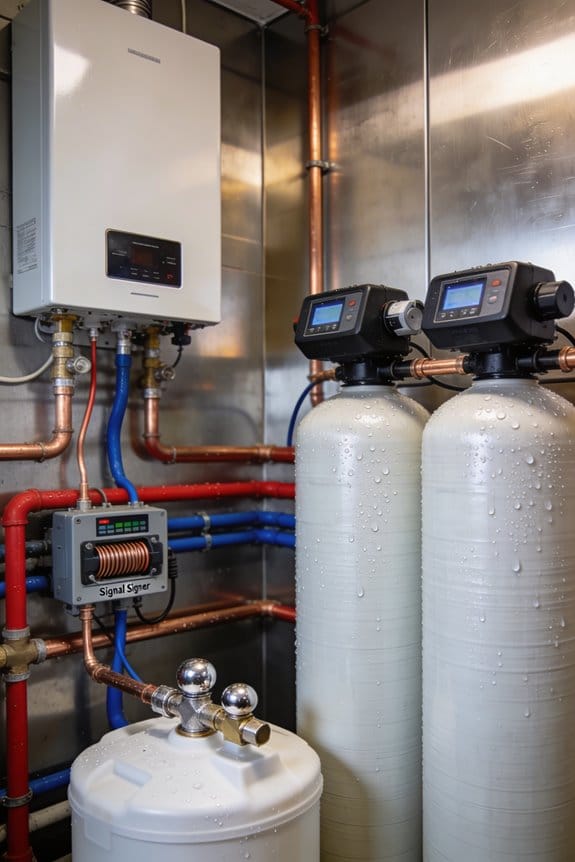
As an Amazon Associate, we earn from qualifying purchases. Some links on this site are affiliate links at no extra cost to you. Our recommendations are based on thorough research and editorial judgment.


Are Water Softeners Banned in Some U.S. States? (Brine Discharge Laws)

Water softeners aren’t banned nationwide, but several states and dozens of municipalities restrict salt-based models due to brine discharge concerns. Texas implemented the first statewide ban in 2001, though it’s since relaxed rules for high-efficiency systems. California allows individual agencies to set their own regulations, resulting in over 25 counties with restrictions. The brine discharged from traditional softeners contains high chloride levels that damage aquatic ecosystems and contaminate water supplies. Understanding your specific location’s regulations and exploring compliant alternatives like salt-free conditioners can help you navigate these evolving restrictions.
Key Takeaways
- Texas implemented the first statewide water softener ban in 2001, later relaxing rules to focus on demand-initiated regeneration systems.
- More than 25 California counties restrict salt-based softeners due to brine discharge contaminating waterways and harming aquatic ecosystems.
- Salt-based softener brine contains high chloride levels that damage water supplies, wildlife, and cannot be effectively treated by recycling plants.
- High-efficiency salt-based systems meeting state standards remain legal in many Southern California areas, creating variable compliance requirements by locality.
- Non-compliance penalties include removal orders, fines, increased water charges, and costs for purchasing compliant equipment and professional installation.
Which States and Cities Have Actually Banned Water Softeners?
While you might think water softener bans are everywhere across the United States, the reality’s more nuanced—most states don’t have complete statewide prohibitions, though some cities and regions have enacted strict regulations. Texas implemented the first statewide ban in 2001, followed by California’s 2005 law allowing individual agencies to establish municipal ordinances. Today, more than 25 California counties have restricted salt-based softeners, with Santa Clarita and Dixon leading the way. Massachusetts and Texas now focus on regulating discharge byproducts rather than outright bans. These utility conflicts arise because brine discharge damages water treatment systems and local ecosystems. Most restrictions target timer-based systems, while high-efficiency models meeting state standards remain legal in many Southern California areas.
Is Your Water Softener Legal Where You Live?

Before you invest in a water softener system or continue using one you already own, you’ll need to determine what regulations apply in your specific location, since legality depends entirely on where you live and the type of system you’re considering. California cities like Santa Clarita and Dixon have banned salt-based softeners, while Texas enforces discharge regulations rather than outright prohibitions. Check your local water district’s requirements, as many agencies now mandate demand-initiated regeneration systems or high-efficiency models meeting specific performance standards. Installation costs vary markedly depending on system type and compliance needs. Understanding these regulations protects you from removal orders and fines while ensuring your choice supports water quality and public health impacts in your community.
Why Water Softeners Are Getting Banned

As salt-based water softeners continue their regeneration cycles, they’re discharging brine—a concentrated saltwater mixture—into municipal sewer systems and local waterways, which has prompted environmental agencies across the country to restrict or ban their use. The environmental impacts are significant; brine runoff containing high chloride levels infiltrates groundwater and surface water, damaging aquatic ecosystems and harming local wildlife. According to a University of Minnesota study, salt-based systems contribute over 150,000 tons of salt annually to lakes. Water recycling plants often cannot treat this brine discharge effectively. Beyond environmental concerns, public health considerations arise when contaminated water affects drinking water supplies and agricultural irrigation. These combined factors—environmental degradation and public health risks—have driven communities nationwide to implement stricter regulations on salt-based softener systems.
California’s Local Ban Patchwork and Compliant Alternatives
Unlike states that enforce statewide water softener regulations, California has created a complex system where individual cities and water districts decide their own rules rather than following one uniform law. Santa Clarita, Dixon, and numerous Los Angeles County districts have implemented full bans on salt-based softeners, while more than 25 California counties have enacted varying local ordinances. This patchwork approach means your compliance requirements depend entirely on where you live. However, compliance incentives exist through approved alternatives. High-efficiency salt-based systems meeting state standards of removing at least 4,000 grains of hardness per pound of salt remain legal in most Southern California areas. Salt-free water conditioners offer statewide-legal options, though they don’t remove hardness minerals like calcium and magnesium, making them suitable only for scale protection without providing traditional soft water benefits.
How Texas and Massachusetts Changed Their Rules

While California’s decentralized approach leaves homeowners finding their way through a complicated web of local rules, other states have taken different paths by initially implementing strict bans and then softening their regulations as technology improved. Texas evolution reflects this shift perfectly. The state began with a statewide ban on water softener discharge in 2001, but as demand-initiated regeneration systems became standard, Texas relaxed its stance. Now the state requires only DIR features, allowing homeowners to program systems based on actual water usage. Massachusetts regulation similarly changed course, moving away from complete prohibitions toward regulating byproduct discharge instead. Both states recognized that modern technology could address environmental concerns while still allowing residents access to water-softening solutions that met strict efficiency standards.
Legal Alternatives if Your Softener Is Banned
If your local water district has banned salt-based softeners, you’re not without options for managing hard water problems in your home. Salt free alternatives like water conditioners offer compliant solutions that don’t discharge harmful brine into sewers. These systems alter how minerals crystallize, preventing scale buildup on pipes and fixtures, though they don’t remove hardness minerals entirely.
Portable conditioners provide flexible treatment for specific areas where you need it most. You might combine a salt-free whole-house conditioner with carbon filtration to address scale concerns thoroughly. While salt free systems won’t deliver traditional soft water benefits like improved soap performance, they remain legal throughout California and other restricted areas. This makes them practical choices when traditional softeners aren’t permitted in your region.
Penalties for Installing Non-Compliant Systems
Installing a non-compliant water softener in an area where bans are in place carries real consequences that can affect your finances and your home. Local authorities may issue removal orders requiring you to uninstall the system entirely, forcing installation removal costs onto your shoulders. Beyond removal expenses, you’ll face fines that can escalate depending on how long the violation persists and your local jurisdiction’s enforcement policies. Some municipalities increase water charges for non-compliant properties, while homeowners associations may impose additional penalties. The financial impact extends beyond immediate fines—you’ll need to purchase compliant equipment and pay for professional installation by licensed contractors. Understanding your local regulations beforehand helps you avoid these costly consequences and guarantees your water treatment system meets all applicable standards.
Frequently Asked Questions
How Much Do Demand-Initiated Regeneration Systems Cost Compared to Traditional Salt-Based Softeners?
I can’t provide the specific cost comparison you’re asking about because the knowledge base doesn’t include pricing information for demand-initiated regeneration systems versus traditional salt-based softeners. You’d need current quotes from water treatment vendors for accurate initial cost and long-term savings data.
Can I Install a Water Softener Myself, or Must I Hire a Licensed Contractor?
You’ll need to hire a licensed contractor—DIY installation isn’t recommended due to installer liability issues. California requires C-55 Water Conditioning or C-36 Plumbing licenses, ensuring you’re compliant and protected.
What Is the Difference Between Salt-Free Conditioners and True Water Softening Systems?
Ironically, salt-free conditioners don’t actually soften water—they’re template-free systems altering scale formation through conditioning mechanisms. True ion exchange softeners remove hardness minerals, delivering genuine soft water benefits you’d expect from the name.
How Often Do Water Softener Regulations Change Across Different States and Municipalities?
Water softener regulations shift frequently across states and municipalities. I’ve found that policy shifts and ordinance updates happen continuously, with California seeing expansion every few years while Texas has become more lenient as technology improved.
What Are the Health Effects of High Chloride Levels in Treated Brine Water?
I can’t directly address human health effects from the provided knowledge, which focuses on chloride toxicity’s aquatic impacts. High chloride levels in brine damage rivers and groundwater, severely harming aquatic ecosystems and terrestrial wildlife through environmental contamination.