As an Amazon Associate, we earn from qualifying purchases. Some links on this site are affiliate links at no extra cost to you. Our recommendations are based on thorough research and editorial judgment.


What Happens If You Don’t Flush Your Tankless Water Heater?

If you skip annual flushing, hard water minerals like calcium and magnesium build up inside your heat exchanger, restricting water flow and forcing your system to work harder. This mineral accumulation reduces heating efficiency, spikes your energy bills, and creates damaging thermal stress that weakens metal components. You’ll notice banging noises, inconsistent hot water, and discolored water as sediment accumulates. Skipping maintenance also voids your warranty and risks expensive repairs exceeding $1,000—but understanding each consequence reveals why routine flushing protects your investment.
Key Takeaways
- Mineral deposits accumulate in the heat exchanger, narrowing water passages and restricting flow until clogs prevent normal heating operation.
- Insulating scale layers reduce heat transfer efficiency, forcing the system to run longer and significantly increasing your electricity or gas bills.
- Thermal stress from repeated expansion and contraction weakens the heat exchanger structure, leading to corrosion and potential failure requiring costly replacement.
- Mineral buildup causes unusual banging and rumbling noises, temperature fluctuations, inconsistent hot water, and discolored or rusty-looking water output.
- Skipping annual flushing violates manufacturer warranty requirements, and lack of maintenance documentation may result in denied coverage for scale damage.
Mineral Buildup Clogs Your Heat Exchanger Over Time
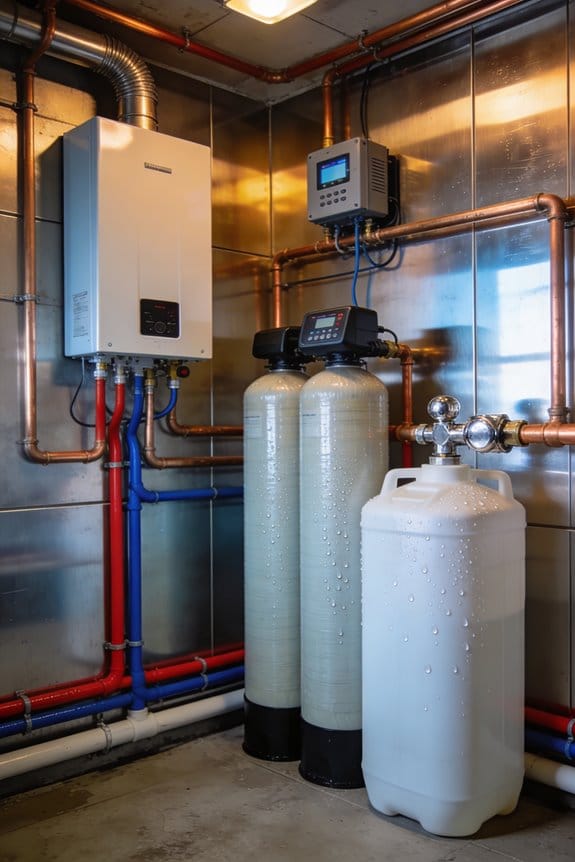
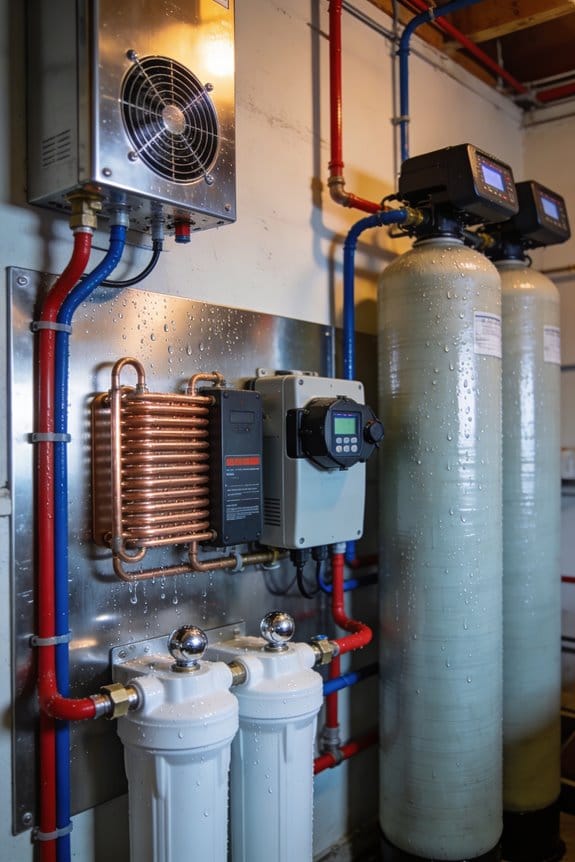
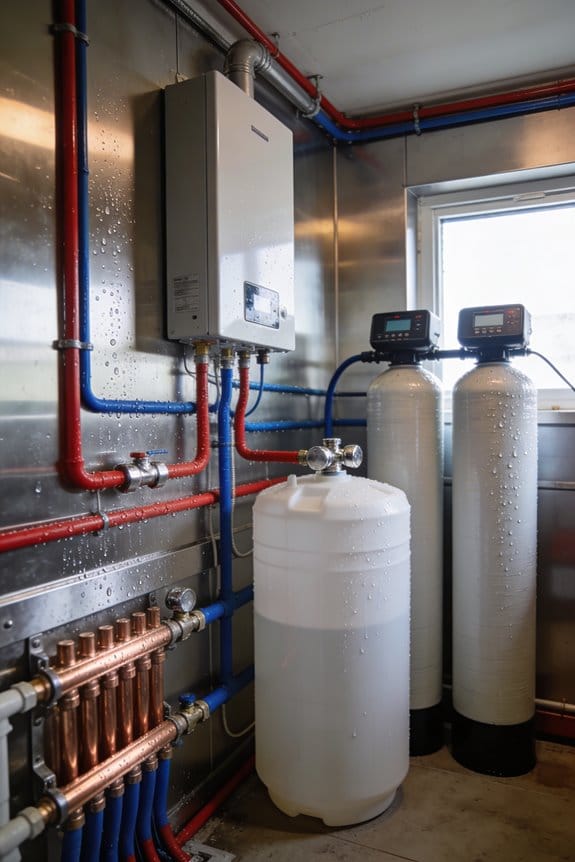
If you’ve got hard water coming into your home, minerals like calcium and magnesium are constantly accumulating inside your tankless water heater’s heat exchanger, which is the component responsible for warming your water. Over time, this scale accumulation creates deposits that harden and build up on the interior surfaces. These mineral layers cause flow restriction by narrowing the passages where water travels through the exchanger. When water can’t move freely, sediment clogs the system and prevents normal heating operation. The buildup worsens each year you skip maintenance, eventually causing erosion in the heating chamber walls. Annual flushing removes these deposits before they solidify, protecting your heat exchanger’s ability to function properly and efficiently.
Why Mineral Deposits Kill Heating Efficiency (and Spike Your Bills)?

Once mineral deposits accumulate inside your tankless water heater’s heat exchanger, the system has to work considerably harder to do its job, and that increased effort directly translates to higher energy bills for your household. Scale buildup acts as an insulating layer, reducing the heat exchanger’s ability to transfer warmth efficiently to your water. Your heating elements must run longer and consume more electricity or gas to reach desired temperatures. This energy waste compounds monthly, markedly increasing utility costs. Additionally, restricted water flow from scale accumulation forces the system to operate at reduced capacity, further diminishing performance. The longer your unit runs to compensate, the more you’ll pay. Regular flushing prevents this efficiency decline and keeps your energy consumption in check.
Heat Exchanger Failure: The Most Expensive Consequence

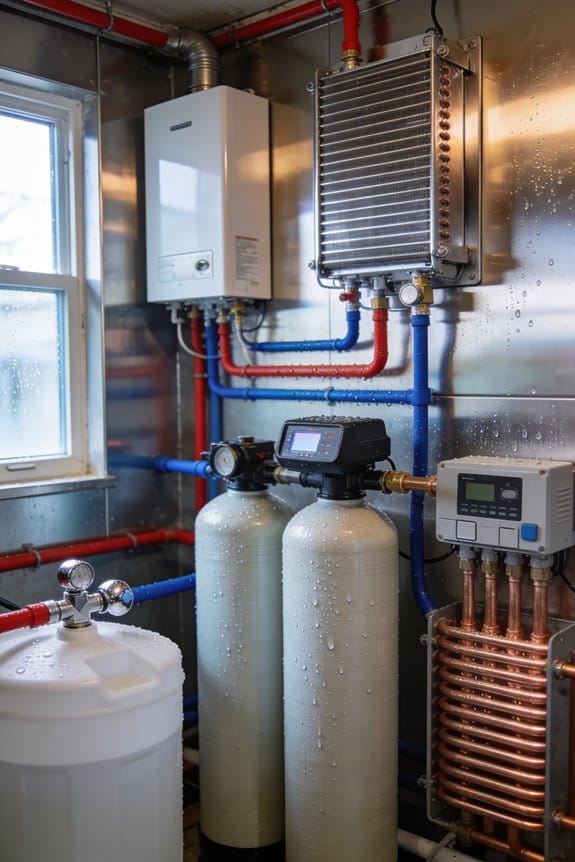
While mineral deposits initially cause efficiency problems, they ultimately lead to heat exchanger failure—the most expensive repair you’ll face with a tankless water heater. The heat exchanger transfers warmth from your heating elements to the water flowing through, but mineral buildup creates thermal stress on its metal walls. As scale accumulates, temperature fluctuations intensify, causing the metal to expand and contract repeatedly. This constant stress weakens the exchanger’s structure over time. Additionally, minerals accelerate corrosion acceleration by trapping moisture against metal surfaces, eating away at the material from inside. Once failure occurs, you’re looking at replacement costs exceeding $1,000. Regular flushing prevents this catastrophic damage and keeps your unit functioning reliably for years.
Why Your Water Heater Starts Making Loud Noises?

Beyond the internal damage that mineral buildup causes to your heat exchanger, you’ll likely notice something else happening first: your water heater will start making unusual sounds during operation. These noises occur because mineral deposits restrict water flow through narrow passages, creating vibrations and turbulence. As sediment accumulates, it causes airborne vibration within the heating chamber, producing banging or rumbling sounds you’ll hear from the unit.
Additionally, hardened scale can loosen components inside your system, creating rattling noises as water pressure fluctuates. These loose components vibrate against the chamber walls, intensifying the noise over time. The sounds serve as an early warning system, indicating that mineral buildup is progressing and affecting your water heater’s internal structures markedly.
Inconsistent Hot Water and Temperature Swings

As mineral deposits accumulate inside your tankless water heater’s heat exchanger, you’ll frequently experience inconsistent hot water delivery and temperature fluctuations that make showering uncomfortable. This temperature variance occurs because mineral buildup blocks water passages, forcing the system to struggle with maintaining consistent heating. Flow inconsistency develops when sediment restricts water movement through narrow channels, causing some areas to heat properly while others remain cool. Your sensors detect these temperature swings and trigger error codes or automatic shutdowns as the unit tries compensating for the blockages. You might notice water temperature dropping suddenly mid-shower, then spiking moments later. These unpredictable temperature changes signal that mineral accumulation is compromising your heater’s ability to regulate water heat effectively, requiring immediate flushing to restore normal operation.
Discolored Water: A Sign of Hidden Sediment
When you turn on your hot water tap and notice discolored, cloudy, or rusty-looking water flowing out, you’re observing a clear warning sign that sediment has accumulated inside your tankless water heater. This discoloration typically results from rust particles and pipe corrosion occurring within the system’s internal components. Hard water minerals combine with corroding metal surfaces, creating visible rust and sediment that contaminate your water supply. Beyond appearance, this sediment poses health and safety concerns for your household. The rust particles indicate your heat exchanger is deteriorating from mineral buildup and insufficient water flow. Regular flushing removes these deposits before they cause extensive damage, preventing water quality problems and protecting your system’s longevity. Don’t ignore discolored water—it demands immediate attention.
Why Skipping Flushing Voids Your Warranty
Your tankless water heater comes with a manufacturer’s warranty that protects you against defects and premature failures, but this coverage has an important condition: you must perform regular maintenance, including annual flushing. When you skip flushing, you’re effectively neglecting the required upkeep that keeps your warranty valid. Manufacturers include this maintenance requirement because mineral buildup directly causes component damage and system failure. If you need repairs or replacements due to scale accumulation, your warranty coverage becomes void without proper service documentation proving you’ve completed annual flushing. This means you’ll pay the full cost of repairs out of pocket. Keeping detailed maintenance records demonstrates compliance with warranty terms, protecting your investment and ensuring you can claim coverage when problems arise from manufacturing defects rather than neglect.
Annual Flushing: The Maintenance That Prevents Costly Repairs
Annual flushing stands as the single most effective way to prevent expensive repairs and keep your tankless water heater operating efficiently for years to come. When you schedule regular flushing, you remove mineral deposits before they harden and cause damage. I’d recommend arranging professional servicing at least once yearly, depending on your water’s hardness level. During these scheduled inspections, technicians flush out calcium and magnesium buildup that restricts water flow and reduces heating efficiency. This preventive approach costs markedly less than replacing a failed heat exchanger or paying for emergency repairs. By investing in routine maintenance now, you’ll extend your unit’s lifespan, maintain your warranty coverage, and avoid the escalating expenses that come from neglected scale buildup. Consistent flushing truly protects your investment.
Frequently Asked Questions
How Often Should I Flush My Tankless Water Heater to Prevent Mineral Buildup?
I’d recommend you flush your tankless water heater annually—like maintaining a horse carriage. Your annual flushing and descaling schedule protects against mineral buildup, maintains warranty coverage, and keeps your system running efficiently for years.
Can Hard Water Damage My Tankless Water Heater Permanently if Left Unflushed?
Yes, hard water can permanently damage your tankless water heater if left unflushed. Scale buildup hardens over time, eroding heat exchanger walls and causing component failure. You’ll also void warranty concerns without regular maintenance.
What’s the Average Cost of Replacing a Failed Heat Exchanger?
I’d estimate you’re looking at $800–$2,500 for a heat exchanger replacement cost, though labor estimates typically run $300–$800 depending on your unit’s complexity and your technician’s rates.
Does Flushing My Water Heater Improve Water Pressure and Flow Rate?
Yes, flushing your water heater restores flow benefits and pressure recovery by removing mineral deposits clogging passages. I’ve seen dramatic improvements in water pressure and delivery speed after flushing removes buildup restricting flow.
Can I Flush My Tankless Water Heater Myself or Need a Professional?
You can perform DIY maintenance flushing, but I’d recommend checking your warranty first. Professional flushing guarantees proper procedures and protects your coverage, especially since neglect voids manufacturer guarantees for scale damage.