As an Amazon Associate, we earn from qualifying purchases. Some links on this site are affiliate links at no extra cost to you. Our recommendations are based on thorough research and editorial judgment.

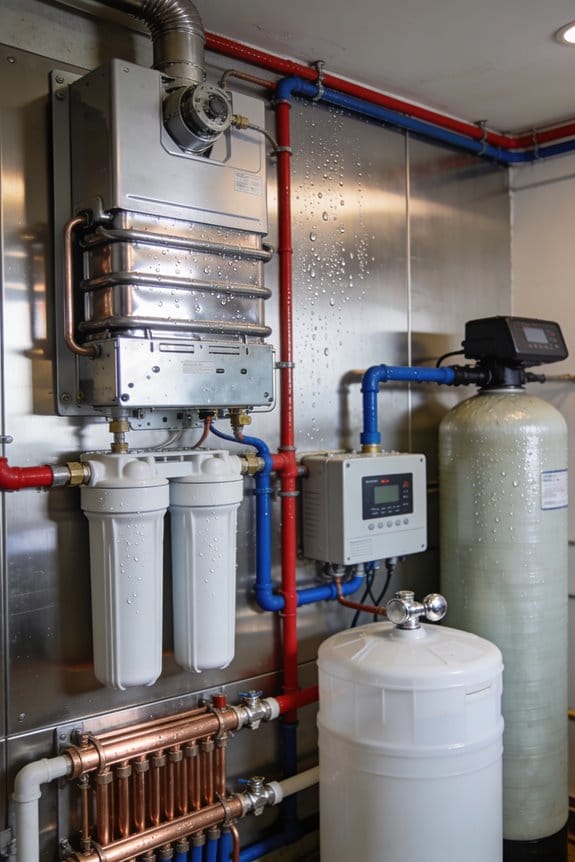
Gas vs. Electric Tankless Water Heater: Key Differences Explained

Gas and electric tankless heaters both heat water on demand, but they differ in key ways. Electric models convert energy at 98–99% efficiency and cost less to install, though they deliver lower flow rates (3–3.5 GPM). Gas units reach 8 GPM with faster heating, making them better for cold climates and multiple simultaneous uses, but they’re pricier to install and maintain. Your choice depends on your home size, climate, and local utility costs. Understanding your specific needs will reveal which option makes the most sense for you.
Key Takeaways
- Electric tankless heaters achieve 98–99% efficiency, significantly outperforming gas models at 80–96% efficiency.
- Gas units deliver higher flow rates (up to 8 GPM) and perform better in cold climates.
- Electric installation costs less due to no venting or gas line requirements; fits compact spaces easily.
- Natural gas operates 10–15% cheaper per unit than electricity, though prices may rise faster long-term.
- Electric units need simple annual descaling; gas requires professional combustion safety inspections and venting checks.
Energy Efficiency: Which Type Converts Energy Better?
Electric tankless water heaters consistently outperform their gas counterparts when it comes to converting energy into usable heat, achieving efficiency ratings between 98-99% compared to gas models‘ 80-96% range. This superior conversion efficiency stems from how each system operates. Electric models convert nearly 100% of electrical energy directly into heat without venting losses, while gas units lose some energy through necessary ventilation systems. Even newer condensing gas units, which recover heat from exhaust, can’t match electric efficiency levels. According to the U.S. Department of Energy, electric tankless heaters exceed traditional tank heaters by 24-34% in efficiency. The minimal energy losses in electric systems mean you’re paying primarily for actual heating, not wasted heat escaping through vents.
Flow Rate and Performance: Can Your System Handle Your Demand?

While efficiency determines how well your water heater converts energy, flow rate determines whether it can actually meet your household’s hot water needs simultaneously. Gas units deliver higher flow rates, up to 8 GPM in warm climates, supporting multiple fixtures at once, making them ideal for larger households. Electric models provide lower flow rates, typically 3-3.5 GPM in cold climates, working better for smaller homes or point-of-use applications like single bathrooms. Gas performs better in cold climates due to faster heating capabilities. Consider your peak timing demands and pipe sizing when choosing between them. Gas handles simultaneous showers and dishwashing efficiently, while electric units work well for limited, sequential usage patterns.
Installation Costs and Space: What’s the True Price to Install?

Now that you understand your household’s flow rate needs, the next practical consideration is how much you’ll actually spend to get your system up and running. Electric units cost markedly less to install because they require no venting or gas line modifications. You can fit them in compact spaces like closets or under sinks, minimizing aesthetic impact on your home. Gas models demand higher installation costs due to venting requirements and necessary wall or ceiling modifications. You’ll also need permit requirements and professional installation for gas lines and combustion safety inspections. However, multiple electric units may be necessary for larger homes, which increases total expenses. Gas systems offer higher upfront costs but provide better performance for high-demand households with simultaneous fixture use.
Operating Costs: Which Fuel Fits Your Budget Long-Term?
Once you’ve settled on installation costs, you’ll want to take into account how much you’ll spend operating your tankless water heater year after year. Natural gas currently costs about 10-15% less than electricity per unit of energy, making it attractive for long term budgeting. However, electricity rates remain relatively stable, while gas prices are projected to rise faster over time. Electric models’ 99% efficiency helps offset their higher per-BTU costs. Your actual expenses depend on local utility rates and seasonal variability in demand. In cold climates, winter heating demands increase markedly. If you have access to affordable natural gas or renewable solar power, those factors should heavily influence your decision-making process.
Maintenance and Safety: What Ongoing Care Each System Requires

Because both electric and gas tankless water heaters require regular upkeep to function properly, understanding their maintenance differences helps you plan for long-term ownership. Electric models need only annual descaling and filter cleaning, making them straightforward to maintain yourself. Gas units demand more attention; they require annual professional inspections to verify combustion safety and proper operation. Since gas models produce exhaust, you’ll need to address venting risks through regular maintenance and inspections of ventilation systems. Electric heaters eliminate venting concerns entirely, simplifying troubleshooting and reducing safety hazards. Both systems benefit from regular flushing to remove mineral buildup and extend their lifespan. If you prefer minimal maintenance responsibility, electric tankless heaters offer easier, less costly upkeep. Gas systems require more professional oversight but deliver higher performance output.
Choosing by Climate and Household Size: When Each System Wins
While maintenance requirements differ between electric and gas models, your choice between them ultimately depends on where you live and how many people need hot water in your home. If you’re in a cold climate with high seasonal demand, gas units deliver the flow rate you need for multiple showers running simultaneously. Electric models work better for smaller households with lower occupancy patterns, especially in warmer regions where water temperatures don’t require as much heating power. Consider your local energy costs too—natural gas advantages emerge in areas where it’s cheaper, while electricity makes sense where rates favor it. Your home’s size, climate zone, and typical usage patterns should guide your decision.
How to Decide: Your Decision Framework
To make the right choice between gas and electric tankless water heaters, I recommend you evaluate four key factors in order: your home’s size and water demand, your local climate conditions, your available utility options, and your budget constraints.
Start with a usage mapping exercise, documenting how many showers, appliances, and fixtures run simultaneously in your household. Next, create a decision matrix comparing installation costs, operating expenses, and efficiency ratings specific to your area. Establish budget thresholds for upfront expenses versus long-term savings. Finally, build a priority checklist ranking what matters most: energy savings, flow rate, installation simplicity, or maintenance requirements. This systematic approach guarantees you’re selecting the system that genuinely fits your specific situation rather than choosing based on general recommendations alone.
Frequently Asked Questions
How Long Do Gas and Electric Tankless Water Heaters Typically Last?
I’ll tell you that both gas and electric tankless water heaters typically last 15-20 years. Your lifespan comparison shows electric units often outlast gas models since they require less maintenance frequency—just annual descaling versus gas’s professional inspections.
What Are the Environmental Impacts of Choosing Gas Versus Electric?
I’ll tell you straight: electric tankless heaters practically vanish your carbon footprint compared to gas. You’re slashing lifecycle emissions dramatically—electric’s 98% efficiency means minimal waste, while gas belches venting losses continuously, burdening our atmosphere.
Can Tankless Water Heaters Be Installed in Apartments or Rentals?
I’d recommend getting your landlord’s written permission first—it’s essential. You’ll face space constraints in most apartments, but electric units fit compact areas like closets. Gas requires venting modifications, making installation trickier for rentals.
Do Tankless Water Heaters Work During Power Outages or Gas Disruptions?
No, they’re dead in the water without power or gas. Electric units need electricity; gas units require ignition power. I’d recommend backup generators or manual override systems for reliability during disruptions.
What Warranty Coverage and Guarantees Do Manufacturers Typically Offer?
I’ll tell you that most manufacturers offer 5-15 year warranties covering defects, plus performance guarantees ensuring efficiency ratings. You’ll find extended warranties available, though coverage varies by component and installation type.