As an Amazon Associate, we earn from qualifying purchases. Some links on this site are affiliate links at no extra cost to you. Our recommendations are based on thorough research and editorial judgment.


What Is a Whole-House Water Filtration System?

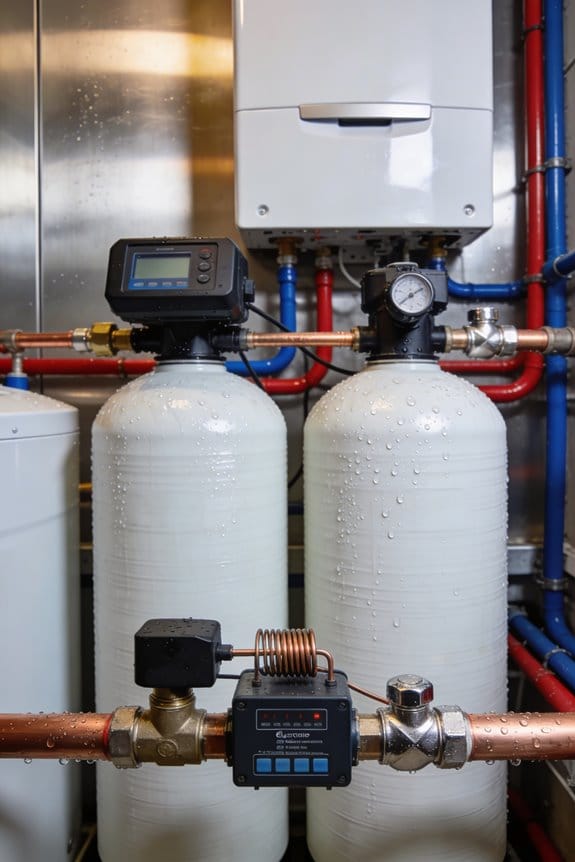
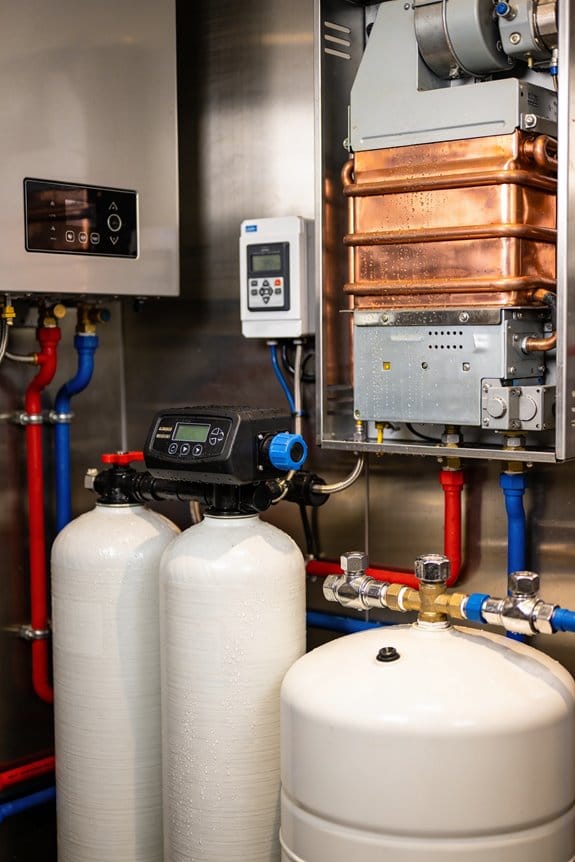
A whole-house water filtration system treats all the water entering your home at the main water line before it flows to your faucets, showers, and appliances. Instead of filtering water at individual locations, this system uses multi-stage filtration—combining different media types like KDF and activated carbon—to remove chlorine, sediment, heavy metals, and other contaminants. You’ll get filtered water everywhere in your home, protecting your appliances and improving overall water quality. The specifics of how these stages work together reveals why they’re worth the investment.
Key Takeaways
- A whole-house system filters your entire home’s water supply at the main line before distribution to all outlets.
- Multi-stage filtration combines KDF media, activated carbon, and sediment filters to remove chlorine, sediment, heavy metals, and contaminants.
- The system maintains 15–20 gallons per minute flow while preserving consistent water pressure during simultaneous appliance use.
- Filtered water protects appliances from scale buildup, extends their lifespans, and reduces energy consumption and utility bills long-term.
- Pre-filters require replacement every six to nine months; main filter media lasts approximately ten years before replacement needed.
How Whole-House Water Filters Work
Since water travels through your home’s pipes to every faucet, shower, and appliance, a whole-house water filtration system works by filtering all that water right at the source—where it enters your home from the main water line. The system uses multi-stage filtration technology, beginning with KDF media that removes harmful chemicals and municipal contaminants. Water then flows through activated carbon filters that target organic compounds and chloramines. Final sediment filters trap remaining particles down to 5 microns. Pressure balancing mechanisms maintain consistent water pressure throughout your home during simultaneous appliance usage. Flow dynamics are carefully designed to deliver 15-20 gallons per minute, ensuring adequate water supply while maintaining filtration effectiveness across all household outlets.
What Contaminants Does a Whole-House Filter Remove?

A whole-house water filter tackles multiple types of contaminants that’d otherwise flow through your home’s pipes to every faucet and appliance. These systems remove chlorine and chloramines, which are chemicals added by municipal water treatment facilities. They also eliminate sediment like sand, silt, and rust particles that can damage appliances and reduce water clarity.
The filters capture volatile organic chemicals, pesticides, and herbicides, which are harmful substances sometimes found in water supplies. Heavy metals and industrial solvents get filtered out as well. Advanced systems address microbial pathogens through UV sterilization, removing 99.99% of viruses and bacteria. Beyond safety, whole-house filters provide taste enhancement by removing odors and improving overall water quality throughout your entire home.
How Multi-Stage Filtration Systems Remove Impurities

To effectively purify your home’s water supply, whole-house filtration systems use multiple stages that work together like a team, each one targeting different types of contaminants. The first stage typically uses KDF media, which removes harmful chemicals and municipal water additives through chemical reactions. Next, activated carbon filters tackle organic contaminants and chloramines, while catalytic carbon media handles stubborn impurities. This media synergy creates an efficient purification process where each filter layer addresses specific particle dynamics and dissolved substances. Final sediment filters, usually rated at 5 microns, trap remaining particles before water reaches your home’s outlets. When these stages work in coordination, they deliver thoroughly filtered water to every faucet, shower, and appliance throughout your house.
Why Whole-House Filters Extend Appliance Life and Cut Costs

Mineral buildup and sediment that flow through unfiltered water act like silent saboteurs inside your home’s appliances, gradually reducing their efficiency and shortening their lifespan. When you install a whole-house filter, you protect your water heater, dishwasher, and washing machine from these damaging particles.
This protection directly increases appliance longevity. Your water heater won’t have to work as hard against mineral deposits, which means it operates more efficiently and lasts considerably longer. The same principle applies to other appliances throughout your home.
Energy savings follow naturally from cleaner water. When appliances function without scale buildup, they consume less energy to heat water and complete cycles. You’ll notice lower utility bills over time, making the filtration system investment cost-effective while simultaneously extending the operational life of expensive household equipment.
Filter Maintenance: Replacement Timelines and Real Costs

While whole-house filters work quietly in the background to protect your appliances and reduce your energy costs, they don’t operate maintenance-free forever. Understanding replacement frequency helps you maintain system effectiveness and plan your household budget accordingly. Pre-filters typically need replacement every six to nine months, depending on your water quality. The main filter media lasts approximately ten years or one million gallons before requiring replacement. Budget planning should account for these periodic costs; pre-filter replacements cost less than media replacements. Tracking your system’s usage helps you anticipate expenses and avoid unexpected water quality decline. Regular maintenance guarantees your whole-house filter continues delivering clean water efficiently throughout your home while protecting your long-term investment in appliances and plumbing systems.
Whole-House vs. Point-of-Use: Which System Fits Your Home?
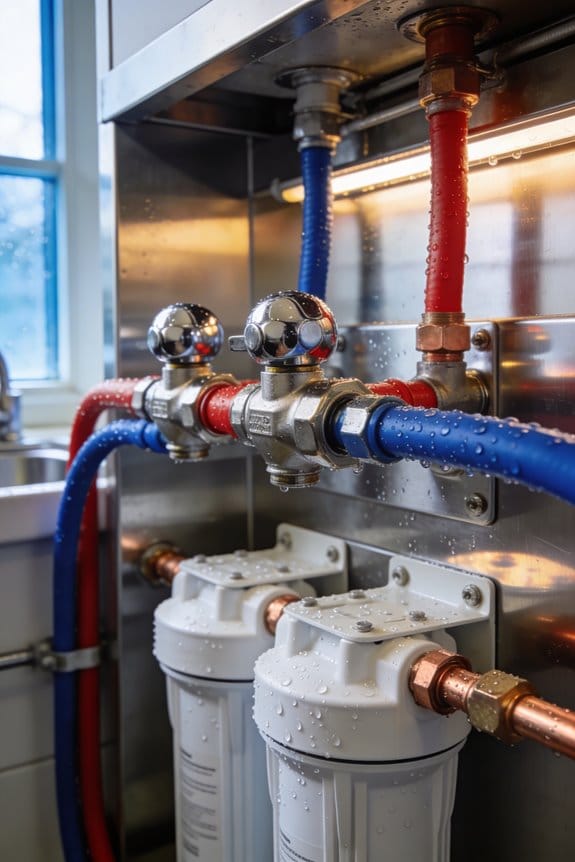
How do you decide between installing a whole-house filtration system and relying on point-of-use filters at individual faucets? Whole-house systems require greater installation complexity since they connect directly to your main water line, but they deliver filtered water everywhere simultaneously. Point-of-use filters are simpler to install under sinks or on countertops, yet they only treat water at specific locations. If you want consistent water aesthetics throughout your home, including improved taste and clarity in showers and appliances, a whole-house system works better. However, if you’re concerned mainly about drinking water quality and prefer minimal installation effort, point-of-use filters might suit your needs. Consider your household size, water quality issues, and budget when choosing between these approaches.
Frequently Asked Questions
Can a Whole-House Water Filter Handle Homes With Multiple Bathrooms and Simultaneous Appliance Usage?
Yes, I can confirm whole-house filters handle multiple bathrooms and simultaneous appliance usage. They’re designed with sufficient flow capacity for peak demand, maintaining water pressure across your home’s installation footprint without compromising performance.
What Water Pressure and Temperature Ranges Do Whole-House Filtration Systems Operate Within Safely?
I’ll guide you through the operating parameters like a steady stream flowing through channels. Your system’s operating pressure ranges from 25-80 PSI, while temperature tolerance spans 36-120°F for safe, reliable performance.
How Long Does a Whole-House Water Filter System Typically Last Before Requiring Replacement?
Your whole-house filter’s lifespan depends on usage, but I’d say you’re looking at 10 years or 1 million gallons before requiring complete media replacement. However, cartridge replacement every 6-9 months keeps it performing at peak efficiency.
Are Whole-House Filters More Cost-Effective Than Purchasing Multiple Point-Of-Use Filtering Systems?
Yes, I’d say whole-house filters are like planting one tree instead of many—they’re pricier upfront but deliver long term savings. You’ll avoid replacing multiple point-of-use systems, making them genuinely cost-effective.
Do Whole-House Water Filters Require Professional Installation or Can Homeowners Install Them Independently?
You can install whole-house filters yourself if you’re handy, though professional installation guarantees proper setup. DIY considerations include shutting off water, understanding plumbing connections, and following manufacturer guidelines carefully for peak performance.