As an Amazon Associate, we earn from qualifying purchases. Some links on this site are affiliate links at no extra cost to you. Our recommendations are based on thorough research and editorial judgment.


What Is TDS (Total Dissolved Solids) and Should You Be Worried?

TDS measures all minerals and salts dissolved in your water, acquired naturally through rock weathering or introduced by human activities like agricultural runoff. While high TDS rarely causes direct health problems unless heavy metals are present, it can damage appliances through scale buildup, alter your water’s taste, and create maintenance issues. The EPA recommends staying below 500 ppm for drinking water quality. If your levels exceed 1,000 ppm, you’ll want to explore what’s driving those numbers and your filtration options.
Key Takeaways
- TDS measures all dissolved substances in water like minerals and salts acquired naturally through rock weathering and human activities.
- EPA recommends keeping drinking water below 500 ppm for taste; concern increases significantly above 1,000 ppm due to appliance issues.
- High TDS is primarily an aesthetic concern causing mineral stains and scale buildup unless heavy metals are present as contaminants.
- Reverse osmosis removes 95–98% of TDS but generates wastewater; distillation and deionization offer alternatives though they’re typically more expensive.
- Portable digital meters provide quick TDS readings in seconds when properly calibrated with known solutions for accurate field assessments.
What TDS Actually Means and Where It Comes From
Let me break down what TDS really is: it’s a measurement of all the stuff dissolved in water that isn’t the water itself. These dissolved particles include cations like calcium and magnesium, along with anions such as chloride and sulfate. When water flows through rocks and soil, it naturally picks up these minerals through weathering processes. Human activities also contribute—municipal water treatment, plumbing systems, and surface runoff from pesticides add dissolved solids too. Understanding molecular speciation helps explain how different ions behave in water. Some water treatment methods, like ion exchange, remove these dissolved substances by replacing unwanted ions with others. Knowing where your TDS comes from helps you understand your water’s quality and whether filtration’s necessary for your home.
How to Measure TDS in Your Water?

Once you understand what TDS is and where it comes from, you’ll want to know how to actually measure it in your own water. I’ll explain the most practical methods you can use.
Digital portable meters represent the quickest option. These handheld devices emit a small electrical current through your water sample, then convert the conductivity reading into a TDS measurement. You’ll get results in seconds.
For accuracy, you’ll need calibration solutions—reference liquids with known TDS values that help make sure your meter reads correctly. Most portable meters come with these solutions included.
Alternatively, gravimetric testing involves evaporating water and weighing the remaining residue, though it’s time-consuming. Test strips offer quick field assessments too. Each method has trade-offs between speed, accuracy, and convenience for home use.
When Should You Worry About High TDS?

Now that you know how to measure TDS in your water, the next question becomes whether you should actually be concerned about what those numbers mean. You’ll want to worry about high TDS when levels exceed 1,000 ppm, though this primarily affects taste and appliance efficiency rather than direct health risks. However, source tracing becomes important because high TDS can indicate harmful contaminants like heavy metals present in your water. If your TDS reading surpasses 2,000 ppm, filtration becomes challenging. The EPA recommends staying below 500 ppm for drinking water palatability. Unless heavy metals are present, high TDS isn’t a serious health concern, but it warrants investigation to understand what’s dissolved in your water supply.
What Causes High TDS in Your Water?

Understanding what raises TDS levels in your water requires examining both natural and human-made sources that dissolve minerals and substances into your supply. Natural sources include rock and soil weathering, which gradually releases calcium, magnesium, and other minerals into groundwater. Human activities contribute materially too. Agricultural runoff carries fertilizers and pesticides into water sources, while industrial discharge introduces various compounds during manufacturing processes. Municipal water treatment and plumbing systems can add dissolved solids as water travels through pipes and infrastructure. Surface runoff from roads and urban areas introduces additional contaminants. These combined sources explain why TDS levels vary geographically. I recommend testing your water regularly to understand your local TDS profile and identify whether natural geology or human activity drives your results.
How High TDS Affects Your Appliances, Taste, and Skin?

High TDS levels create a ripple effect throughout your daily life, impacting not just how your water tastes but also how your appliances perform and how your skin responds to regular water exposure. When you have high TDS, mineral staining becomes visible on fixtures and glassware, while scale buildup accumulates inside water heaters and pipes, reducing their efficiency. The dissolved minerals alter your water’s flavor, making it taste flat or slightly bitter. On your skin, high TDS water can leave residue, potentially causing dryness or irritation, especially for sensitive individuals. Your hair may feel sticky or limp after washing. Beyond comfort issues, scale buildup forces appliances to work harder, consuming more energy and shortening their lifespan markedly.
How to Lower TDS in Your Water
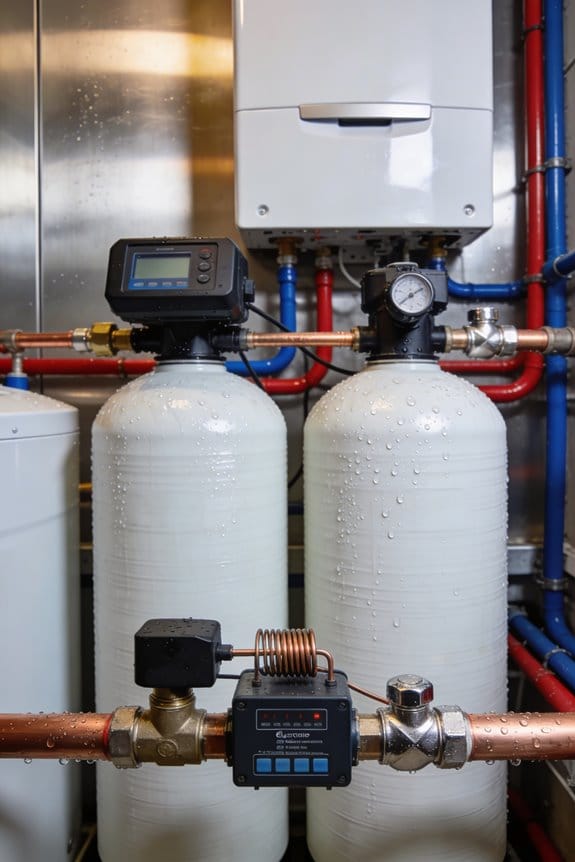
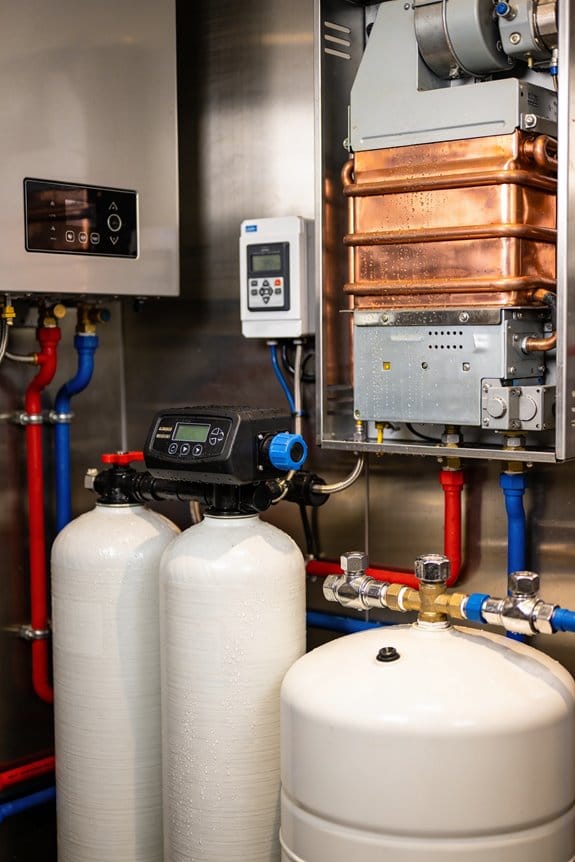
Since high TDS levels create scale buildup, affect taste, and reduce appliance efficiency, you’ll want to know the methods available to reduce dissolved solids in your water. Reverse osmosis stands as the most effective treatment option, forcing water through a semipermeable membrane that traps dissolved minerals and contaminants. This process removes approximately 95-98% of TDS, though it generates wastewater during filtration. For whole-house systems, periodic flushing of water softeners helps maintain their effectiveness by removing accumulated minerals. Distillation and deionization offer alternative approaches, though they’re generally more expensive. Activated carbon filters provide limited TDS reduction but improve taste and odor. Combining multiple filtration methods often yields better results than relying on a single treatment approach, ensuring improved water quality throughout your home.
Frequently Asked Questions
Is TDS the Same as Water Hardness, or Are They Different Measurements?
They’re different measurements. TDS measures your water’s total ionic concentration of all dissolved substances, while hardness specifically gauges mineral content—primarily calcium and magnesium. I’d say TDS is broader than hardness.
Can TDS Levels Vary Seasonally or Change Throughout the Year?
Yes, TDS levels fluctuate seasonally. I’ve found that heavy rainfall dilutes dissolved solids, while dry periods concentrate them. Seasonal fluctuations and rainfall influence directly affect your water’s mineral content throughout the year.
What’s the Difference Between Natural TDS and TDS From Pollution?
I’d say natural sources like rock and soil weathering create baseline TDS, while industrial contamination from runoff and municipal treatment adds harmful pollutants like pesticides and heavy metals that threaten your water quality.
Are There Specific TDS Levels Recommended for Different Water Uses?
I’d say different water uses definitely have their own acceptable ranges and usage guidelines. Drinking water should stay under 500 ppm, while irrigation tolerates higher levels, and industrial applications vary widely depending on specific needs.
How Do TDS Levels Compare Between Tap Water and Bottled Water?
Like Pandora’s box, I’ve found bottled water’s TDS varies wildly—sometimes lower than tap, sometimes higher. Source tracing reveals bottled variability depends entirely on origin: mineral springs contain more dissolved solids than purified sources.