As an Amazon Associate, we earn from qualifying purchases. Some links on this site are affiliate links at no extra cost to you. Our recommendations are based on thorough research and editorial judgment.

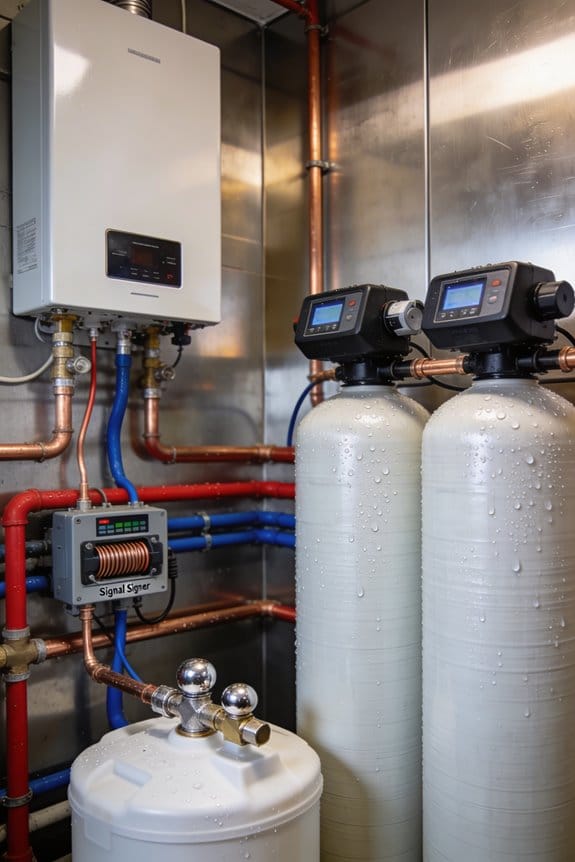
Portable Water Softeners: Who Needs One and How Do They Work?

If you own an RV, boat, or live off-grid, you’re probably dealing with hard water that damages your pipes and appliances. Portable water softeners use ion-exchange technology to remove calcium and magnesium minerals before they cause costly problems. The resin beads inside attract these hardness minerals and replace them with softer sodium ions. You’ll regenerate the softener monthly using salt, a process taking about an hour. Choosing the right capacity and understanding proper maintenance will help you maximize your investment and protect your water systems.
Key Takeaways
- RV owners, boat operators, mobile home residents, and off-grid cabin users benefit most from portable water softeners for convenient hard water treatment.
- Portable softeners use cation-exchange resin beads to capture calcium and magnesium ions, releasing softer sodium ions into water instead.
- Regeneration cycles take approximately one hour, using canning salt or softener salt to restore resin capacity without requiring electricity.
- Match softener capacity and flow rate (3–12 GPM) to your water hardness level and daily usage needs for optimal performance.
- Monitor resin performance with hardness test strips, clean pre-filters regularly, and use appropriate salt to maintain long-term softener efficiency.
Hard Water Problems You’re Likely Experiencing Right Now
If you’ve noticed a white, chalky buildup around your faucets or felt a filmy residue on your skin after showering, you’re likely dealing with hard water—a common issue that stems from high concentrations of dissolved minerals, primarily calcium and magnesium, in your water supply. This scale buildup accumulates on pipes, fixtures, and appliances, reducing their efficiency and lifespan. Hard water also prevents soap from lathering properly, leaving you with dry skin and dull hair. Your water heater works harder to maintain temperature when mineral deposits form inside, increasing energy costs. Clothes washed in hard water may feel stiff and fade faster. These problems affect RVers, boat owners, and mobile home residents particularly, since they often encounter varying water sources while traveling.
Who Benefits Most From a Portable Water Softener

Since portable water softeners address the hard water problems we’ve discussed, certain groups experience the most dramatic improvements in their daily lives. RVers benefits include preventing limescale in tanks and appliances while traveling, extending equipment lifespan markedly. Marine owners gain protection against corrosion and scaling in boat systems, which is especially critical in saltwater environments. Mobile home residents who lack permanent plumbing installations find portable softeners indispensable for daily water needs. Off-grid cabin owners and seasonal retreat users also benefit substantially, since they often encounter harder water sources without access to municipal softening systems. Additionally, light manufacturers and craft operations requiring processed water discover improved efficiency and reduced mineral-related complications. These groups collectively represent those who’ll notice the most noticeable quality-of-life improvements from portable softening technology.
How Water Softeners Remove Hard Water Minerals

The magic behind portable water softeners lies in a process called cation-exchange, which is how they actually remove the minerals that make water hard. Inside the unit, specially designed resin beads attract calcium and magnesium ions from your water. As hard water passes through the resin, these mineral ions stick to the beads while softer ions are released into your water supply.
When the resin becomes saturated with hardness minerals, you’ll need resin replacement or regeneration using salt. This process recharges the resin beads, restoring their ability to perform ion exchange again. The entire regeneration typically takes about one hour, making portable softeners practical for RV owners and travelers who need consistent soft water without complicated maintenance or electricity requirements.
Portable vs. Whole-Home Softeners: Which Fits Your Lifestyle?

When you’re deciding between a portable water softener and a whole-home system, your living situation and water needs should guide your choice. Portable softeners offer superior space efficiency for RVs, boats, and apartments where permanent installation isn’t possible. They’re ideal if your lifestyle involves frequent travel or seasonal occupancy. Whole-home systems require dedicated plumbing but treat all water throughout your residence. Consider upfront cost: portables cost less initially, while whole-home units demand professional installation. However, whole-home systems deliver long term savings through reduced maintenance and broader water treatment coverage. Evaluate your water usage patterns, available space, and whether you’re stationary or mobile. Your specific circumstances determine which option maximizes both convenience and value for your situation.
Pick the Right Softener Capacity for Your Needs

Once you’ve decided that a portable softener matches your lifestyle, you’ll want to match its capacity to your actual water demands. Start by calculating your usage estimates for daily activities—showering, laundry, and cooking—then compare that figure to the softener’s flow capacity, typically ranging from 3 to 12 GPM.
For an RV or small boat, a lower-capacity unit around 16,000 grain units handles light usage effectively. If you’re running a mobile car wash or managing a larger household, you’ll need higher capacity to prevent the resin from exhausting too quickly between regenerations.
Consider your water hardness level too. Harder water depletes resin faster, requiring more frequent salt regeneration. Match your specific lifestyle demands to the unit’s specifications for peak performance and cost-effectiveness.
How to Regenerate Your Portable Water Softener
After your portable water softener has processed water for a period of time, the resin beads inside become saturated with calcium and magnesium minerals and lose their ability to soften water effectively. Regeneration restores these beads to working condition through a salt-based process. You’ll need to add canning salt or specialized salt types designed for water softeners into the brine tank. The salt dissolves to create a brine concentration—a saltwater solution—that flows through the resin. This high brine concentration pulls the trapped minerals from the beads, replacing them with sodium ions. The regeneration cycle typically takes about one hour and requires no electricity, relying solely on water pressure to push the solution through your system.
Installing and Maintaining Your Portable Softener
Setting up your portable water softener correctly guarantees it’ll work efficiently from day one, and proper maintenance keeps it functioning well for years to come. Start by connecting inlet and outlet hoses securely to prevent leaks. Consider portable mounting options that fit your RV or boat’s layout, ensuring accessibility for regeneration. Check all connections before running water through the system.
Regular maintenance involves monitoring resin performance using hardness test strips. Clean pre-filters every few months to prevent sediment buildup. For seasonal winterization, drain all water from the tank and hoses if storing in freezing temperatures. This protects the resin from damage.
Replace cation-exchange resin when softening capacity decreases markedly. Keep regeneration salt stocked for routine maintenance cycles, typically needed every few weeks depending on water hardness and usage volume.
Common Regeneration Mistakes and How to Avoid Them
Since your portable water softener depends on proper regeneration to maintain its softening capacity, understanding the most common mistakes can help you guarantee costly damage to your system. First, don’t skip salt storage best practices—keep your salt in a dry location away from moisture, which can clump and prevent proper dissolving. Second, avoid cross contamination risks by using only food-grade salt or specialized iron removers during regeneration, never regular table salt with additives. Third, don’t rush the regeneration cycle; allowing the full hour ensures complete resin recharging. Finally, test your water hardness regularly with provided strips to determine when regeneration’s needed, preventing both over-treatment and under-treatment that can damage your appliances.
Frequently Asked Questions
Can Portable Water Softeners Handle Iron-Rich or Sediment-Heavy Water Sources?
I’d recommend pairing your softener with a pre-filter for sediment filtration and considering iron removal options separately. The included 5-micron pre-filters help, but heavily iron-rich water needs specialized treatment alongside softening for peak performance.
How Long Does Resin Typically Last Before Needing Replacement?
I’ll tell you resin typically lasts 5-10 years before resin degradation reduces exchange capacity. You’ll notice softening performance declining, requiring replacement when regeneration can’t restore effectiveness anymore.
What’s the Cost Difference Between Portable and Whole-Home Softening Systems?
I’d say portable softeners cost $300–$800 initially, while whole-home systems run $1,500–$4,000. You’ll find maintenance costs lower for portables since you’re just replacing salt periodically versus professional servicing.
Are Portable Softeners Safe for Drinking Water and Food Preparation?
I’ve found that 85% of Americans have hard water concerns. Yes, they’re safe for drinking and food prep—they reduce taste concerns and don’t create health impacts. You’re simply removing minerals, not adding chemicals.
Can Portable Softeners Work With Well Water or Only Municipal Supplies?
I’ll tell you they work great with well water and private wells. You’ll just need to test your groundwater sources first since rural homes often have higher mineral content requiring more frequent regeneration cycles.