As an Amazon Associate, we earn from qualifying purchases. Some links on this site are affiliate links at no extra cost to you. Our recommendations are based on thorough research and editorial judgment.

What Size Tankless Water Heater Do I Need for a Family of 4?

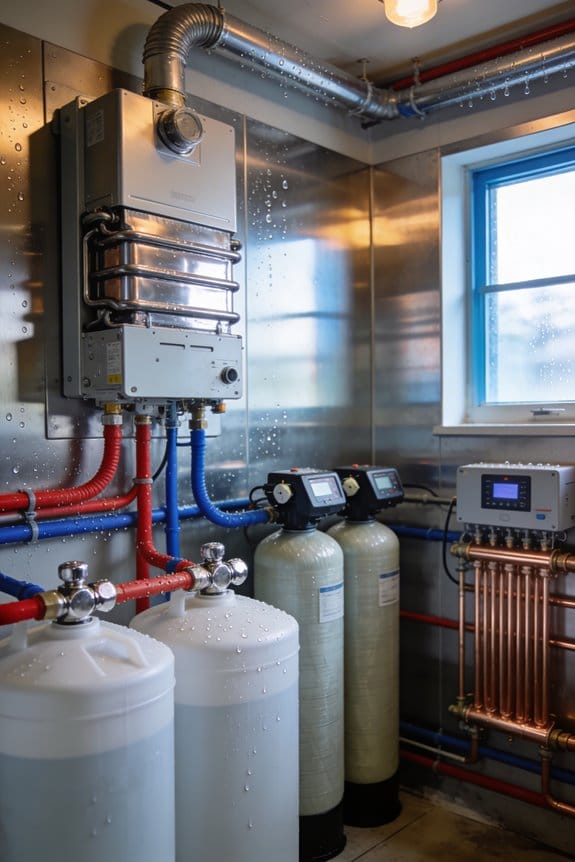
For a family of four, you’ll need an 8–10 GPM (gallons per minute) tankless water heater. This capacity handles simultaneous demands like two showers running with a kitchen faucet without temperature drops. GPM measures how much hot water your system delivers at any moment, so proper sizing prevents cold water surprises. Your climate affects the BTU output you’ll need—colder regions require more heating power. Setting your temperature to 120°F balances safety and energy efficiency, and understanding these factors helps you choose the right system.
Key Takeaways
- An 8–10 GPM tankless water heater typically handles a family of four’s simultaneous hot water demands efficiently.
- Peak demand calculation requires summing fixture flow rates: two showers (5 GPM) plus kitchen faucet (2.5 GPM) equals 7.5 GPM minimum.
- A single 8.5–10 GPM unit provides endless hot water while maximizing energy efficiency for most households.
- Higher BTU output (380,000+) accommodates simultaneous fixtures through heat staging without temperature loss in colder climates.
- Set temperature to 120°F for safety, energy savings, and sufficient warmth for showers, dishwashing, and laundry.
Why GPM Matters in Tankless Water Heater Sizing
Why does GPM matter so much when you’re choosing a tankless water heater for your home? GPM, or gallons per minute, measures how much hot water your system delivers at any given moment. Unlike traditional tank heaters that store water, tankless systems rely on flow rate to meet your household’s demands. When you shower while someone runs the kitchen faucet, you’re experiencing flow variability—multiple fixtures drawing water simultaneously. Your heater must handle this combined demand instantly. A properly sized unit prevents cold water surprises and guarantees consistent comfort. Understanding GPM requirements helps you avoid undersized systems that can’t meet peak usage. Additionally, matching your system’s capacity to actual needs supports effective maintenance scheduling, keeping your investment running efficiently for years.
Calculate Your Peak Water Demand
Determining your peak water demand requires adding up the flow rates of all fixtures that might run at the same time in your home, since this represents the most challenging moment for your tankless water heater. Consider your typical usage patterns, such as whether someone showers while another person uses the kitchen faucet. Most standard fixtures flow at specific rates: showerheads deliver approximately 2.5 gallons per minute, while bathroom faucets produce around 0.75 GPM. Your dishwasher and washing machine each consume roughly 1.5 to 2 GPM. By identifying your peak fixtures and calculating their combined flow rate, you’ll determine the minimum GPM capacity your tankless system requires to handle simultaneous demands without losing hot water pressure throughout your home.
The 8-10 GPM Tankless Heater Size for Families of Four
Based on your peak water demand calculation, you’ll typically find that an 8-10 GPM tankless water heater represents the ideal capacity for most families of four. This flow rate accommodates simultaneous usage of multiple fixtures, such as two showers and a kitchen faucet operating together. A single high-capacity unit within this range provides endless hot water supply while maximizing energy efficiency by heating water only when needed. When selecting your system, consider maintenance tips like annual flushing to prevent mineral buildup, which guarantees optimal performance and longevity. This sizing prevents the system from being undersized, which would cause temperature fluctuations, while avoiding unnecessary oversizing that wastes resources and increases operational costs for your household.
One Unit or Two?
Once you’ve settled on the 8-10 GPM capacity range, you’ll face another decision: should you install one unit or two?
For most four-person households, a single properly sized tankless heater handles all your hot water needs efficiently. One high-capacity unit of 8.5-10 GPM provides sufficient flow for simultaneous fixtures like showers, dishwashers, and faucets without complications.
However, some homeowners prefer two units for installation redundancy and system zoning. This approach offers backup protection if one unit fails, ensuring you’ll still have hot water. Additionally, zoning lets you direct hot water to specific areas of your home independently.
Two 7 GPM units represent a viable alternative configuration. Ultimately, your choice depends on your priorities, budget, and whether your gas venting and electrical systems support multiple installations.
How BTU Output Enables Simultaneous Hot Water Use
The higher your tankless water heater‘s BTU output, the more hot water it can deliver simultaneously to multiple fixtures in your home. I’ll explain why this matters for your family.
A 380,000 BTU system gives you the capacity to run two showers and a kitchen faucet at the same time without losing temperature. This works through heat staging, where the system gradually increases heating power as demand rises. Modulation efficiency guarantees your heater uses only the energy needed, adjusting its output automatically when fewer fixtures run.
Think of it this way: more BTUs mean faster heating and stronger performance during peak usage. Without sufficient BTU capacity, your water temperature drops when multiple people use hot water simultaneously. Proper sizing prevents cold showers and guarantees consistent comfort throughout your home.
Why Your Climate Affects Tankless Heater Sizing
Since incoming water temperature varies dramatically depending on where you live, your tankless water heater must be sized accordingly to meet your family’s hot water needs. In colder climates, incoming groundwater arrives much colder than in warmer regions, requiring your heater to work harder and deliver more BTUs to reach your desired temperature. This temperature difference, called the “temperature rise,” directly impacts your sizing calculations. Seasonal variance also matters—winter months bring colder water than summer months, so you’ll need a system that handles your coldest season. A family of four in Minnesota, for example, needs considerably more heating capacity than the same family in Florida, where incoming water temperatures remain naturally warmer year-round.
Set Your Temperature to 120°F for Safety
After you’ve selected the right-sized tankless water heater for your family of four, setting the temperature correctly becomes your next critical step, and I’d strongly recommend keeping it at 120 degrees Fahrenheit rather than the higher 140-degree setting that some people choose. The 120-degree setting protects your family from child scalding risks, which can occur rapidly with hotter water. Beyond safety, this temperature provides energy savings by reducing the workload on your heating system. Most households find 120 degrees adequately warm for showers, dishwashing, and laundry. If you have young children in your home, this lower setting becomes especially important. Water temperature consistency matters substantially for both operational efficiency and household protection, making proper adjustment essential after installation.
Frequently Asked Questions
Can I Upgrade My Tankless Water Heater Later if My Household Needs Change?
Yes, you can upgrade your tankless water heater later if your household needs change. I’d recommend verifying your home’s electrical considerations and gas venting capacity first, as capacity upgrades require proper infrastructure support.
What Are the Installation Costs for a Tankless Water Heater for Four People?
I’ve seen families save thousands when they discovered energy rebates offset installation costs. You’re looking at $1,500–$3,000 installed, but don’t forget installation permits and potential utility incentives that’ll reduce your actual expense markedly.
How Long Do Tankless Water Heaters Typically Last Before Replacement?
I’d say tankless water heaters typically last 20-30 years, though lifespan estimates vary based on maintenance and water quality. Most manufacturers offer warranty coverage ranging from 5-15 years, protecting your investment.
Do Tankless Heaters Work Effectively in Extremely Cold Climates or High Altitudes?
I’d say yes, but you’ll need adjustments. Imagine a Denver family struggling with cold climate performance—they’d require higher BTU output. Altitude adjustments and incoming water temperature become critical factors for reliable hot water delivery.
What Maintenance Schedule Keeps a Tankless Water Heater Running Efficiently Long-Term?
I’d recommend annual descaling to prevent mineral buildup and regular filter replacement to maintain water quality. These two maintenance tasks will keep your tankless heater running efficiently and extend its operational lifespan markedly.