As an Amazon Associate, we earn from qualifying purchases. Some links on this site are affiliate links at no extra cost to you. Our recommendations are based on thorough research and editorial judgment.

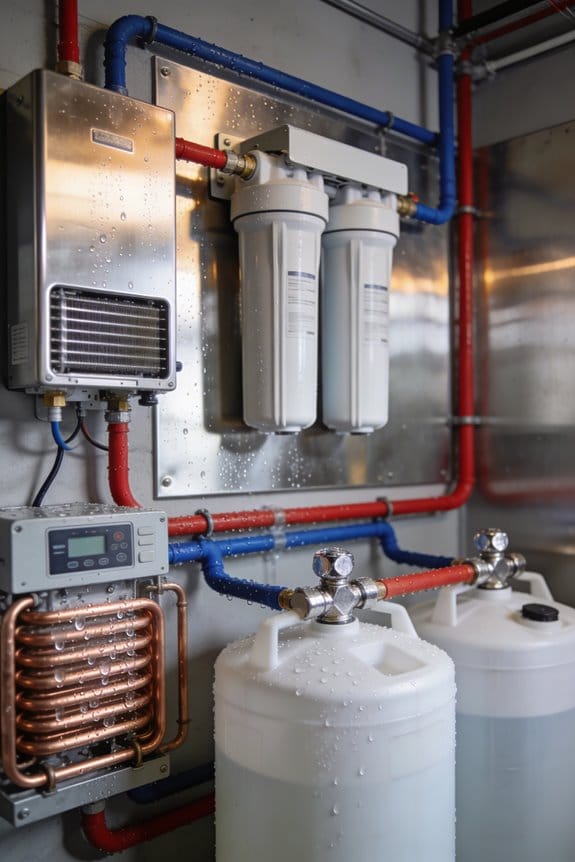
What Are the Pros and Cons of a Tankless Water Heater?

Tankless water heaters cut energy consumption by 30-50% compared to traditional tanks, eliminating standby heat loss and saving around $100 annually for lower-use households. However, they cost roughly $4,400 to install and require annual maintenance like descaling. You’ll need climate-specific sizing to avoid temperature inconsistencies, and possible upgrades to gas lines or electrical circuits. For households using less than 41 gallons daily, you’ll recoup your investment in 8-12 years through savings. Understanding your specific usage patterns and local energy costs helps determine if this investment makes sense for your home.
Key Takeaways
- Energy Efficiency Pro: Tankless water heaters reduce energy consumption by 30-50% compared to traditional tank systems through demand-based activation.
- Higher Upfront Cost Con: Installation typically costs around $4,400, including potential upgrades to gas lines, electrical circuits, and venting requirements.
- Payback Timeline Pro: Lower-usage households recoup their investment in 8-12 years through cumulative energy savings of approximately $2,000 over 20 years.
- Maintenance Con: Regular annual descaling and professional service contracts ($150-300/year) are essential, especially in hard-water areas, due to continuous operation demands.
- Flow Rate Consideration Con: Undersizing causes temperature inconsistencies during simultaneous hot water use, while oversizing unnecessarily increases upfront costs and complexity.
How Tankless Water Heaters Cut Energy and Costs
Tankless water heaters consistently reduce energy consumption by 30-50% compared to traditional tank-based systems, which means they’ll help you save money on your utility bills month after month. Unlike conventional heaters that continuously reheat stored water, tankless models use demand activation—they only operate when you turn on a hot water faucet. This eliminates wasteful standby heat loss that drains energy constantly. For homes using less than 41 gallons daily, you’ll gain 24-34% better efficiency, according to the US Department of Energy. By implementing energy monitoring practices, you can track your savings and discover additional ways to conserve. Over 20 years, most households save approximately $2,000 on utility expenses, making the initial investment worthwhile despite higher upfront costs.
Sizing Tankless for Your Home: Flow Rate Reality

One critical factor that often gets overlooked when choosing a water heater is flow rate, which measures how much hot water your unit can deliver per minute, typically expressed in gallons per minute or GPM. I recommend evaluating your household’s simultaneous hot water needs through fixture prioritization, identifying which appliances you’ll likely use together. A shower typically requires 2.5 GPM, while a dishwasher uses 1.5 GPM. You’ll also want to consider climate adjustment, since homes in colder regions need higher flow rates to heat incoming water adequately. Undersizing your unit risks inconsistent temperatures during peak usage, while oversizing increases your initial investment unnecessarily. Calculating your actual requirements prevents costly mistakes and guarantees reliable hot water delivery.
Installation Costs and Infrastructure Upgrades Required

While calculating your home’s flow rate needs helps you select the right unit size, understanding the financial reality of installation reveals why tankless water heaters demand a larger upfront investment than traditional tank systems. Installation costs approximately $4,400, but this figure varies based on your existing infrastructure. Many homes require upgrades to gas pipes or electrical circuits to support the unit’s power demands. Venting requirements for gas-fired models may necessitate additional ductwork installation. You’ll also need to account for permit timelines, which can extend your project duration. These infrastructure modifications, combined with professional installation fees, explain why tankless systems cost markedly more upfront than conventional water heaters, requiring extended ownership to recoup expenses through energy savings.
The Maintenance Cycle: What to Budget For

Because tankless water heaters operate continuously on demand without the sediment buildup protection that traditional tanks provide, you’ll need to commit to regular maintenance to keep your system running efficiently. Annual descaling is essential, particularly if you live in an area with hard water, since mineral deposits can reduce performance and damage internal components. I’d recommend setting up service contracts with licensed plumbers to handle this specialized work, as it requires professional expertise. These maintenance plans typically cost between $150-300 yearly and include inspections, descaling, and repairs. While this ongoing expense might seem burdensome, it’s actually less costly than dealing with catastrophic failures that tank systems experience, and it guarantees your tankless heater reaches its full 15-20 year lifespan.
When Tankless Pays for Itself: Long-Term Savings Analysis

Although tankless water heaters cost substantially more upfront than traditional tank models, the energy savings they generate over time can eventually offset this initial investment. Your payback timeline depends on several factors, particularly your usage patterns and local energy costs. Households using less than 41 gallons daily see 24-34% energy efficiency gains, saving over $100 annually. With these savings, most homeowners recoup their investment within 8-12 years. Those with higher hot water demands may experience faster payback periods. Over a 20-year lifespan, you’ll save approximately $2,000 compared to traditional systems. Additionally, tankless units last 15-20 years, extending your savings window. Understanding your household’s specific hot water consumption helps determine whether the long-term financial benefits align with your situation.
Frequently Asked Questions
How Long Do Tankless Water Heaters Typically Last Compared to Traditional Models?
Tankless water heaters typically last 15-20 years or more, outpacing traditional tank models that last 10-15 years. I’ve found their extended service lifespan results from simpler design and reduced component wear, making them a worthwhile long-term investment.
Can Tankless Water Heaters Operate During Power Outages or Blackouts?
Like a ship without its compass, your tankless heater won’t function during blackouts unless you’ve installed a battery backup. I’d recommend exploring manual bypass options to maintain hot water access when power fails.
What Is the Difference Between Gas-Fired and Electric Tankless Water Heaters?
I’ll explain the gas vs electric installation differences. Gas-fired models need larger gas pipes and ventilation systems, while electric units require upgraded electrical circuits. Gas heaters typically cost more to install but heat water faster than their electric counterparts.
Do Tankless Water Heaters Require More Frequent Repairs Than Tank-Based Systems?
I’d argue that unlike Sisyphus with his boulder, you won’t face endless repairs. Tankless systems require less frequent maintenance frequency than tanks, though component wear demands annual descaling—especially with hard water—to keep yours running smoothly.
How Does Hard Water Affect Tankless Water Heater Performance and Longevity?
Hard water causes scale buildup and mineral corrosion inside your tankless heater, reducing efficiency and lifespan. I’d recommend annual descaling maintenance to combat this issue, especially if you’re in a hard water area.