As an Amazon Associate, we earn from qualifying purchases. Some links on this site are affiliate links at no extra cost to you. Our recommendations are based on thorough research and editorial judgment.

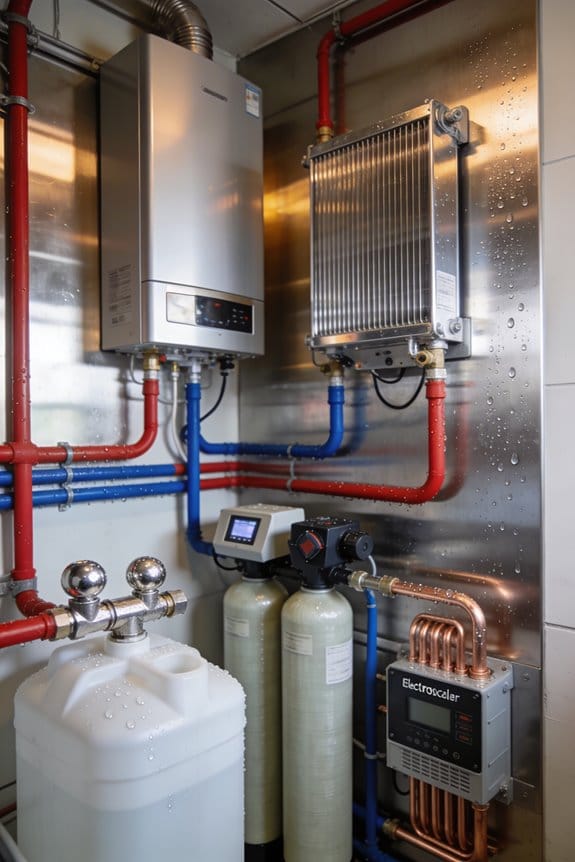
How Much Hot Water Can a Tankless Water Heater Actually Produce?

A tankless water heater’s capacity isn’t measured in gallons—it’s measured in gallons per minute (GPM), which tells you how much hot water flows simultaneously. A unit rated for 8.5 GPM can handle a shower and kitchen sink running together. However, cold climates reduce this flow because the heater must work harder reaching your desired temperature. Your actual performance depends on your local water temperature and which fixtures you’re using at once, so understanding your household’s peak demand matters greatly.
Key Takeaways
- Tankless heaters produce hot water continuously based on GPM (gallons per minute) capacity, not stored tank volume.
- Flow rate depends on temperature rise needed; colder inlet water reduces GPM output to reach desired temperature.
- Peak demand is calculated by adding simultaneous fixture flow rates—shower plus sink typically requires 3.5–4.3 GPM.
- Most households need 8.5–10 GPM capacity for multiple simultaneous fixtures without pressure loss or temperature drops.
- Local water temperature and climate significantly affect real-world GPM performance; colder regions require greater temperature rise capacity.
What GPM Really Means for Your Tankless Heater
When you’re shopping for a tankless water heater, you’ll run into the term “GPM” constantly, and understanding what it means can help you make a better decision for your home. GPM stands for gallons per minute, which measures how much hot water your heater can deliver at any given moment. Think of it as flow dynamics—the actual volume of water moving through your pipes simultaneously. Higher GPM ratings mean you can run multiple fixtures at once without losing water pressure or temperature. Your heater’s energy draw increases as flow demands rise, so understanding your household’s peak usage helps you choose the right capacity without overspending on unnecessary power.
How Water Temperature Reduces Your Flow Rate

Because tankless water heaters must heat incoming water to your desired temperature, they face a fundamental limitation: the colder the water entering your system, the lower the flow rate your heater can deliver. This relationship between temperature rise and flow throttling determines your unit’s real-world performance. When groundwater arrives at 50°F and you want 120°F output, your heater must manage a 70-degree temperature drop. This significant temperature differential forces the unit to reduce flow rates, sometimes substantially. Conversely, if you live in Florida where incoming water reaches 65°F, you’ll experience less flow throttling and maintain higher GPM. Understanding your local water temperature helps you select the appropriate heater capacity, ensuring adequate hot water during peak usage without performance disappointment.
Size Your Heater by Household Demand, Not Tank Gallons

Unlike tank water heaters, which you size by storage capacity in gallons, tankless models require a completely different approach based on how much hot water your household actually needs at peak times. Instead of thinking about tank size, I’ll help you focus on GPM capacity that matches your occupant habits and usage patterns. Your household’s simultaneous fixture demands determine the right heater. For example, if you typically run a shower while someone uses the kitchen sink, you’d need approximately 4.3 GPM. A family of four with regular multi-fixture usage demands 8.5 to 10 GPM. By calculating your realistic peak demands, you’ll select a tankless unit that delivers consistent hot water without undersizing or overspending on unnecessary capacity.
Calculate Your Peak Hot Water Demand

To find the right tankless water heater for your home, you’ll need to determine your peak hot water demand by adding up the flow rates of all the fixtures you’d realistically use at the same time. I recommend listing your simultaneous spikes in usage, such as running a shower while someone uses the kitchen faucet and the dishwasher operates. A shower requires 2.5 GPM, a faucet uses 1 GPM, and a dishwasher demands 2-3 GPM, totaling around 5.5-6.5 GPM combined. Understanding peak scheduling helps you identify your maximum simultaneous demand. Most households experience their highest demand during morning routines or evening cleanup periods. Once you’ve calculated this total, you’ll know the minimum GPM capacity your heater needs to handle all simultaneous fixtures comfortably.
Common Appliance Combinations and Their GPM Requirements

Now that you’ve calculated your peak demand, it’s helpful to examine real-world scenarios showing how different appliances combine during typical daily routines. Morning shower clusters often create the highest demand, with a shower (2.5 GPM) plus a sink faucet (1 GPM) reaching 3.5 GPM simultaneously. Laundry overlap scenarios add complexity—running a clothes washer (3-5 GPM) while someone showers means you’d need 5.5-7.5 GPM capacity. A dishwasher running during a shower reaches 4.5-5.5 GPM combined. Understanding these realistic combinations helps you select the right heater size. Most households experience their peak demand during morning routines, so sizing your unit around these common scenarios guarantees consistent hot water availability.
How Your Climate Affects Flow Rate
Your climate plays a vital role in determining the flow rate your tankless water heater must deliver, since the temperature of your incoming water varies dramatically depending on where you live. Climate variability directly impacts how much energy your heater must add to reach your desired temperature.
In colder regions like Minnesota, where regional inlet temperature hovers around 60°F, you’ll need a heater that can produce more hot water because it must raise the water’s temperature by 60-65°F. Conversely, Florida’s warmer groundwater at 70-75°F requires only a 35°F rise, allowing smaller units to meet your household’s demands.
I’d recommend checking your area’s typical groundwater temperature, then calculating the temperature rise needed for your 120-125°F target. This guarantees you choose the right GPM capacity for your climate’s conditions.
Tankless vs. Tank: Why GPM Wins
Once you’ve matched your tankless unit’s output to your climate’s temperature rise, you’ll notice a fundamental difference between how tankless and traditional tank water heaters measure capacity. Tank models use gallons—typically 40 to 75—storing hot water that gradually cools. Tankless units use GPM, heating water on demand without storage limits. This distinction matters because tankless heaters deliver continuous hot water at their rated flow rate, whereas tanks eventually run empty. Though initial installation cost runs higher for tankless systems, they’re 8 to 34 percent more energy efficient, reducing utility bills over time. You’re paying for performance and savings rather than storage space, making GPM the superior measurement for understanding real household capacity.
The Risks of Undersizing Your Unit
Because selecting a tankless water heater with insufficient GPM capacity creates immediate and ongoing problems, understanding these risks helps you make a better purchasing decision. When you choose an undersized unit, you’ll experience reduced water pressure during simultaneous fixture usage, meaning your shower weakens while someone uses the kitchen faucet. This frustration compounds when multiple appliances run together. Additionally, undersizing stresses your system’s heating elements, accelerating wear and potentially causing system failure. More seriously, installing an inadequately sized heater may result in warranty voidance from manufacturers who specify minimum GPM requirements for your household size. You’ll also face higher energy costs as the stressed system works inefficiently. Proper sizing guarantees reliable performance, protects your warranty coverage, and delivers consistent hot water when you need it most.
Frequently Asked Questions
Can I Upgrade My Tankless Heater’s GPM Capacity After Installation?
Upgrading your tankless heater’s GPM capacity is like replacing an engine—it’s not a simple tune-up. You’d need a complete unit replacement, plus plumbing retrofit work and potentially an electrical upgrade to handle the higher demands.
How Often Do Tankless Water Heaters Need Maintenance for Optimal Flow Performance?
I’d recommend you perform an annual flush and filter replacement to maintain peak flow performance. These routine maintenance tasks prevent mineral buildup that reduces your heater’s GPM capacity and efficiency over time.
Does Water Pressure in My Home Affect the Heater’s Actual GPM Output?
Yes, water pressure markedly impacts your heater’s GPM output. Since pipe sizing affects actual flow volume, I’d recommend checking your home’s pressure and fixture count—lower pressure reduces the rated GPM you’ll actually achieve.
What’s the Typical Lifespan of a Tankless Unit Before Flow Rate Diminishes?
Most tankless units maintain peak flow rates for 15-20 years, though I’d recommend annual flushing to prevent scale degradation and mineral buildup. These deposits reduce your GPM output markedly over time.
Can Multiple Tankless Heaters Be Connected Together to Increase Total GPM Capacity?
You’ll absolutely skyrocket your hot water capacity by connecting multiple units in parallel installation! I’d recommend this modular control approach for homes needing beyond 10 GPM simultaneously.