As an Amazon Associate, we earn from qualifying purchases. Some links on this site are affiliate links at no extra cost to you. Our recommendations are based on thorough research and editorial judgment.


How a Capacitive Electronic Descaler Prevents Limescale Without Salt

A capacitive electronic descaler prevents limescale by generating electromagnetic signals that reshape how calcium and magnesium minerals crystallize in your water. Instead of forming hard, sticky deposits on pipes and appliances, these reshaped crystals stay suspended and flow through your system. You get no salt, chemicals, or maintenance—just continuous protection. The device wraps around your main water line, uses minimal electricity, and stops new scale formation almost immediately. Understanding how this technology compares to traditional softeners reveals whether it’s right for your home’s specific needs.
Key Takeaways
- Electromagnetic signals reshape calcium and magnesium crystals into non-adhesive forms that suspend in water instead of building up.
- A coil wrapped around the main water line generates continuous electromagnetic fields targeting mineral crystals without chemical treatment.
- Non-adhesive reshaped minerals remain suspended, preventing limescale accumulation on pipes, fixtures, and appliances while maintaining beneficial minerals in water.
- Electronic descalers operate continuously with minimal power consumption and require no salt refills, regeneration cycles, or chemical replenishment.
- New scale formation stops almost immediately after installation; existing limescale gradually dissolves over weeks or months without plumbing alterations.
What Is Limescale and Why It Damages Your Home
When water containing high levels of calcium and magnesium minerals flows through your pipes and appliances, it can leave behind a hard, chalky buildup called limescale. This deposit accumulates over time on your shower heads, faucets, and water heaters. Limescale causes several problems in your home. First, it reduces water flow, making showers weaker and filling tasks slower. Second, limescale creates appliance inefficiency by forcing your water heater to work harder, increasing energy bills. Third, the buildup can cause pipe corrosion, damaging your plumbing system and leading to costly repairs. Hard water minerals also shorten appliance lifespans, from dishwashers to washing machines. Understanding limescale’s effects helps you see why prevention matters for your home’s efficiency and longevity.
How Electronic Descalers Reshape Mineral Crystals?
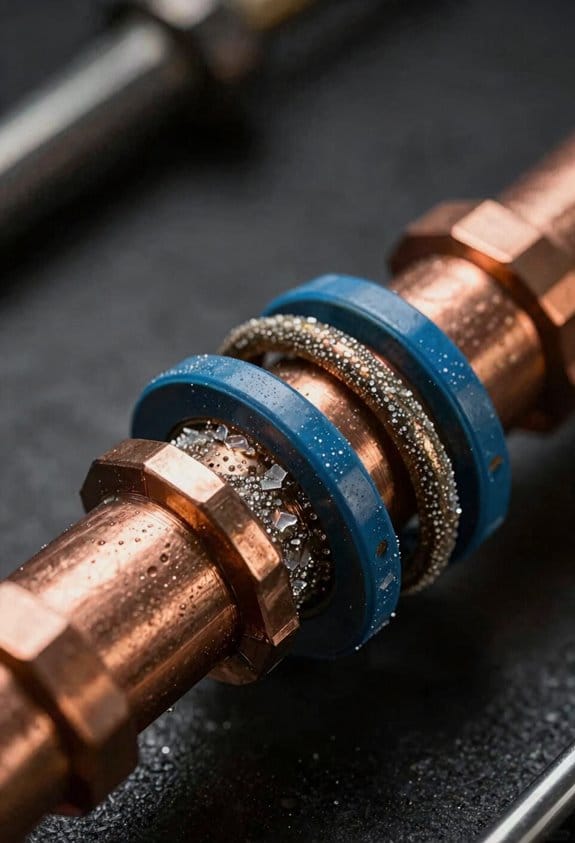
Since hard water minerals create problems in your home, understanding how electronic descalers work to prevent limescale requires looking at what happens at the crystal level. Electronic descalers generate electromagnetic signals that fundamentally alter crystal morphology, or the shape and structure of mineral crystals. When calcium and magnesium ions undergo ion pairing through this electromagnetic influence, their molecular arrangement changes. Instead of forming rigid, adhesive crystals that cling to pipes and appliances, the reshaped minerals remain suspended in water. This transformation occurs continuously as water flows through the electromagnetic field, preventing scale buildup without removing minerals. The altered crystal structure effectively makes minerals incapable of bonding to surfaces, protecting your plumbing while maintaining the water’s natural mineral content.
How Electronic Descalers Compare to Salt Softeners for Your Home?

While both electronic descalers and salt-based water softeners address hard water problems, they accomplish this goal through fundamentally different methods. Electronic descalers use electromagnetic signals to reshape mineral crystals, preventing scale buildup without removing minerals from your water. Salt softeners, conversely, replace calcium and magnesium with sodium through ion exchange, actually removing hardness minerals.
When comparing maintenance costs, electronic descalers win markedly. They require no salt refills, cleaning cycles, or chemical treatments, making them considerably cheaper to operate. Salt softeners demand ongoing salt purchases and regular regeneration maintenance.
Regarding health impacts, electronic descalers maintain beneficial minerals in your drinking water. Salt softeners add sodium to your water supply, which may concern people monitoring sodium intake. For families seeking eco-friendly solutions without salt pollution, electronic descalers provide a sustainable alternative.
How Electronic Descalers Work: The Technology Explained

Understanding how electronic descalers actually work requires looking beyond their benefits and examining the electromagnetic technology at their core. Inside the device, a coil generates electromagnetic signals that target mineral crystals in your water. Through signal modulation, these frequencies alter how calcium and magnesium molecules behave, changing their crystalline structure. Strategic coil placement around your main water line guarantees the electromagnetic field reaches all water passing through your pipes. Rather than removing minerals, the descaler prevents them from bonding to surfaces. The altered crystals remain suspended in water instead of forming stubborn scale deposits. This technology continuously operates once powered, working silently to protect your appliances and plumbing without requiring salt or chemical additives.
What Electronic Descalers Actually Prevent: New Scale vs. Old Buildup?

Because electronic descalers work by altering mineral crystal structure rather than removing minerals, they excel at preventing new limescale formation but face different challenges with existing deposits. I want to clarify a consumer myth: these devices don’t eliminate hardness from your water. Instead, they transform how calcium and magnesium crystals behave, preventing them from sticking to surfaces. When you examine water under crystal microscopy, you’ll see altered particle shapes that remain suspended rather than accumulating. New scale formation stops almost immediately after installation. However, breaking down established buildup takes time, sometimes weeks or months, as the electromagnetic signals gradually dissolve existing deposits. Understanding this distinction helps you set realistic expectations about what electronic descalers actually accomplish in your home.
Can You Install One Without Plumbing Modifications?
One of the most appealing aspects of capacitive electronic descalers is that they don’t require you to tear into your plumbing system or hire a professional plumber to install them. You simply wrap the device around your main water line—no drill, no cutting, no complicated alterations needed. The plug-in placement is straightforward; you position it where your water enters your home, then connect it to a nearby electrical outlet. Power requirements are minimal, typically drawing less electricity than a standard light bulb. Most manufacturers include warranty activation instructions with your purchase, which you’ll complete after installation. This straightforward setup means you can have limescale protection working within minutes, making electronic descalers an accessible solution for most homeowners seeking protection without renovation hassles.
Electronic Descaler Results: What Homeowners Actually See
Most homeowners notice changes within the first few weeks of using an electronic descaler, though the timeline and extent of results depend on several factors specific to your water and home setup. You’ll likely observe visible changes in appliances first, such as reduced white buildup on faucets and showerheads. Water heaters typically operate more efficiently, which translates to appliance savings on your energy bills. Existing scale deposits gradually dissolve over several weeks or months, improving water flow throughout your home. The speed of these improvements depends on your water’s hardness level and mineral composition. While you won’t experience softer-feeling water like salt-based systems provide, you’ll appreciate the practical benefits of maintained appliance performance and reduced maintenance needs.
How Electronic Descalers Protect Your Water Heater and Plumbing
While limescale buildup happens gradually in your plumbing system, an electronic descaler works continuously to prevent this mineral accumulation before it becomes a costly problem. The device protects your water heater by preventing scale deposits from coating the tank’s interior surfaces and reducing tank insulation effectiveness. Flow sensors monitor water movement through your pipes, ensuring the electromagnetic field reaches all areas where minerals might accumulate. By altering how calcium and magnesium crystals form, the descaler stops scale before it restricts water flow or damages fixtures. This protection extends your water heater’s lifespan markedly while maintaining consistent water pressure throughout your home, ultimately reducing expensive plumbing repairs and replacement costs.
Electronic Descalers vs. Salt Softeners: Feature-by-Feature Breakdown
When you’re deciding between an electronic descaler and a salt-based water softener, understanding how each system works helps you choose the right solution for your home. Electronic descalers use electromagnetic signals to alter mineral crystal shapes, preventing limescale buildup without removing minerals from your water. Salt-based softeners, conversely, exchange calcium and magnesium ions for sodium through chemical processes. Consumer reviews consistently show electronic descalers require minimal maintenance and no salt refills, while salt softeners demand regular regeneration cycles. Regarding energy savings, electronic descalers operate continuously with low power consumption, whereas salt softeners need electricity for regeneration cycles. Electronic descalers suit moderate hardness levels and eco-conscious households, while salt softeners handle severe hardness but produce wastewater and require ongoing chemical replenishment.
Choosing Electronic Descaling: A Hardness-Based Decision Framework
Selecting an electronic descaler requires you to first understand your water’s hardness level, since this measurement determines whether the system will effectively solve your limescale problems. I recommend starting with water testing, which identifies your specific mineral content in parts per million (ppm). Electronic descalers work best for moderate hardness levels, typically below 400 ppm. My tiered recommendations suggest that if your water tests below 200 ppm, an electronic descaler handles limescale prevention efficiently. Between 200-400 ppm, you’ll still see good results, though effectiveness may vary. However, if testing reveals hardness exceeding 400 ppm, a salt-based softener becomes more appropriate. Understanding your water’s composition through testing guarantees you’ll choose the right solution for your home’s specific needs.
Frequently Asked Questions
How Long Does It Take for an Electronic Descaler to Break Down Existing Limescale Deposits?
Like a patient sculptor chiseling away stone, I’ll tell you—it typically takes weeks to months. Installation’s quick, though. I’d recommend this chemical-free alternative for gradual, natural breakdown without salt hassles.
What Is the Power Consumption and Cost of Running an Electronic Descaler Continuously?
I’ll tell you that electronic descalers consume minimal energy—typically 5-15 watts continuously. Your operating cost runs roughly $5-15 yearly, making it extremely affordable compared to traditional water softeners’ energy use and salt expenses.
Does an Electronic Descaler Work Effectively With Well Water or Only Municipal Water?
Studies show well water’s mineral variability ranges 50-300% higher than municipal supplies. I’d tell you electronic descalers work with both, though groundwater chemistry and electrical conductivity fluctuations mean well water effectiveness varies considerably based on your specific mineral composition.
Can Electronic Descalers Handle Extremely Hard Water or Only Moderate Hardness Levels?
I’d say electronic descalers work best with moderate hardness. They’ve got mineral saturation limits that make extreme hardness challenging. You’ll need a traditional softener for severely hard water situations.
What Is the Warranty Period and Expected Lifespan of an Electronic Descaler Unit?
I can’t provide specific warranty length and expected lifespan details because the knowledge base doesn’t include manufacturer-specific information. You’ll want to check your unit’s documentation for exact warranty coverage and longevity estimates.