As an Amazon Associate, we earn from qualifying purchases. Some links on this site are affiliate links at no extra cost to you. Our recommendations are based on thorough research and editorial judgment.


Can a Descaler Remove Existing Limescale From Pipes?

Yes, descalers can remove existing limescale from pipes, though speed varies by type. Chemical descalers work fastest, dissolving deposits within days or weeks, while electronic descalers require 2–3 months to show results. Water softeners work gradually, improving pipes over 3–12 months. The right choice depends on your buildup severity and timeline. Combining methods—starting with chemicals then adding electronic prevention—tackles stubborn deposits thoroughly and establishes lasting protection.
Key Takeaways
- Chemical descalers like RYDLYME dissolve existing mineral deposits within days to weeks effectively.
- Electronic descalers remove existing limescale gradually over 2–3 months without chemical treatment methods.
- Water softeners dissolve existing pipe scale slowly, showing noticeable improvement within 3–12 months.
- Mechanical tools provide immediate physical removal of limescale in accessible pipe sections only.
- Combination approaches work best: start with chemical descalers, then use electronic prevention devices.
How to Choose the Right Descaler for Your Pipes and Situation
When you’re facing limescale buildup in your pipes, you’ll find that not all descalers work the same way or produce results on the same timeline. Your choice depends on two key factors: your pipe material and application scale level.
For heavy buildup, chemical descalers like RYDLYME work fastest, dissolving mineral deposits within days. Electronic descalers suit maintenance situations, requiring two to three months for effectiveness. If your pipes are copper, PVC, PEX, or galvanized, most options work, though you’ll want to verify compatibility.
Consider your application scale level carefully. Severe blockages need aggressive chemical treatment or mechanical tools for immediate results. Moderate buildup allows flexibility between chemical and electronic options. Minor prevention situations benefit from water softeners, which gradually remove scale over months.
Chemical vs. Electronic Descalers: Speed and Effectiveness Compared
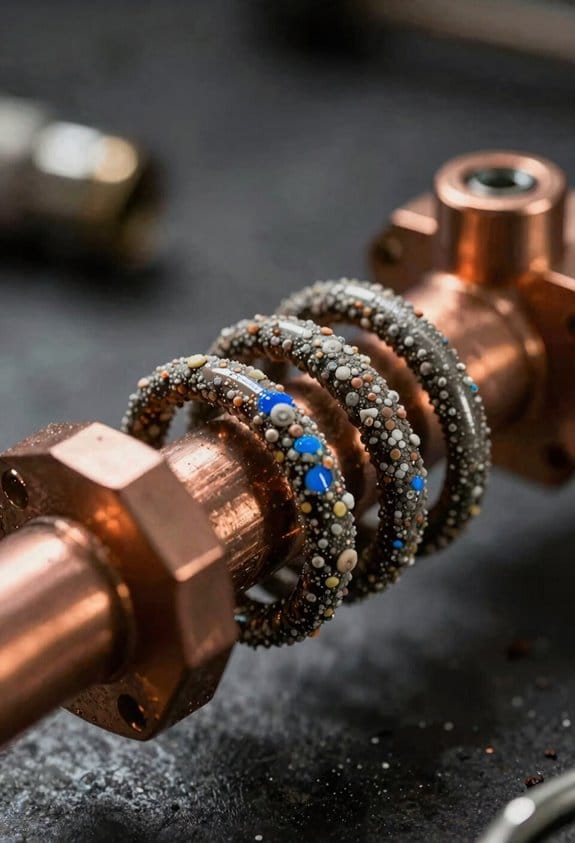
Chemical and electronic descalers take fundamentally different approaches to removing limescale, which means they excel in different situations. Chemical descalers like RYDLYME work quickly through chemical penetration, dissolving mineral deposits within days or weeks. They’re fortified with agents that break down tough calcium and rust efficiently, making them ideal when you need fast results.
Electronic descalers such as Scalesweeper offer different advantages through electronic longevity. They prevent new scale formation using magnetic fields, though they require 2-3 months to show visible results on existing buildup. While they’re maintenance-free and chemical-free, they work gradually.
If you’re facing heavy existing limescale, chemical descalers deliver faster removal. For prevention and long-term management, electronic systems provide sustained protection without ongoing chemical use or maintenance demands.
Realistic Timelines for Removing Built-Up Limescale

Understanding how long it takes to remove built-up limescale depends on which method you choose, since each approach works at a different pace. Chemical descalers like RYDLYME act quickly, dissolving mineral deposits efficiently within days or weeks. Electronic descalers require more patience, showing visible results after 2-3 months on heavily scaled pipes. Water softeners work gradually through a process called reversion, where softened water dissolves calcium carbonate over time—typically 3-12 months for noticeable improvement in pipes, though complete removal takes 1-3 years. Timeline benchmarks vary based on scale severity and water temperature. Seasonal variations affect removal rates, as warmer water often accelerates chemical reactions. Mechanical tools offer immediate physical removal when targeting specific pipe sections. Your situation determines which realistic timeline applies best.
Water Softeners: Prevention vs. Active Descaling

Through the lens of water treatment, water softeners serve two distinct purposes that aren’t always clearly separated in people’s minds. While they’re excellent for prevention, they work differently than active descaling solutions. Water softeners remove existing limescale slowly through a process called reversion, which gradually pulls calcium back into solution through undersaturation. This gradual descaling means your domestic pipework shows noticeable improvement in 3-12 months, with complete removal taking 1-3 years. Water heaters respond faster, improving in 1-6 months and achieving full removal within 6-24 months. However, their reliability for complete scale removal is limited. I’d recommend using water softeners primarily for long-term prevention and softening maintenance rather than relying on them as your main active descaling method for heavily built-up pipes.
Which Descaling Method Works Best for Your Scale Severity

Now that you understand how water softeners work as a long-term prevention tool, it’s time to match the right descaling method to your specific scale problem. Your choice depends on how severe your buildup is and your budget considerations. For heavy limescale accumulation, chemical descalers like RYDLYME work fastest, dissolving deposits within days. Electronic descalers suit moderate buildup, requiring 2-3 months but needing no chemicals. Mechanical tools offer immediate results for targeted pipe sections. If you’re uncertain about severity or worried about damaging your pipes, professional consultation guarantees you select the safest option. Consider your system type—copper, PVC, or galvanized steel pipes each respond differently. Balancing effectiveness, cost, and timeline helps you choose the descaling method that fits your situation best.
Combining Descalers for Stubborn Limescale Buildup
When you’re facing severe limescale accumulation that doesn’t respond to a single descaling method, combining different approaches can deliver better results than relying on one solution alone. I’d recommend starting with a chemical descaler like RYDLYME to dissolve heavy deposits quickly, then following up with an electronic descaler for prevention. This phased treatment tackles existing scale while establishing long-term protection.
For stubborn buildup, chemical rotation—alternating between different descaling agents—prevents mineral deposits from adapting to one method. You might use a chemical descaler initially, then switch to household vinegar solutions for maintenance flushing.
Mechanical tools work well as a final step on targeted problem areas. This combination approach addresses limescale thoroughly, ensuring more complete removal than any single solution provides.
Frequently Asked Questions
Are Descalers Safe to Use in Pipes Connected to Potable Water Systems?
I’d say yes, they’re safe for potable water systems. RYDLYME’s NSF/ANSI 60 certification guarantees it won’t pose health risks or affect your water taste. I recommend choosing certified descalers for drinking water safety.
Can Mechanical Descaling Tools Damage Different Pipe Materials Like PVC or Copper?
I’ll explain that mechanical tools are like surgical instruments—precise but requiring careful handling. They’re designed for cast iron and clay, so I’d caution against PVC or copper pipes where abrasive wear and joint stress risk damage.
How Often Should Descalers Be Applied to Prevent Limescale From Returning?
I’d recommend establishing a maintenance timing schedule based on your water hardness level. For prevention, I suggest applying descalers every 6-12 months, though electronic systems require less frequent intervention than chemical treatments.
What Environmental Impact Do Chemical Descalers Have Compared to Electronic Alternatives?
I’ll show you the stark difference: chemical descalers create chemical runoff pollution, while electronic alternatives consume minimal energy and leave no toxic trace. You’re choosing between environmental damage and sustainable cleaning.
Can Household Vinegar Effectively Remove Heavy Limescale Buildup or Just Minor Deposits?
I’d say household vinegar works best on minor deposits, but it’ll struggle with heavy buildup. You’ll likely need repeated flushing and more time, making chemical descalers or mechanical tools better options for serious limescale.