As an Amazon Associate, we earn from qualifying purchases. Some links on this site are affiliate links at no extra cost to you. Our recommendations are based on thorough research and editorial judgment.

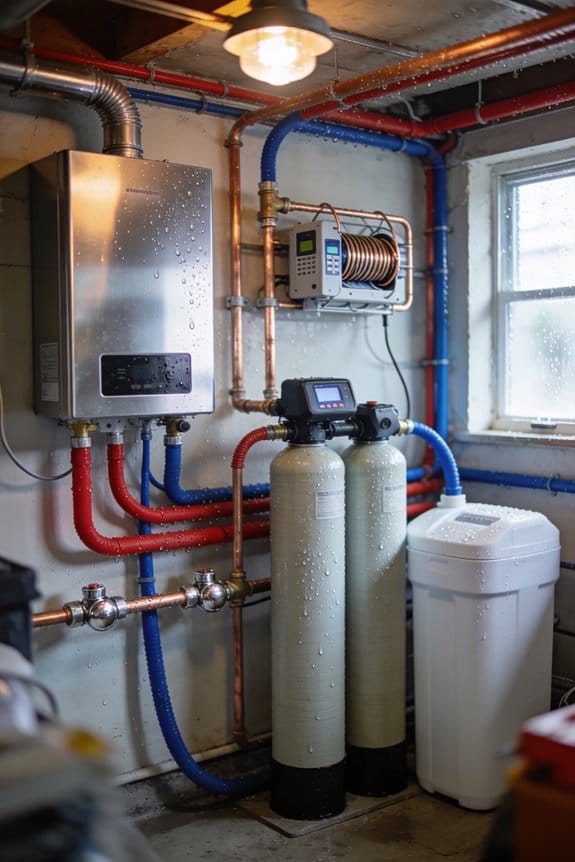
What Is Template-Assisted Crystallization (TAC) in Salt-Free Conditioners?

Template-Assisted Crystallization transforms dissolved calcium and magnesium ions into suspended nano-crystals that can’t stick to pipes or appliances. Polymeric beads with engineered surface patterns trigger crystal formation as water passes through the mineral tank. Unlike traditional softeners that remove minerals entirely, TAC retains beneficial calcium and magnesium in your drinking water while preventing scale buildup. The process requires minimal maintenance, no salt purchases, and delivers over 90% effectiveness according to independent testing. Understanding how TAC’s crystal structure prevents adhesion reveals why it’s becoming a popular alternative for homeowners seeking mineral-rich conditioned water.
Key Takeaways
- TAC converts dissolved calcium and magnesium ions into nano-crystals that remain suspended without adhering to surfaces.
- Polymeric beads with engineered surface patterns act as templates, directing hardness minerals into specific crystal formations like aragonite.
- Suspended crystals resist sticking to pipes and appliances due to smooth surfaces and hydrodynamic water shear forces.
- Systems retain beneficial minerals in drinking water while eliminating salt purchases and regeneration cycles required by traditional softeners.
- TAC reduces scale buildup by over 90% and requires minimal maintenance, with media lasting over eight years.
How Template-Assisted Crystallization Prevents Limescale
When hard water flows through your pipes and appliances, the dissolved calcium and magnesium minerals it carries would normally stick to surfaces and build up as limescale, but TAC technology stops this problem before it starts. The polymeric beads in TAC systems use engineered surface chemistry to transform how these minerals behave. As water passes through the media, the beads trigger the formation of nano-crystals from calcium and magnesium ions. These crystals develop in non-sticking forms, like aragonite, rather than the stubborn calcite that causes scale buildup. The flow dynamics inside the system allow only five seconds of contact time for this crystallization process. Once formed, the suspended crystals can’t adhere to pipes or appliances, preventing limescale accumulation before it begins.
The Limescale Problem: Why Traditional Softeners Fall Short

While TAC systems excel at preventing new limescale from forming, I should explain why traditional water softeners, despite their popularity, don’t actually solve the limescale problem the way many people think they do. Traditional softeners remove hardness minerals entirely through ion exchange, which creates soft water. However, this process introduces sodium into your water and generates waste brine that harms the environment. Additionally, softened water can cause appliance corrosion because it lacks protective minerals. Through hardness mapping studies, we’ve found that many households experience scale buildup years after installing softeners. TAC addresses these limitations by crystallizing minerals instead of removing them, preventing limescale while preserving water quality and protecting your appliances from damage.
How TAC’s Polymeric Beads Transform Hardness Minerals
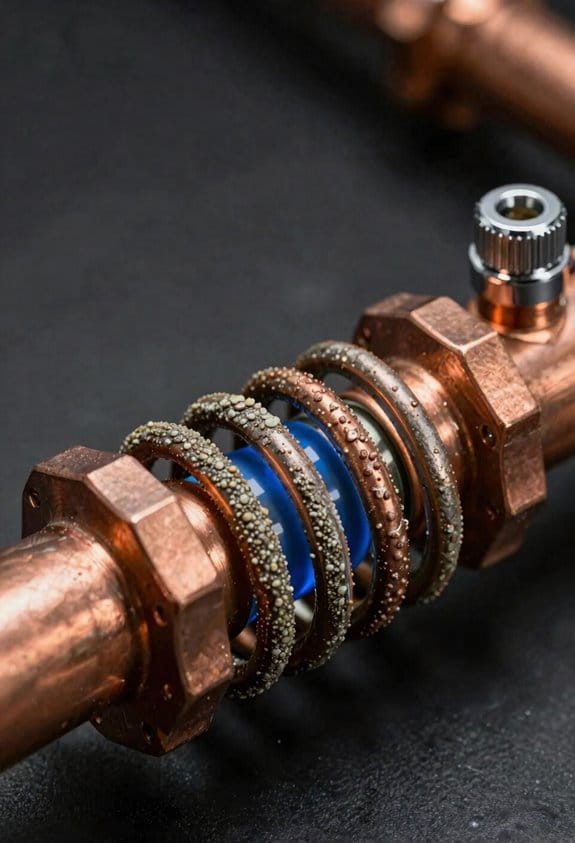
At the heart of TAC technology lies a deceptively simple yet elegant solution: polymeric beads that’ve been specially engineered to transform how hardness minerals behave in your water. These beads feature intricate surface engineering at the atomic level, creating microscopic patterns that guide calcium and magnesium ions into specific crystal formations. The bead morphology—their unique three-dimensional structure—acts as a template, directing ions toward creating nano-crystals in shapes like aragonite rather than the stubborn calcite that sticks to pipes. When hard water flows through the media for just five seconds, ions crystallize on the bead surfaces before detaching and suspending throughout your water. This transformation prevents minerals from adhering to appliances and plumbing, effectively neutralizing limescale problems without removing beneficial minerals.
Why TAC’s Nano-Crystals Stay Suspended Instead of Sticking
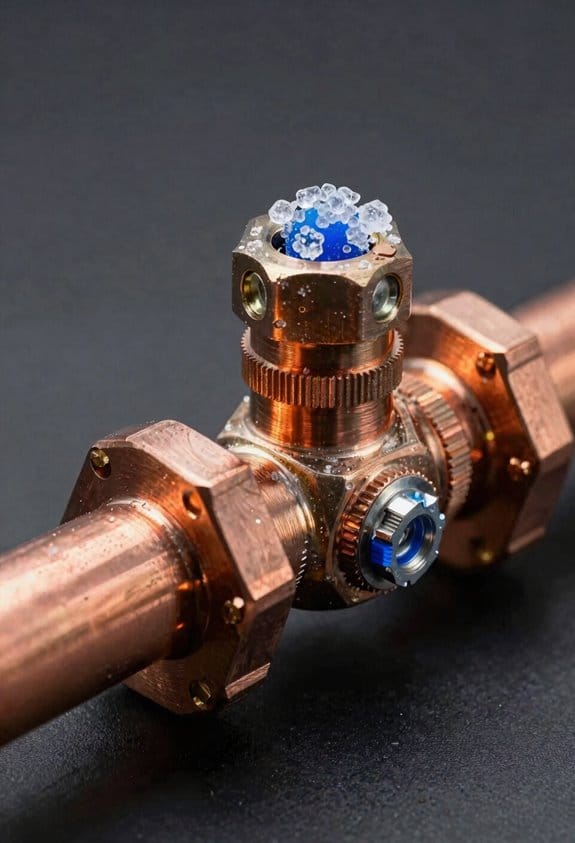
Now that you understand how the polymeric beads create these specialized nano-crystals, it’s worth examining why those crystals behave so differently from regular limescale. The key lies in particle stabilization and how water movement affects these crystals. When TAC creates aragonite crystals instead of calcite, it produces particles with smooth surfaces that resist sticking to pipes and appliances. Hydrodynamic shear—the force created by flowing water—keeps these suspended nano-crystals moving throughout your system. Unlike traditional limescale that bonds to surfaces, these crystals remain in your water column because their crystalline structure prevents adhesion. This suspension makes certain that crystals can’t accumulate or harden into problematic deposits, making TAC fundamentally different from conventional conditioning methods.
TAC vs. Salt-Based Softeners: What’s Actually Different

Because both TAC and salt-based water softeners address hard water problems, many people assume they work the same way—but they’re fundamentally different technologies with distinct advantages and drawbacks. Salt-based softeners remove calcium and magnesium ions entirely through ion exchange, replacing them with sodium. This creates significant salt tradeoffs: you’ll purchase salt regularly, require brine disposal systems, and add sodium to your drinking water. TAC, conversely, crystallizes hardness minerals without removing them, so you retain beneficial calcium and magnesium while avoiding sodium intake. You’ll never purchase salt or manage brine disposal. Unlike softeners that actually soften water, TAC conditions it by preventing scale formation. For health-conscious households seeking mineral retention without maintenance burdens, TAC offers a practical alternative.
The Health Benefit: Keeping Essential Minerals in Your Water
When you turn on your tap, you’re getting more than just water—you’re potentially getting calcium and magnesium, two minerals your body needs for strong bones, healthy muscles, and proper nerve function. Unlike salt-based softeners that strip these minerals away, TAC technology preserves them while preventing scale buildup. This mineral balance matters greatly for your health. Calcium strengthens your skeletal system and supports bone health, while magnesium aids muscle function and nerve transmission. By choosing TAC conditioning, you maintain access to these essential elements. Your body continues receiving the natural minerals it requires, even as your pipes and appliances stay protected from damaging scale formation. This approach offers protection without sacrificing the nutritional benefits your water naturally provides.
What Lab Tests and Real-World Data Prove About TAC
The scientific evidence supporting TAC technology comes from multiple sources, each providing different but complementary insights into how well this system actually works. Arizona State University’s 2011 study demonstrated that TAC reduces scale buildup by over 90%, establishing a strong foundation for the technology’s credibility. Independent laboratory tests rate TAC at 99.6% effectiveness against international protocols, confirming its performance in controlled environments. Longitudinal studies tracking systems over six years show consistent results in both residential and commercial applications. Consumer surveys reveal that users experience fewer appliance repairs and reduced maintenance costs, supporting the laboratory findings with real-world data. Together, these sources—academic research, laboratory testing, and consumer feedback—paint a thorough picture of TAC’s reliability and effectiveness in preventing limescale formation.
How TAC Maintenance and Costs Compare to Traditional Systems
Homeowners consistently find that TAC systems require markedly less maintenance than traditional water softeners, which translates to lower costs over time. While installation costs for TAC units may be comparable to salt-based softeners initially, you’ll experience significant long term savings because the resin bed lasts over eight years with virtually no upkeep required. Traditional softeners demand regular salt purchases, frequent cleaning cycles, and periodic resin replacement, which accumulate substantial expenses annually. TAC systems eliminate these ongoing costs entirely since they need no chemicals, salt, or regeneration processes. You won’t purchase brine or schedule maintenance visits, making TAC considerably more economical over a system’s lifespan. This reduced operational burden makes TAC especially attractive for budget-conscious households seeking reliable water conditioning without continuous expense.
Is TAC Right for Your Home or Business?
Have you considered whether TAC technology truly fits your specific water conditioning needs? I’d evaluate your situation by examining your water hardness level, since TAC works effectively across all hardness ranges with consistent 5-second contact time. Installation considerations matter markedly, as TAC systems integrate into existing plumbing without extensive modifications, requiring only a mineral tank and bypass valve placement. Before purchasing, I’d review warranty options carefully, since most TAC systems offer extended coverage reflecting their durability and minimal maintenance requirements. Your home’s size, water usage patterns, and budget constraints should guide your decision. If you value mineral retention, dislike salt purchases, and prefer maintenance-free operation, TAC represents an excellent fit. However, if you need complete water softening for extremely hard water conditions, traditional ion exchange might suit you better.
Frequently Asked Questions
How Long Do TAC Polymeric Beads Last Before Needing Replacement?
Like seeds that bloom for seasons, your TAC polymeric beads flourish for over 8 years. I’ve found their service life remarkably durable, with minimal bead degradation throughout their lifespan, requiring virtually no maintenance replacements.
Can TAC Systems Treat Extremely Hard Water Above 25 GPG?
Yes, I can confirm TAC systems treat extremely hard water above 25 gpg effectively. The template surfaces guide seed crystals regardless of hardness levels, with particle size reduction ensuring 99.6% scale prevention even in severely hard water conditions.
Does TAC Work Effectively With Well Water Containing Iron or Manganese?
I’d tell you TAC handles calcium and magnesium well, but iron interactions and manganese precipitation complicate effectiveness. You’ll likely need pre-filtration to remove these metals first, then TAC can work most effectively.
What Is the Typical Flow Rate Capacity of Residential TAC Systems?
I’d recommend checking your system’s specifications, as residential TAC flow capacity typically ranges from 10-20 gallons per minute, depending on your home’s sizing needs and water hardness levels.
How Does TAC Perform in Regions With Fluctuating Water Hardness Levels?
I’ve found TAC performs exceptionally well in regions with fluctuating water hardness. Its buffering capacity guarantees consistent scale prevention during seasonal performance variations, maintaining effectiveness regardless of hardness level changes throughout the year.