As an Amazon Associate, we earn from qualifying purchases. Some links on this site are affiliate links at no extra cost to you. Our recommendations are based on thorough research and editorial judgment.

What Is a Tankless Water Heater and How Does It Work?

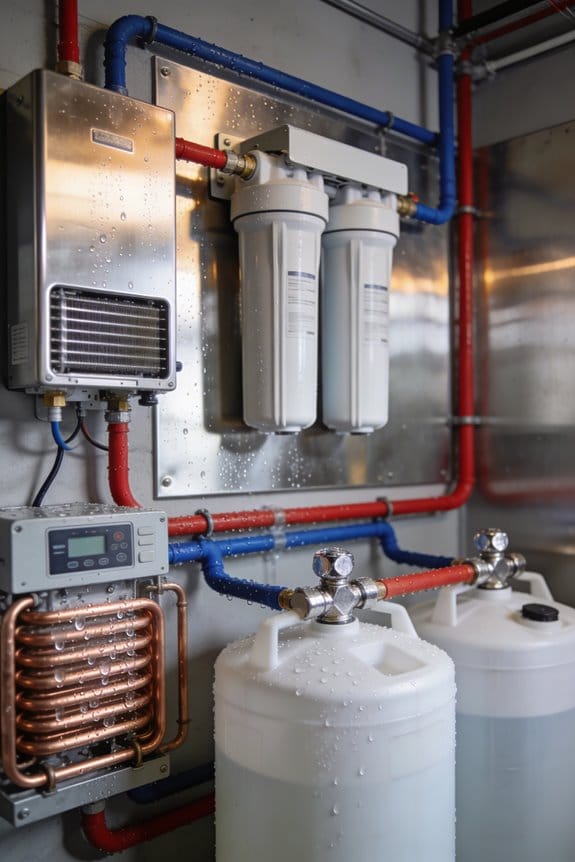
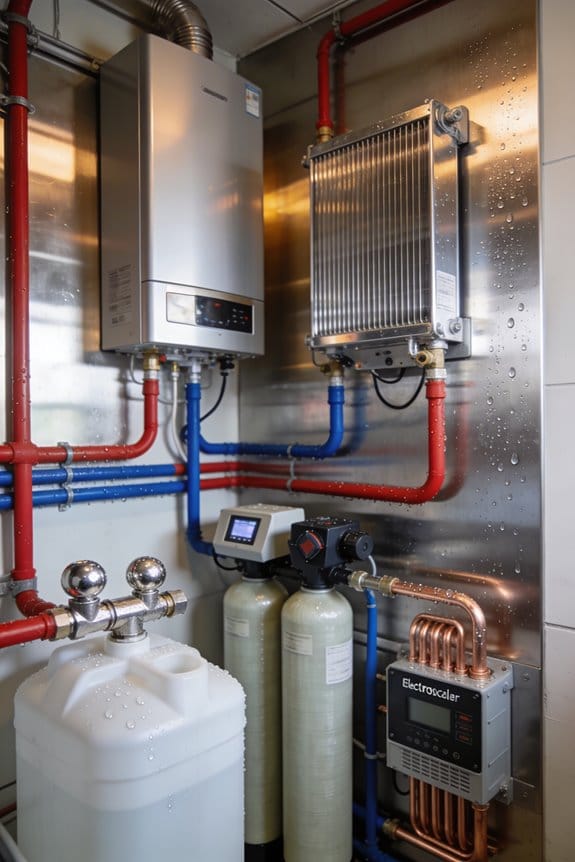
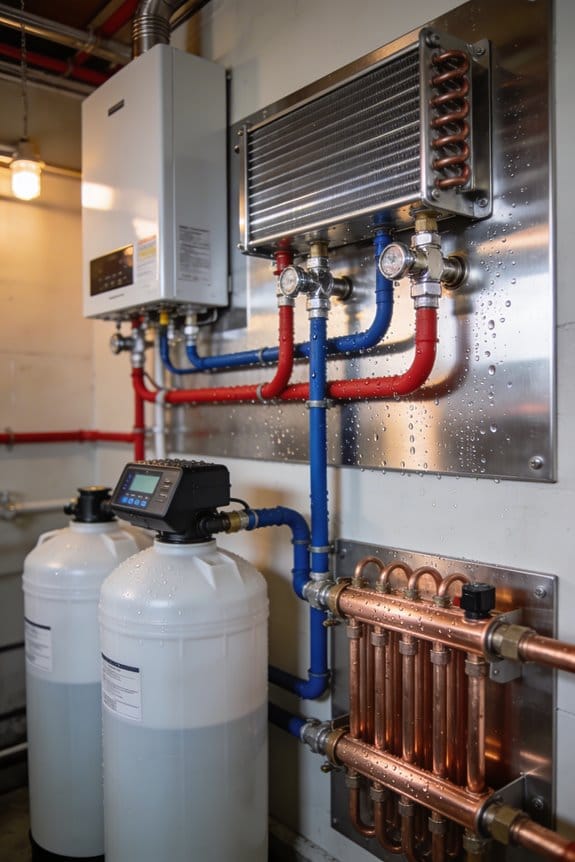
A tankless water heater heats water instantly as it flows through the unit rather than storing it in a tank. When you open a hot water faucet, a flow sensor detects the water movement and triggers the heating system to activate within seconds. Gas burners or electric elements raise the water’s temperature as it passes through heat exchangers, then the unit shuts down immediately when you close the faucet. This on-demand approach eliminates wasted energy from keeping stored water constantly hot, giving you endless hot water while reducing your energy bills. Understanding the specific mechanisms behind this efficiency reveals why many homeowners consider switching.
Key Takeaways
- Tankless water heaters heat water instantly as it flows through the unit rather than storing it in a tank for later use.
- A flow sensor detects water movement and triggers the heating system to activate within seconds when a hot water faucet opens.
- Gas models use burners to heat primary and secondary heat exchangers, while electric models use heating elements for on-demand water heating.
- The system shuts down immediately when the faucet closes, eliminating standby energy losses and reducing overall energy consumption.
- Typical flow rates range from 2 to 5 gallons per minute, providing unlimited hot water for continuous use without tank storage.
What Is a Tankless Water Heater?
Unlike traditional water heaters that store and continuously heat large tanks of water, tankless water heaters work on demand by heating water instantly as it flows through the unit. I’ll explain how this technology offers significant advantages for your home.
Tankless models provide constant hot water supply without requiring a storage tank, which delivers substantial space savings in your home. When you turn on a hot water faucet, the unit activates and heats water in seconds using either a gas burner or electric element.
This on-demand approach eliminates standby energy losses that occur with traditional tank systems, contributing to water conservation and lower energy bills. Because the heater only operates when you need hot water, you’re not continuously maintaining a large tank’s temperature throughout the day.
How Tankless Activation Works

When you turn on a hot water faucet, a series of automatic processes kicks in to heat your water instantly. A flow sensor detects when water moves through the unit at a minimum of 0.4 gallons per minute, triggering activation. This sensor sends a signal to your unit’s user interface, which commands the heating system to start. Electronic fail safes monitor temperature and pressure throughout the process, ensuring safe operation. In electric models, temperature sensors replace flow sensors to control heating. The entire system responds within seconds, delivering hot water without delay. When you close the faucet, the unit shuts down immediately, eliminating wasted energy and unnecessary heating cycles throughout your home.
Key Benefits: Endless Hot Water and Energy Savings

Most homeowners discover that tankless water heaters offer two major advantages that make a real difference in daily life: an unlimited supply of hot water and substantially lower energy consumption. Unlike traditional tank models, these units heat water only when you need it, eliminating standby energy losses that waste electricity or gas. You’ll enjoy hot water continuously without worrying about running out, even during back-to-back showers. Smart controls allow you to set your preferred temperature precisely, optimizing efficiency automatically. To maintain peak performance, follow basic maintenance tips like flushing the system annually and checking for mineral buildup. This proactive approach guarantees your tankless heater operates reliably for years, delivering both comfort and savings that justify the initial investment.
The Gas Heating Mechanism and Heat Exchanger

Since gas tankless water heaters work through a series of precisely timed steps, understanding how they operate helps you appreciate their efficiency and reliability. When you turn on a hot water faucet, the gas valve opens and sends fuel to the burners. Ignitors spark, creating flame that heats the primary heat exchanger, where cold water flows and absorbs thermal energy. The secondary exchanger captures remaining heat from combustion byproducts before they exit through the vent system. Advanced exchanger metallurgy allows these components to withstand extreme temperatures while transferring heat efficiently. In condensing models, gases cool enough to produce condensation, which gets neutralized before draining. This dual-exchanger design maximizes energy capture, ensuring your water reaches the desired temperature quickly and consistently.
Tankless Flow Rate Limits: When Demand Exceeds Supply

One of the most important limitations you’ll encounter with tankless water heaters involves their flow rate, which typically maxes out between 2 and 5 gallons per minute. Gas models generally outperform electric versions in this regard. When demand exceeds your unit’s capacity, you’ll face challenges running multiple hot water appliances simultaneously, like showering while someone’s washing dishes.
The unit adjusts its power output based on flow rate and groundwater temperature, calculating necessary BTU needs accordingly. Proper pipe sizing helps optimize performance and minimize this constraint. Some systems employ peak shaving techniques, which strategically manage power distribution during high-demand periods. Understanding your household’s simultaneous hot water needs guarantees you’ll select an appropriately sized tankless heater that meets your family’s requirements.
Installation, Cost, and Long-Term ROI
While tankless water heaters offer impressive energy savings and endless hot water, the upfront expenses and installation complexities require careful consideration before making your purchase decision. The installation timeline typically spans one to three days, depending on your home’s plumbing setup. The cost breakdown includes the unit itself, ranging from $1,000 to $3,000, plus professional installation fees between $500 and $1,500. Although initial expenses seem substantial, the payback period usually occurs within five to ten years through reduced energy bills. You’ll also benefit from maintenance savings since tankless units require less frequent servicing than traditional tanks. Regular descaling prevents mineral buildup, extending your heater’s lifespan markedly. When calculating long-term ROI, factor in energy rebates and tax credits available in your area, which can offset initial costs considerably.
Is Tankless Right for Your Home?
After understanding the financial investment and long-term returns of tankless water heaters, you’ll want to evaluate whether this technology actually fits your household’s specific needs and circumstances. Consider your home’s space requirements, since tankless units demand minimal room compared to traditional tanks. However, climate considerations markedly impact your decision. If you live where groundwater stays cold, your heater must work harder, reducing output capacity. Households with multiple simultaneous hot water demands may find tankless systems insufficient, since they typically deliver 2-5 gallons per minute. Conversely, smaller households or those prioritizing energy savings often benefit greatly. Evaluate your usage patterns, available installation space, and local water temperature to determine compatibility with tankless technology.
Frequently Asked Questions
How Often Do Tankless Water Heaters Require Maintenance and Descaling?
I’d recommend you schedule annual servicing to keep your tankless water heater running efficiently. Regular descaling prevents mineral buildup, and most manufacturer warranties require this maintenance for coverage protection.
What Is the Lifespan of a Tankless Water Heater Compared to Traditional Tanks?
I’ll tell you that tankless water heaters typically last 20+ years, outlasting traditional tanks which average 10-15 years. You’ll appreciate their longer lifespan and lower operating costs, making them a smarter long-term investment for your home.
Can Tankless Heaters Work During Power Outages or Gas Supply Interruptions?
I’ll inform you that tankless heaters won’t work without power or gas—they’re entirely dependent on both. However, you can install battery backups or manual bypass systems to maintain minimal hot water during interruptions.
How Does Cold Water Sandwich Effect Occur in Tankless Water Heaters?
I’ll explain how the cold water sandwich effect occurs. When you turn off hot water, I find that residual heated water remains in the pipes. Upon reopening, I experience cold shockless inlet buffering as this stored water drains before fresh heating begins again.
Are Tankless Water Heaters Suitable for Homes in Extremely Cold Climates?
I’ll tell you they’re like trying to run a race in a blizzard—challenging but doable. You’ll need robust insulation strategies and pipe freeze prevention measures to keep yours functioning reliably through harsh winters.