As an Amazon Associate, we earn from qualifying purchases. Some links on this site are affiliate links at no extra cost to you. Our recommendations are based on thorough research and editorial judgment.


How to Lower Your Water Heating Bill Without Replacing Your Heater

I can lower my water heating bill $150–$200 yearly without replacing my heater. First, I’ll reduce my thermostat to 120°F, which saves about $60 annually. Next, I’ll insulate my tank and pipes to prevent heat loss, adding another $45 in savings. Switching to low-flow fixtures, washing clothes in cold water, and fixing leaks also cuts costs substantially. These simple adjustments compound quickly, and each strategy offers specific money-saving benefits worth exploring further.
Key Takeaways
- Lower your water heater thermostat from 140°F to 120°F, saving up to $60 annually with minimal effort.
- Insulate your water tank and first 6 feet of hot water pipes to reduce heat loss by 25–45%.
- Install low-flow showerheads using under 2.5 gallons per minute instead of older models using 5.5+ gallons.
- Wash clothes in cold water instead of hot to eliminate nearly all water heating costs for laundry.
- Inspect and repair leaks at faucets, pipes, and connections; a single drip wastes 1,661 gallons yearly.
Lower Your Water Heater to 120°F
Since most manufacturers set water heaters to 140°F straight from the factory, you’re likely paying more than necessary to heat your water each month. I’d recommend adjusting your thermostat to 120°F, which provides significant savings without affecting your daily routine noticeably. Every 10-degree decrease in hot water temperature saves 3 to 5 percent on water heating bills, meaning a thermostat adjustment to 120°F can save you up to $60 annually. Beyond cost savings, lowering your water temperature offers additional benefits. It reduces scald prevention risks, protecting your household from burns, while simultaneously slowing mineral buildup and corrosion in your heater and pipes. This simple adjustment represents one of the most accessible and effective ways to reduce your water heating expenses immediately.
Insulate Your Tank and Pipes to Cut Heat Loss

Reducing heat loss from your water heater and pipes represents the next critical step in lowering your water heating costs. I recommend wrapping your water heater with a tank blanket, which reduces heat loss by 25 to 45 percent according to the U.S. Department of Energy. These pre-cut insulation blankets cost about $20 and can save you up to $45 annually, providing quick payback on your investment.
Additionally, insulating exposed hot water pipes using pipe sleeves or fiberglass raises water temperature by 2 to 4 degrees. When you insulate the first 6 feet of piping leaving your heater, you’ll reduce heat loss most effectively. This prevents hot water from cooling as it travels through your home, allowing lower temperature settings and creating 3 to 4 percent annual energy savings.
Switch to Low-Flow Fixtures and Cold Water Washing

After insulating your tank and pipes, you’ll find that upgrading your fixtures and changing your washing habits offers another powerful way to reduce water heating expenses. Low-flow showerheads use less than 2.5 gallons per minute, compared to older models using 5.5 gallons or more. A 10-minute shower with a low-flow showerhead saves approximately 30 gallons of hot water. These fixtures cost only $10 to $20 each. Additionally, switching laundry cycles to cold water eliminates nearly all hot water heating costs for washing clothes. Modern detergents work effectively in cold water, making this change practical. When cold water isn’t suitable, warm water provides adequate cleaning at roughly half the cost of hot water, delivering significant savings without sacrificing results.
Diagnose and Fix Leaks to Stop Wasting Hot Water

Even small leaks in your water heating system can drain both water and money from your home. A single drip per second wastes approximately 1,661 gallons annually and costs up to $35 yearly. To identify leaks, perform regular drip detection by inspecting faucets, pipes, and connections for moisture. Check under sinks, around the water heater, and along exposed piping. Modern fixtures often use petrochemical seals that deteriorate over time, causing leaks at connection points. When you discover a leak, repair it promptly by tightening connections or replacing worn washers and seals. For persistent problems, contact a professional plumber. Additionally, make certain your water heater has heat traps installed, which prevent heated water from escaping through pipes when the system’s inactive, maximizing efficiency.
See Your Water Heating Savings in Year One
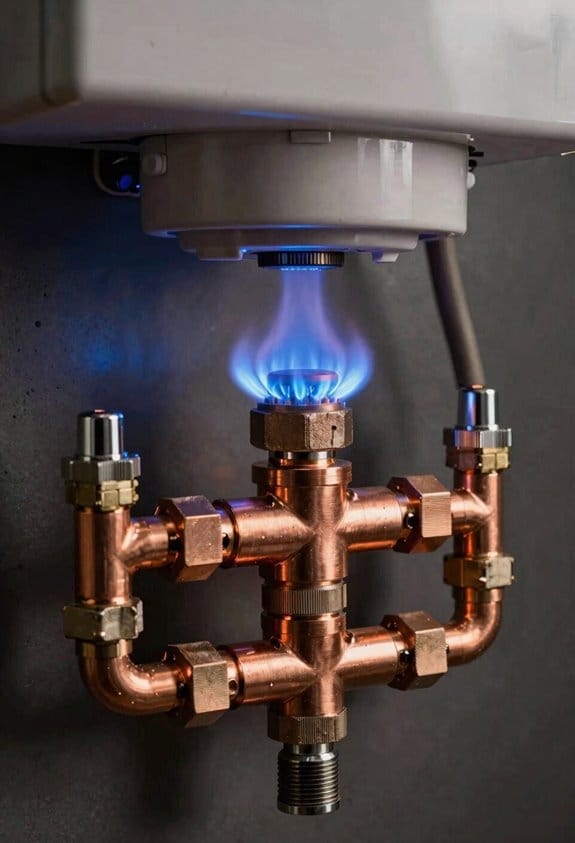
When you implement the water heating strategies outlined in this guide, you’ll likely notice a reduction in your utility bills within the first year. Your savings breakdown depends on which improvements you choose. Lowering your thermostat to 120°F saves approximately $60 annually, while insulating your tank contributes up to $45 per year. Pipe insulation and low-flow fixtures provide additional reductions through decreased hot water consumption. The payback timeline varies by strategy; inexpensive aerators and faucet repairs offer immediate returns, whereas insulation blankets and pipe sleeves recoup their modest investments within months. Combined, these measures typically deliver $150 to $200 in first-year savings. Most importantly, you’ll establish lasting habits that continue reducing your water heating expenses for years ahead.
Frequently Asked Questions
Is 120°F Safe for Households With Young Children or Elderly Family Members?
I’ve found that 120°F is actually safer for vulnerable households. Like a gentle guardrail, it reduces child scalding risks while temperature sensors on faucets provide extra protection for elderly family members.
Will Lowering My Water Heater Temperature Affect My Dishwasher’s Cleaning Performance?
I’d say your dishwasher’s cleaning performance shouldn’t suffer. Modern dishwasher cycles are designed to work efficiently with standard water temperatures, and today’s detergent effectiveness has improved markedly, handling lower temperatures well.
Can I Install Insulation Blankets on Newer Water Heater Models Safely?
I’d recommend checking your manufacturer’s warranty first, as some newer models have built-in insulation that makes blankets unnecessary. However, if you’ve got older components, I’d say it’s generally safe—just make certain proper ventilation around vents and thermostats.
Do Low-Flow Fixtures Work Well With Older Plumbing Systems in Homes?
Yes, I’ve found low-flow fixtures work well with older plumbing. Flow restrictors adapt easily to existing pipes, and pipe compatibility isn’t an issue. You’ll see water savings of 25-60 percent without needing plumbing upgrades.
How Quickly Will I Notice Savings After Implementing These Water Heating Changes?
You’ll notice immediate savings on your daily water usage, though your billing lag means you won’t see utility bill reductions for one to two billing cycles. Most changes like lowering thermostats and installing low-flow fixtures deliver noticeable results quickly.