As an Amazon Associate, we earn from qualifying purchases. Some links on this site are affiliate links at no extra cost to you. Our recommendations are based on thorough research and editorial judgment.

What the Global Water Heater Market Growth Means for Homeowners in 2026

If you’re replacing your water heater in 2026, expect higher costs from labor shortages, supply chain disruptions, and stricter efficiency rules eliminating budget models. Traditional electric units run $800–$1,500, while heat pump and solar systems cost more upfront but save $3,000–$5,000 over ten years. Installation fees add $500–$1,500. Federal tax credits and utility rebates can markedly reduce your actual expenses, though programs have deadlines and budget caps. Understanding which type matches your home’s climate and layout reveals your best long-term investment.
Key Takeaways
- Installation costs are rising due to labor shortages and supply chain disruptions affecting skilled technician availability and material pricing.
- Heat pump and solar water heaters offer long-term savings of $3,000 to $5,000 over ten years despite higher upfront costs.
- Efficiency regulations are eliminating budget models, forcing manufacturers to produce costlier high-efficiency units and narrowing affordable options.
- Federal tax credits and utility rebates can significantly reduce actual purchase costs, though programs have budget caps and deadlines.
- Homeowners should prioritize long-term operating costs over upfront prices, as cheaper models often cost substantially more throughout their lifetime.
Why Replacement Costs Are Climbing in 2026
As the global water heater market expands toward USD 33.63 billion in 2026, you’ll likely notice that replacing your home’s water heater costs more than it did just a year or two ago. Several factors drive these climbing expenses. A labor shortage means fewer skilled technicians are available, increasing installation fees. Supply chain disruptions affect product availability and pricing. Raw materials, including copper and steel, have become more expensive, raising manufacturing costs that get passed to consumers. Installation complexity has also increased, particularly with newer heat pump and solar models requiring specialized knowledge and equipment. These combined pressures mean homeowners should budget more generously for replacements and consider scheduling installations sooner rather than later to avoid further price increases.
What You’ll Actually Pay: 2026 Water Heater Price Ranges

Understanding the specific costs you’ll face when replacing your water heater in 2026 requires breaking down the prices by type and capacity, since what you’ll pay depends heavily on which model suits your household’s needs. Traditional electric models typically range from $800 to $1,500, while gas units cost between $1,000 and $2,000. Mid range models, like heat pump water heaters, fall around $1,500 to $3,000 due to advanced technology. Solar systems demand $3,000 to $6,000 upfront but offer long-term savings. Installation addons—including permits, labor, and modifications to your plumbing—can add $500 to $1,500. Your final cost depends on your home’s existing infrastructure, location, and chosen technology level.
Heat Pump, Solar, Tankless, or Electric: Which Type Fits Your Home?

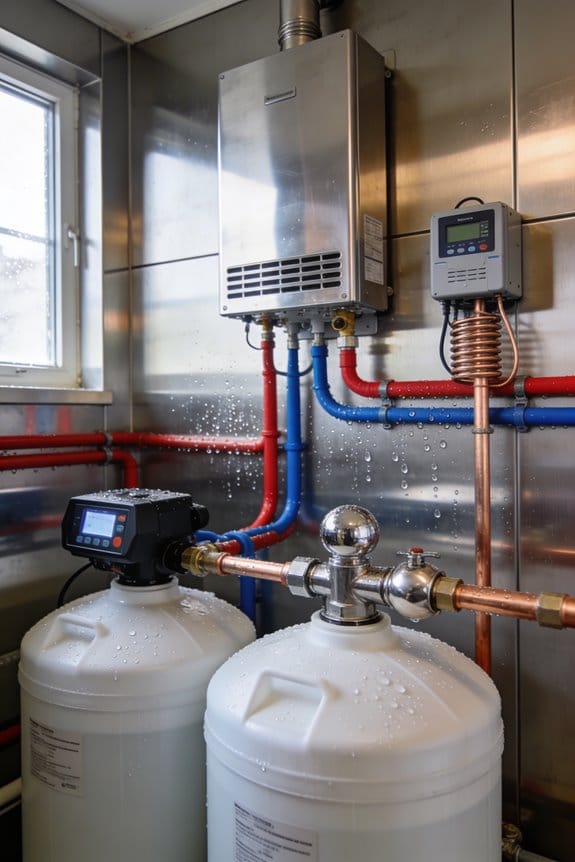
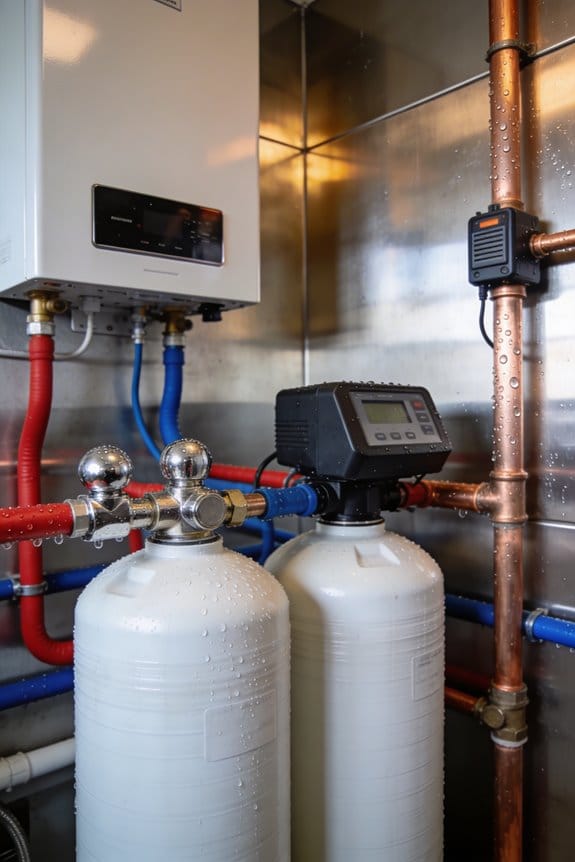
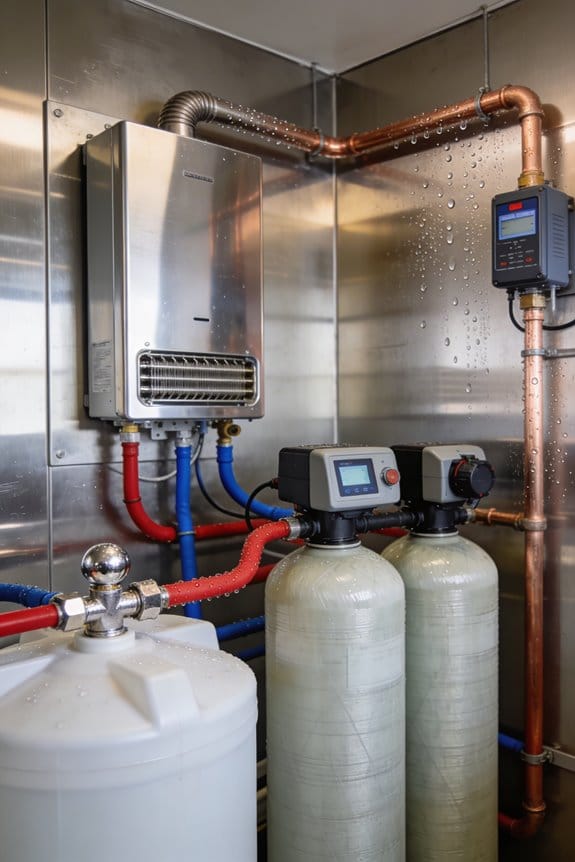
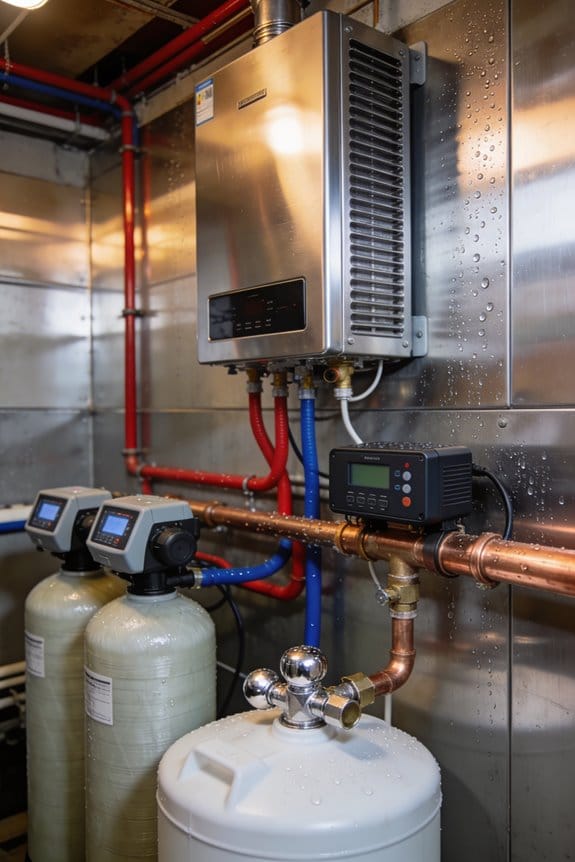
Now that you know what you’ll spend, you need to figure out which water heater type actually works for your home and lifestyle. Heat pump sizing requires adequate space and moderate climates, making them efficient for most homeowners. Solar feasibility depends on roof exposure and sunlight availability in your region. Tankless reliability offers compact installation and continuous hot water, though they need proper ventilation. Electric integration suits homes with existing electrical infrastructure, representing the market’s highest-share segment. Each option addresses different priorities: heat pumps maximize efficiency, solar minimizes emissions, tankless saves space, and electric provides straightforward installation. Consider your climate, home layout, budget, and long-term energy goals when selecting your system.
Which Water Heater Saves You the Most Money Over 10 Years?

Most homeowners don’t realize that the cheapest water heater upfront often costs considerably more over a decade of use, which is why comparing long-term expenses matters more than initial purchase price. Heat pump and solar models require higher upfront investments, typically $1,500 to $3,000 more than electric units, yet deliver substantial savings through reduced energy bills. Over ten years, heat pump water heaters can save $3,000 to $5,000 in operating costs, while solar systems provide even greater returns in sunny climates. Tankless heaters eliminate standby losses, lowering energy consumption. When calculating lifecycle costs, factor in installation, maintenance, and energy efficiency ratings. Your climate, hot water usage, and local electricity rates determine which option maximizes savings. Analyzing these variables guarantees you select the most economical solution.
Why Efficiency Rules Are Eliminating Your Cheapest Options

Because governments and environmental agencies worldwide are tightening energy efficiency standards, the budget-friendly water heater models you might’ve chosen five years ago are disappearing from the market. Regulations like the Ecodesign Directive require manufacturers to produce only high-efficiency units, which costs more to build. Material phaseouts eliminate cheaper, less efficient components that older models relied on. This means your options now lean toward heat pump systems, solar thermal units, and tankless heaters—all pricier upfront. However, these efficient models save you money long-term through reduced energy bills. While you’ll pay more initially, government standards are effectively forcing the market toward technology that benefits your wallet and the environment simultaneously.
Lock in Rebates Before Prices Stabilize Mid-2026
While efficiency mandates are reshaping what’s available on the market, they’re also creating a window of opportunity for homeowners willing to act quickly. Manufacturers and retailers are offering substantial rebates right now to clear inventory before prices stabilize mid-2026. Your rebate strategy should prioritize timing urgency, since these incentives won’t last as supply chains adjust to new regulations. Federal tax credits and utility rebates combine to reduce your actual costs markedly. I’d recommend getting quotes before spring, when demand typically peaks and rebate programs tighten. Many programs have budget caps and deadline restrictions. By locking in offers now, you’ll secure savings that disappear once the market stabilizes and manufacturers stop incentivizing early adoption.
Frequently Asked Questions
How Will Global Market Growth at 4.69% CAGR Directly Impact My Local Water Heater Prices?
Asia Pacific’s 37.28% market share drives global competition, lowering your local prices. With 4.69% CAGR growth, material costs stabilize through increased production efficiency. I’d recommend purchasing soon before purchase timing shifts demand upward.
Which Regions Are Seeing the Fastest Water Heater Market Expansion in 2026?
Asia Pacific’s dominance drives the fastest expansion, with China and India leading at USD 7.40 billion and USD 4.21 billion respectively. Southeast Asia and Sub-Saharan Africa present emerging opportunities you’ll want to monitor.
Are Smart Connected Water Heaters Worth the Premium Investment for Homeowners?
Like paying for peace of mind, I’d say yes. Smart connected heaters’ diagnostics and usage insights help you catch problems early, reduce waste, and optimize energy costs—making that premium worthwhile over time.
What Government Efficiency Regulations Should Influence My 2026 Water Heater Purchase Decision?
You should prioritize models meeting Ecodesign Directive standards, check energy labels for efficiency ratings, and explore rebate programs that offset costs. These regulations drive lower emissions and reduced energy bills you’ll appreciate long-term.
How Does the Tankless Segment’s 6.6% Growth Compare to Traditional Water Heater Trends?
Tankless water heaters are growing at 6.6% CAGR—outpacing traditional models—because they’re outperforming them on tankless efficiency. However, retrofit challenges mean you’ll need professional installation, potentially offsetting initial savings.