As an Amazon Associate, we earn from qualifying purchases. Some links on this site are affiliate links at no extra cost to you. Our recommendations are based on thorough research and editorial judgment.

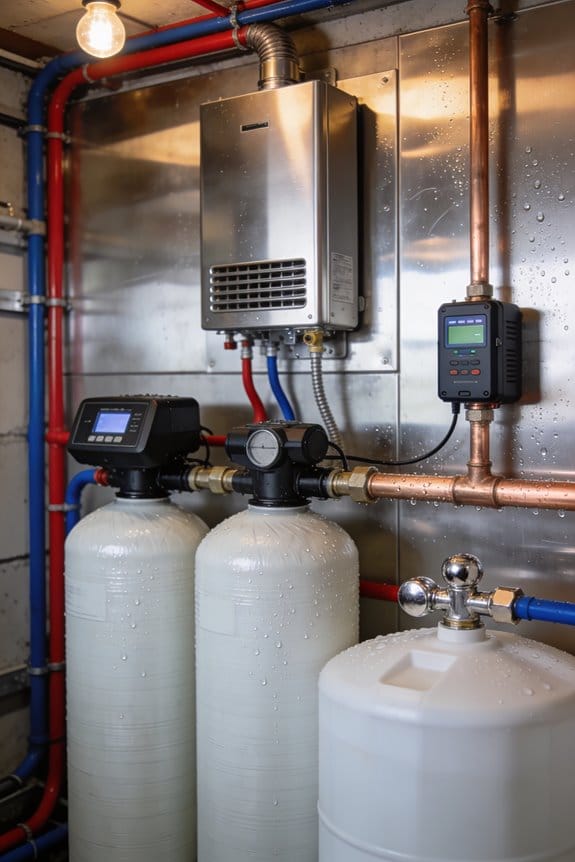
Water Heater Error Codes: What They Mean and How to Fix Them

Water heater error codes are diagnostic messages that identify specific problems. Codes 11–13 indicate ignition failures requiring gas supply checks, while Code 24 signals flow sensor issues or clogged filters needing cleaning. Code 14 means overheating from mineral scale buildup. Many codes respond to a simple twenty-minute power cycle, though persistent errors demand professional service. Regular filter maintenance and annual descaling prevent most problems before they start, protecting your warranty and extending your heater’s lifespan. Understanding these codes helps you know when you can troubleshoot versus when to call a technician, which we’ll explore further.
Key Takeaways
- Code 11–13 indicate ignition failures; confirm gas supply is open and restart after 20 minutes before seeking professional help.
- Code 24 signals a clogged inlet filter or flow sensor malfunction; clean the filter screen thoroughly under running water first.
- Code 14 means overheating from scale buildup; allow cooling, check vents for debris, then contact a technician if persistent.
- Power-cycle the heater for 20 minutes to reset codes 11, 12, and 01; don’t repeat if error recurs immediately.
- Annual descaling and regular filter maintenance prevent most error codes and extend unit lifespan while preserving warranty coverage.
Understanding Your Error Code: Ignition, Flow, and Overheating Symptoms
When your water heater displays an error code, it’s sending you a diagnostic message that pinpoints what’s gone wrong, and understanding these codes can help you decide whether you need professional help or if you can resolve the issue yourself. Three main problem categories commonly trigger these alerts: ignition failures, flow issues, and overheating.
Ignition problems stem from gas supply interruptions, airflow blockages, or dirty ignition components. Flow issues often relate to low water pressure or clogged inlet filters affecting sensor calibration. Overheating occurs when mineral buildup restricts water circulation or vents become blocked.
Each category requires different troubleshooting steps. Before calling a professional, check your gas supply and water pressure, then attempt a reset. Many codes resolve after these basic checks, but persistent errors warrant expert inspection to prevent further damage.
Error Codes 11-13: Why Your Ignition Is Failing and How to Fix It

Error codes 11, 12, and 13 point to ignition failures that stem from three main culprits: insufficient gas supply reaching your unit, combustion problems once the gas arrives, or issues with the ignition system itself. When you see code 11, your heater’s spark electrode may not be generating the spark needed to ignite the gas. Code 12 suggests the flame isn’t staying lit after ignition occurs. Code 13 indicates poor combustion overall.
To troubleshoot, first check that your gas supply valve is fully open and gas is flowing. Next, inspect the spark electrode for debris or corrosion that might prevent sparking. If these steps don’t resolve the issue, restart your unit and wait 20 minutes before attempting ignition again. Persistent codes require professional service.
Error Code 24 and Low Flow: Cleaning Your Filter and Sensor

While ignition failures stem from gas supply and spark issues, another common problem affects your water heater’s ability to function properly: insufficient water flow. Error Code 24 indicates either a flow sensor malfunction or a clogged inlet filter restricting water entry. I recommend starting by turning off your unit and inspecting the inlet filter screen. Rinse it thoroughly under running water to remove debris and mineral deposits. After cleaning, reset your heater and monitor performance. If Code 24 persists, the flow sensor may require sensor calibration or replacement by a professional. For prevention, consider filter replacement as part of annual maintenance. Regular cleaning prevents buildup that compromises water pressure and heating efficiency, ensuring your system operates reliably.
Code 14 Overheating: Scale Buildup, Blocked Vents, and When to Call

As your water heater ages, mineral deposits naturally accumulate inside the tank and heating elements, a process that intensifies in areas with hard water. When Code 14 appears, your unit has exceeded its safety temperature limit, typically signaling scale buildup restricting water flow. I recommend allowing the heater to cool completely before investigating further.
Start with vent inspection, checking that air intake and exhaust paths remain clear of debris, leaves, or obstructions. Next, examine the inlet filter for mineral accumulation. If scale prevention through annual descaling hasn’t occurred, professional service becomes necessary for internal cleaning and potential component replacement.
Don’t ignore recurring Code 14 errors. Persistent overheating indicates serious underlying issues requiring immediate professional attention to prevent equipment damage or safety hazards.
Reset in 20 Minutes or Call a Pro: Your Decision Flowchart
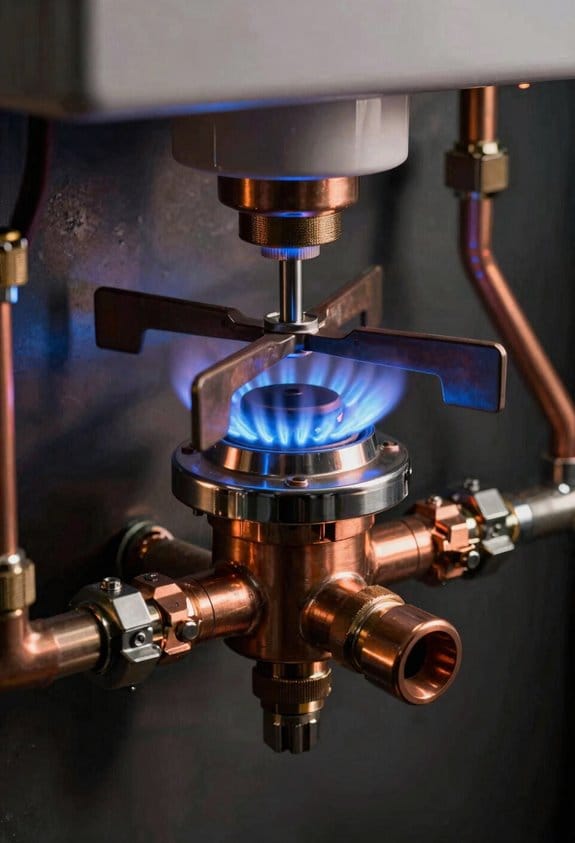
Many water heater error codes can be resolved through a simple reset procedure, though knowing when to attempt this fix yourself versus calling a professional service technician separates effective troubleshooting from wasted time. Power cycling your unit involves turning off both the heater and controller for twenty minutes, then powering everything back on and opening a hot water tap. This method works well for codes 11, 12, and 01 related to ignition or flame issues. However, persistent codes like 65, 76, and 29 warrant professional referral immediately. If an error recurs after your reset attempt, don’t repeat the process; contact a technician instead. Knowing this distinction prevents delays and guarantees your water heater receives appropriate care.
Annual Descaling and Filter Cleaning: Stop Codes Before They Start
Knowing when to call a professional versus attempting a reset yourself puts you in control of your water heater’s health, but the real power lies in preventing those error codes from appearing in the first place. I recommend scheduling annual descaling and filter cleaning as your first line of defense. Hard water deposits accumulate inside your unit, restricting flow and triggering codes like 24 and 65. By descaling yearly, you remove mineral buildup before it causes problems. Cleaning your inlet filter screen regularly prevents clogs that reduce water pressure. These seasonal maintenance tasks preserve your warranty while extending your water heater’s lifespan. Think of prevention as an investment that saves you money on emergency repairs and professional service calls down the road.
Frequently Asked Questions
Can Hard Water and Cold Weather Increase the Frequency of Error Codes?
Yes, I can tell you that hard water and cold snaps definitely increase error code frequency. Hard water causes mineral buildup that restricts flow and triggers codes, while cold weather worsens ignition problems, making both conditions problematic for your heater’s performance.
What Does a 5-Flash or 6-4 Flash Code Indicate in Power Vent Units?
I’ll explain what’s happening with your unit. A 5-flash code means the pilot flame’s present when it shouldn’t be—that’s your 5 flash interpretation. Meanwhile, a 6-4 explanation reveals the pilot’s on during standby in power vent units, requiring immediate attention.
Why Might Error Codes Recur After a Professional Service or Reprogramming?
After reprogramming, you might see recurring codes due to wiring degradation or software glitches. I’d recommend having your technician verify circuit board connections and make sure the system’s calibration wasn’t corrupted during the update process.
Is Error 29 Related to Condensate Issues, and Can Homeowners Fix It?
I’ll tell you straight: Error 29 signals condensate neutralizer failure—you can’t fix it yourself. You’ll need a licensed technician to inspect the float switch, clear condensate blockage, check diagonal venting, and schedule maintenance.
Which Error Codes Absolutely Require Professional Service Versus DIY Troubleshooting Attempts?
I’d categorize codes 65, 76, and 29-34 as professional-only issues—they involve sensor failure, gas leak risks, and condensate problems. You can DIY codes 24, P1, and 03 by cleaning filters and checking valves first.