As an Amazon Associate, we earn from qualifying purchases. Some links on this site are affiliate links at no extra cost to you. Our recommendations are based on thorough research and editorial judgment.


How AI and Predictive Maintenance Are Changing Water Heater Service

AI and predictive maintenance are reshaping water heater service by monitoring your system continuously through real-time sensors that track temperature, pressure, and energy use. These sensors detect problems like sediment buildup, failing valves, and thermostat issues before they cause breakdowns. Instead of emergency repairs, you’ll schedule maintenance when convenient, reducing costs by 40% compared to reactive approaches. IoT technology identifies patterns your water heater displays, alerting you through mobile apps when attention’s needed, transforming expensive emergency calls into planned, affordable service visits that extend your equipment’s lifespan considerably.
Key Takeaways
- AI sensors monitor flow, pressure, temperature, and energy consumption to detect equipment failures before they occur.
- Predictive maintenance enables scheduling repairs during convenient times, preventing costly emergency breakdowns and reducing service expenses.
- Recovery time analysis identifies sediment buildup and thermostat issues, allowing technicians to perform targeted descaling or replacements.
- Real-time multi-metric data feeds AI software for continuous analysis, eliminating guesswork and enabling proactive maintenance decisions.
- Maintenance costs drop approximately 40% by shifting from reactive emergency repairs to AI-powered predictive service strategies.
What Water Heater Problems Does AI Actually Predict?
When you install AI-powered sensors in your water heater system, the technology doesn’t just monitor what’s happening right now—it watches for subtle changes that signal trouble ahead. The system analyzes patterns in flow rate, pressure, temperature rise, and energy consumption to catch problems before they fail.
AI detects sediment buildup by identifying longer recovery times, which means your heater needs descaling. Micro-flows in your data suggest a failing fill valve requiring replacement. Pressure fluctuations point to a worn pressure reducing valve, or PRV. The technology also identifies thermostat failure by tracking temperature inconsistencies.
These predictions let you schedule repairs during convenient times rather than facing unexpected breakdowns. Early intervention prevents costly emergency calls and extends your equipment’s lifespan markedly.
How Real-Time Sensors Catch Problems Before Breakdown
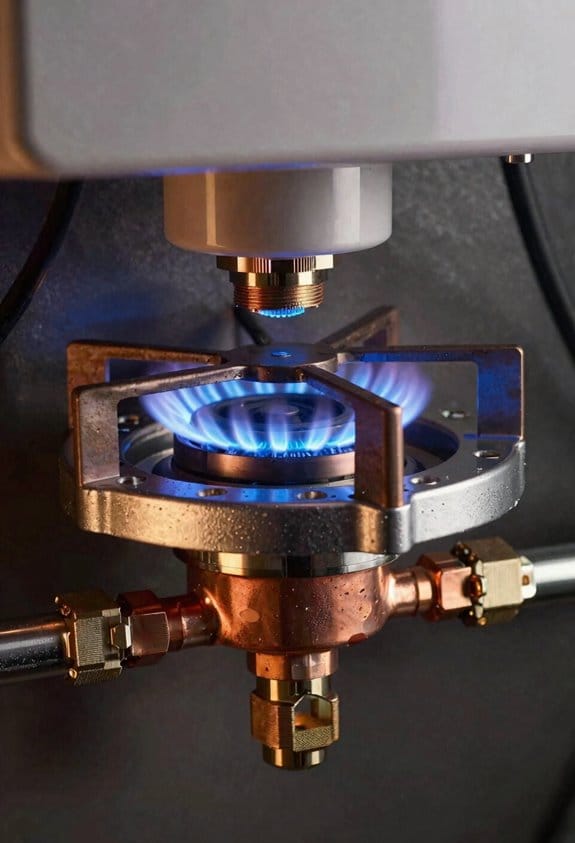
Real-time sensors continuously monitor your water heater’s performance by tracking multiple metrics simultaneously—temperature, pressure, vibration, airflow, and energy consumption—all feeding data to AI software that never stops analyzing. This constant surveillance detects flow anomalies that suggest failing fill valves or clogged pipes before they worsen. When your system shows thermal stratification issues, where hot and cold water don’t mix properly, sensors flag the inefficiency immediately.
The AI identifies patterns humans might miss. Longer recovery times combined with unusual pressure readings point to descaling needs. Micro-flows indicate valve problems requiring attention. By catching these signals early, you avoid sudden breakdowns that disrupt your daily routine. This proactive approach lets technicians schedule repairs during convenient times rather than responding to emergencies that cost more and cause frustration.
How Predictive Maintenance Cuts Repair Costs

The early detection I described in the previous section creates a foundation for something even more valuable: significant savings on your repair bills. When AI predicts failures before they happen, you avoid expensive emergency repairs that drain your budget. You’ll notice immediate reductions in labor costs, since technicians schedule visits strategically rather than rushing to urgent breakdowns. Additionally, predictive maintenance prevents unnecessary parts inventory spending. Instead of replacing components based on time schedules, you replace only what actually needs fixing. This data-driven approach means fewer wasted parts sitting on shelves. Studies show maintenance costs drop by 40% when you shift from reactive repairs to predictive strategies. Your water heater operates longer, emergency calls decrease, and your overall service expenses become more predictable and manageable.
What Your Water Heater’s Slow Recovery Actually Means

Your water heater’s recovery time—how long it takes to reheat water after you’ve used a bunch—tells you something important about its health. When recovery slows down, I’m seeing two common culprits: mineral buildup and thermostat degradation.
Mineral buildup, also called sediment accumulation, coats your heating element, forcing it to work harder and take longer to heat water. This reduces efficiency and strains the system.
Thermostat degradation means your temperature sensor isn’t reading correctly anymore, causing improper heating cycles. With AI-powered IoT sensors monitoring recovery patterns, I can detect these issues early. Slower recovery times signal that descaling or thermostat replacement is needed soon, allowing you to schedule maintenance before your system fails completely.
Schedule Repairs When It’s Convenient for You
Once predictive AI identifies an upcoming water heater issue, you can break free from the frustration of emergency repairs by scheduling maintenance during times that work best for your schedule. Instead of rushing to fix problems at inconvenient moments, you’ll receive advance alerts, allowing you to plan repairs around your life. Evening bookings become possible since technicians know exactly what repairs you’ll need before arriving. This flexibility respects your customer preferences and eliminates the stress of unexpected breakdowns. You can coordinate with your service provider to arrange visits when you’re available, whether that’s weekends, after work, or during quieter periods. Predictive maintenance transforms water heater service from disruptive emergencies into manageable appointments you control.
Install Sensors and Start Getting Alerts
Getting started with predictive maintenance typically begins with installing IoT sensors on your water heater, which continuously monitor performance metrics like temperature, pressure, and energy consumption. Proper sensor placement guarantees accurate readings, so technicians install them at key locations on your tank and pipes.
Once sensors are in position, data onboarding connects them to cloud software that analyzes information in real time. You’ll receive alerts through a mobile app or dashboard when the system detects unusual patterns. For example, longer recovery times might signal descaling needs, while pressure fluctuations could indicate valve wear.
This automated monitoring eliminates guesswork, allowing you to address issues before they become expensive failures. The system learns your water heater’s normal behavior and flags deviations promptly.
Frequently Asked Questions
How Long Does It Take for AI Systems to Become Accurate at Predicting Water Heater Failures?
I’ve found that AI systems typically achieve reliable accuracy within 3-6 months of continuous data collection. You’ll notice model explainability improves as I monitor data drift, allowing me to refine predictions and adapt to your specific water heater’s performance patterns.
What Is the Typical Cost of Installing Iot Sensors on Existing Water Heater Systems?
Like planting seeds for future savings, I’d say sensor installation typically ranges from $500–$2,000, plus subscription pricing between $20–$50 monthly. Costs vary based on system complexity and your provider’s offerings.
Can Predictive Maintenance Technology Work With Older, Non-Smart Water Heater Models?
Yes, I can retrofit older water heaters with IoT sensors through external monitoring systems. You’ll need proper technician training to install these solutions correctly, enabling predictive maintenance on legacy equipment.
How Does Machine Learning Improve Its Predictions Over Time With Accumulated Sensor Data?
Like a detective sharpening investigative skills with each case, I’ve watched machine learning strengthen predictions through model refinement and data augmentation. More sensor readings teach algorithms what failure looks like, boosting accuracy progressively.
What Happens if the AI System Makes a False Failure Prediction?
I’ll schedule an unnecessary service visit, wasting your time and money. False positives create warranty claims when parts don’t actually need replacement, frustrating customers and straining service budgets until I refine my prediction accuracy.