As an Amazon Associate, we earn from qualifying purchases. Some links on this site are affiliate links at no extra cost to you. Our recommendations are based on thorough research and editorial judgment.


Water Softener vs. Whole-House Filter: Do You Need Both?

You likely need both systems working together. A water softener removes calcium and magnesium minerals that damage pipes and appliances, but it can’t eliminate chlorine, lead, or bacteria. A whole-house filter targets those contaminants, yet it can’t handle hardness minerals. Installing them sequentially—filter first, then softener—protects both systems and guarantees your water’s truly clean and safe. Understanding your specific water problems determines the right approach for your home.
Key Takeaways
- Water softeners remove hardness minerals (calcium/magnesium); whole-house filters remove contaminants (chlorine, lead, bacteria)—they address different problems.
- Hard minerals clog filter media, reducing efficiency; install a softener before the filter to protect and extend system lifespan.
- You need both systems if water tests show hardness AND contamination; one alone leaves the other issue unresolved.
- Hard water causes limescale buildup, reducing appliance efficiency; combined systems prevent damage and provide comprehensive water quality improvement.
- Test water quality first to diagnose specific needs; indicators include white buildup (softener needed) or taste/odor issues (filter needed).
Hard Water vs. Contaminated Water: What’s the Difference?
Why does your water sometimes feel slippery while also tasting strange? You’re likely experiencing two different water problems. Hard water contains dissolved calcium and magnesium minerals that create mineral scale on pipes and fixtures. This water feels slippery but isn’t necessarily unsafe to drink. Contaminated water, however, contains harmful substances like chlorine, lead, bacteria, and pesticides that pose health risks. These contaminants affect taste, smell, and safety rather than the water’s feel. Hard water makes soap less effective and leaves residue on dishes. Contaminated water can cause serious health issues if consumed untreated. Understanding which problem you have determines your solution—a water softener addresses hardness, while a whole-house filter removes contaminants.
Does a Water Softener Remove Chlorine and Other Contaminants?

Many homeowners believe that installing a water softener will clean up all their water problems, but I need to clarify an important misconception: water softeners don’t remove chlorine, lead, bacteria, pesticides, or other harmful contaminants.
The chlorine impact on your water quality remains unchanged by softening alone. Water softeners specifically target calcium and magnesium minerals, using ion exchange to swap these hardness minerals for sodium. They’re not designed to filter out chemical pollutants or biological threats.
Understanding contaminant myths is essential for making informed decisions about your home’s water treatment. If you’re concerned about chlorine taste, odors, or dangerous contaminants like lead or bacteria, you’ll need a whole-house filter instead. Many homeowners discover they need both systems working together to achieve truly clean, safe water throughout their homes.
Can a Whole-House Filter Handle Hard Water Minerals?

Consider this scenario: you install a whole-house filter expecting it to solve all your water problems, only to discover that stubborn mineral deposits still accumulate on your showerhead and faucets. This happens because whole-house filters aren’t designed to remove hardness minerals like calcium and magnesium. Instead, they target contaminants such as chlorine, sediment, and heavy metals. When hard minerals pass through your filter, they reduce filter efficiency over time by clogging the media. For best results, you’d need mineral pretreatment using a water softener before the filter. This combination protects your filtration system’s performance while addressing both hardness and contaminants thoroughly. Installing them in sequence—softener first, then filter—ensures your home receives the most effective water treatment possible.
Why Hard Water Damages Your Pipes and Appliances?

As hard water flows through your home’s plumbing system, the calcium and magnesium minerals it contains begin to accumulate on interior pipe surfaces, creating a buildup known as limescale. This mineral deposit restricts water flow and contributes to pipe corrosion over time, eventually requiring expensive repairs or replacement.
Your appliances suffer similarly. Water heaters work harder to heat mineral-laden water, reducing efficiency and shortening their lifespan. Dishwashers, washing machines, and coffee makers experience appliance inefficiency as mineral deposits clog nozzles and heating elements. These buildups force appliances to consume more energy while delivering reduced performance.
Without treatment, hard water transforms your plumbing infrastructure into a deteriorating system. The cumulative damage accelerates aging in both pipes and appliances, making preventive water softening a financially sound investment for homeowners.
How Water Softeners and Filters Protect Your Home Together

While a water softener stops the mineral damage I described, it doesn’t address the other contaminants flowing through your pipes, and a filter alone won’t prevent the limescale buildup that harms your appliances. When you combine both systems, you create what I call maintenance synergy. The filter removes sediment, chlorine, and chemicals before water reaches your softener, which means your softening resin stays cleaner longer. Your softener then tackles hardness minerals, providing superior scale prevention throughout your home’s plumbing and appliances. This partnership extends equipment lifespan while delivering cleaner, safer water. Installing the filter first protects your softener’s efficiency, reducing replacement costs. Together, they address both water quality challenges thoroughly, offering complete home protection that neither system provides alone.
Diagnosing Your Water: How to Know If You Need One, the Other, or Both
Before you invest in either system, you’ll need to figure out what’s actually in your water, because the problems you’re experiencing will determine which solution—or combination of solutions—makes sense for your home. Start by testing your water quality through your local health department or a certified lab. If you notice white buildup on faucets, spot-filled dishes, or flow issues from mineral deposits, you likely have hard water requiring a softener. If you’re concerned about taste, odor, or safety from contaminants like chlorine or lead, a whole-house filter addresses those needs. Consider seasonal testing, since water quality can change throughout the year. Many homeowners discover they need both systems working together for all-around protection and peak water quality.
Install Your Whole-House Filter and Water Softener in the Right Order
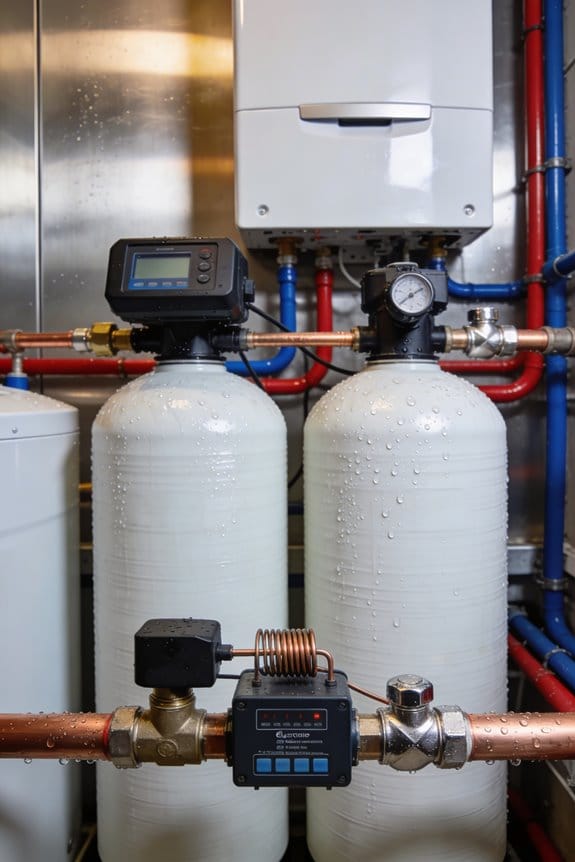
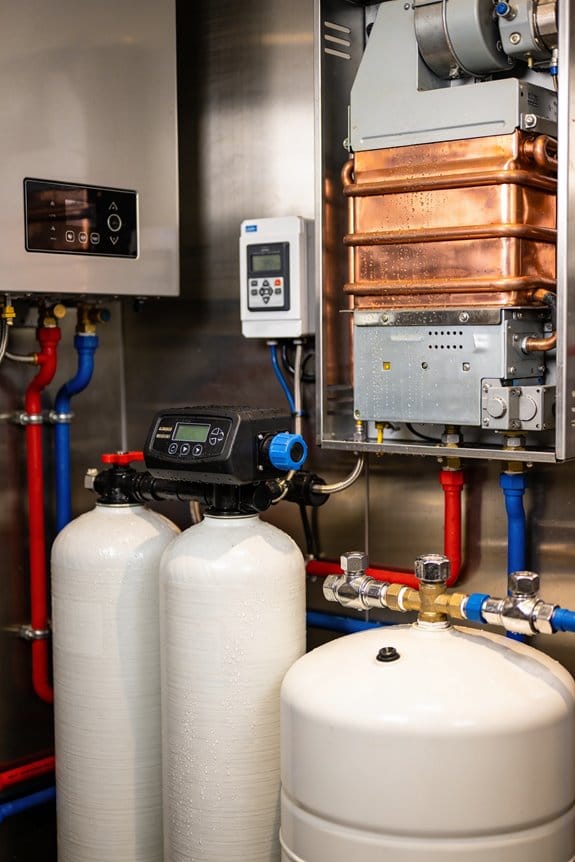
Once you’ve decided that your home needs both a whole-house filter and a water softener, the order in which you install them matters greatly because it directly affects how well each system performs. You should always install your whole-house filter first, positioning it at your main water entry point before the softener. This pre filtering placement protects your softener from sediment and contaminants that could clog its resin bed. The filter removes particles, chlorine, and other impurities, allowing your softener to focus solely on eliminating hard minerals. Installing a bypass valve on your softener lets you redirect water around it during maintenance. This strategic arrangement extends both systems’ lifespans and guarantees peak water quality throughout your home.
Water Softener and Filter Costs: What to Budget
Understanding the costs involved in purchasing and installing both a water softener and a whole-house filter helps you plan your home water treatment budget effectively. Water softeners typically range from $500 to $2,500, depending on capacity and brand quality. Whole-house filters cost between $1,000 and $3,000 for the unit itself. Installation costs vary based on your plumbing setup, adding $500 to $1,500 for professional installation of each system. Beyond initial expenses, you’ll encounter ongoing maintenance expenses like replacing filter cartridges annually ($100–$300) and purchasing softener salt regularly ($100–$200 yearly). When budgeting for both systems together, expect a total investment of $2,500 to $6,000 initially, plus recurring annual maintenance expenses around $200–$500. Planning ahead guarantees you’re financially prepared for all-encompassing home water treatment.
Frequently Asked Questions
How Often Do Water Softeners Need Salt Refills and Maintenance?
I’d recommend refilling salt every four to six weeks, depending on your water hardness level. You’ll also want resin cleaning annually to maintain peak salt frequency efficiency and your softener’s overall performance.
What Is the Lifespan of Whole-House Filter Cartridges Before Replacement?
I’d say most whole-house filter cartridges last 6-12 months, depending on water quality and usage. Your filter longevity depends on contaminant levels, so you’ll want to monitor cartridge lifespan closely for peak performance.
Do Water Softeners Produce Wastewater During the Regeneration Process?
Ever wonder where that salty water goes? Yes, water softeners produce wastewater during regeneration when regeneration brine flushes through the system. I’d address discharge concerns by checking local regulations about drain disposal requirements.
Can I Use a Water Softener With a Septic System Safely?
Yes, you can safely use a water softener with a septic system, though septic compatibility requires attention. I’d recommend filtering before softening to minimize salt’s environmental impact on your system’s bacteria balance.
How Do I Know if My Filter Cartridge Needs Changing?
Your filter’s a canary in the coal mine—I’d watch for a filter indicator light or notice flow reduction at your taps. When water pressure drops noticeably or the indicator signals, it’s time I replace that cartridge.