As an Amazon Associate, we earn from qualifying purchases. Some links on this site are affiliate links at no extra cost to you. Our recommendations are based on thorough research and editorial judgment.

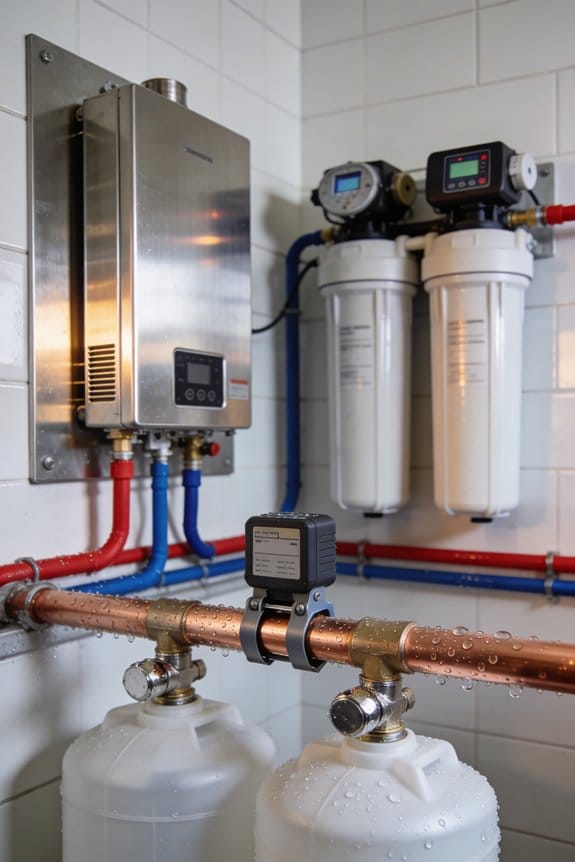
What Are Smart Water Heaters and What Can They Do?

Smart water heaters combine traditional heating with internet connectivity and automated controls to heat water only when you need it. They use sensors to monitor temperature and usage patterns, learning your household habits through cloud-based software. You can control them remotely via smartphone app, receive leak alerts, and enjoy energy savings of 20–30% compared to standard units. Heat pump models operate four times more efficiently than electric ones. The combination of remote monitoring, automatic shutoffs, and optimized heating schedules protects your home while reducing bills and environmental impact, with additional benefits worth exploring further.
Key Takeaways
- Smart water heaters combine heating technology with internet connectivity and cloud-based software to optimize heating schedules based on household usage patterns.
- Remote smartphone app access enables real-time monitoring of temperature and energy consumption, plus instant alerts for leaks and maintenance needs.
- Built-in leak detection sensors automatically shut off water flow after detecting moisture, preventing costly water damage to homes.
- Adaptive scheduling and time-of-use optimization shift heating to off-peak hours, typically reducing household energy consumption by 20–30%.
- Heat pump models operate approximately four times more efficiently than standard electric units while qualifying for federal tax credits and utility rebates.
What Are Smart Water Heaters and How Do They Work?
Smart water heaters break away from traditional models by combining standard heating technology with internet connectivity and automated controls. I’ll explain how they function: these systems use sensors to monitor water temperature and usage patterns, while cloud-based software processes this data to optimize heating schedules. During user onboarding, you’ll connect your unit to Wi-Fi through a smartphone app, enabling remote access and automated adjustments. Sensor calibration guarantees accurate temperature readings and efficient operation. Unlike conventional water heaters that heat continuously, smart models learn your household’s habits and heat water only when needed. They integrate with your home’s network, allowing you to adjust settings, receive alerts, and track energy consumption from anywhere using your phone or voice commands.
Why Smart Water Heaters Save 20–30% on Energy Bills

Imagine your water heater running only when your household actually needs hot water, rather than maintaining a constant temperature around the clock. Smart water heaters achieve this through adaptive scheduling, learning your family’s patterns and adjusting heating times accordingly. This usage forecasting technology predicts when you’ll need hot water, heating it precisely before demand occurs. By shifting heating to off-peak hours when energy costs less, you’re tapping into time-of-use optimization. Heat pump models prove especially efficient, operating four times more effectively than conventional electric systems. The combination of these features—heating only when necessary, avoiding wasteful standby cycles, and leveraging cheaper energy times—creates substantial savings. Most households see 20-30% reductions in energy consumption, directly lowering utility bills while reducing environmental impact.
Control and Monitor Your Heater From Your Phone

Thanks to Wi-Fi connectivity and smartphone apps, you can now manage your water heater from anywhere, whether you’re at work, on vacation, or simply relaxing at home. Mobile dashboards display real-time data about your water temperature, energy consumption, and system status. You’ll receive instant alerts for leaks, unusual heating patterns, or maintenance needs through email or text notifications. Remote diagnostics allow technicians to identify problems before they escalate into costly repairs. Vacation mode automatically reduces energy use when you’re away, while away mode keeps your system efficient during work hours. Voice commands through smart assistants provide hands-free control, and weekly reports track your water usage patterns for informed decisions.
Heat Pump Models: 4X More Efficient Than Standard Electric

When you’re shopping for a new water heater, you’ll encounter heat pump models that operate differently from traditional electric units. Heat pump water heaters use a heat exchanger that captures warmth from the surrounding air, then transfers it to your water supply. This process makes them approximately four times more efficient than standard electric models.
Recent refrigerant innovations have improved heat pump performance markedly. These advanced refrigerants allow the system to extract heat even from cooler environments, expanding where heat pumps work effectively. By moving existing heat rather than generating new heat from electricity, these models consume substantially less energy. For homeowners seeking long-term savings and reduced environmental impact, heat pump water heaters represent a superior choice to conventional electric systems.
Leak Detection Alerts Prevent Water Damage Before It Starts

Smart water heaters come equipped with leak detection systems that catch problems early, preventing costly water damage to your home. These sensors monitor for moisture and alert you immediately through your smartphone app, email, or text message when they detect a leak. The automatic shutoff feature activates when water escapes, limiting damage to just 20 ounces before the system stops water flow. Early alerts give you time to respond quickly before a small drip becomes a major problem. You’ll receive notifications about abnormal water usage patterns, helping you identify issues before they worsen. This proactive approach protects your home’s foundation, walls, and belongings. Combined with diagnostic monitoring, leak detection systems help you avoid expensive repairs and water damage claims that could cost thousands of dollars.
Tax Credits and Rebates That Pay Back Your Investment
Because smart water heaters reduce your energy consumption so markedly, you’re eligible for various tax credits and rebates that help offset your initial investment. Federal tax incentives can cover a portion of your purchase and installation costs, making the upgrade more affordable. Additionally, many utility companies offer utility rebates when you install an energy-efficient model, recognizing the reduced demand on their systems during peak hours. These financial incentives vary by location and change annually, so I recommend checking your local utility provider’s website for current offerings. When you combine these tax credits and rebates with the long-term savings from lower energy bills, your smart water heater pays for itself markedly faster than traditional models would.
Installation and Long-Term Reliability
As with most home appliances, the installation process for smart water heaters determines much of their long-term performance and reliability. I’d recommend hiring a professional installation to guarantee proper setup, correct connections, and peak system configuration. Professional installation typically includes inspecting your existing plumbing, determining the right unit size, and integrating smart features with your home network.
Quality units often come with extended warranty longevity, protecting your investment for 10-12 years. This coverage addresses potential manufacturing defects and component failures. Well-installed smart water heaters experience fewer problems because technicians verify all connections and calibrate sensors correctly. Regular maintenance—checking the anode, flushing sediment, and updating firmware—further extends system lifespan. When you invest in professional installation upfront, you’re fundamentally safeguarding years of reliable hot water and consistent energy savings.
Frequently Asked Questions
What Types of Fuel Options Are Available for Smart Water Heaters?
I’ve got three fuel options for you: electric models, hybrid systems, and gas or propane variants. Each type offers smart features like remote control and energy monitoring, so you’ll find one that fits your home’s needs perfectly.
How Do Smart Water Heaters Integrate With Renewable Energy Sources Like Solar?
I’ve found that smart water heaters excel at solar coupling by absorbing excess solar power for preheating. Their load shifting capabilities let you coordinate heating with peak solar production times, maximizing your renewable energy usage efficiently.
Can Smart Water Heaters Work With Existing Smart Home Systems and Voice Assistants?
Ironically, I’ll tell you they’re complicated—they’re not. I’ve found smart water heaters integrate seamlessly with existing systems through voice control and compatibility testing, working effortlessly with your smart home ecosystem.
What Happens if My Smart Water Heater Detects a Temperature Problem Automatically?
When your smart water heater detects a temperature problem, it’ll automatically trigger an automatic shutoff to protect your system. You’ll receive safety alerts via your app, email, or text so you’re immediately informed of the issue.
How Do Demand Response Programs Provide Bill Credits Through My Utility Company?
You might think demand response is complicated, but it’s simple: I shift my heating to off-peak hours through utility incentives, reducing grid strain. My smart heater syncs with programs offering bill credits for peak shifting participation.


