As an Amazon Associate, we earn from qualifying purchases. Some links on this site are affiliate links at no extra cost to you. Our recommendations are based on thorough research and editorial judgment.


What Is a Connected Home Water System and How Does It Save Money?

A connected home water system uses smart sensors and automatic shut-off valves to monitor your water supply constantly. These devices detect leaks as tiny as one drop per minute using ultrasonic technology, catching problems before they cause expensive damage. You’ll save money through reduced water waste, lower utility bills, and potential insurance discounts. Installation costs $500–$1,000 but typically pays for itself within two to three years. Understanding exactly how these systems work reveals significant financial benefits worth exploring.
Key Takeaways
- Smart sensors and automatic shut-off valves monitor water 24/7, detecting leaks as small as one drop per minute and preventing catastrophic damage.
- AI-powered systems establish normal usage patterns, instantly identifying anomalies like slow drips or burst pipes through ultrasonic sensing and pressure analysis.
- Early leak detection prevents thousands of gallons wasted annually, reduces water bills, and avoids expensive pipe replacements and mold remediation costs.
- Automatic valve shut-offs respond within seconds to unusual flow, protecting homes from $5,000 to $25,000 in burst pipe damage even when away.
- Systems cost $500 to $1,000 upfront with potential $100 to $300 yearly insurance discounts, typically paying for themselves within two to three years.
What Is a Connected Home Water System?
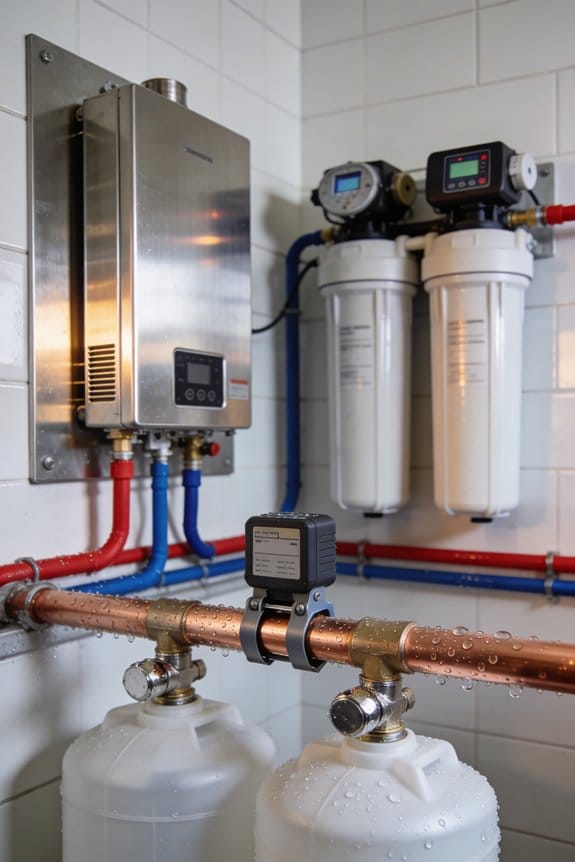
A connected home water system is a network of smart sensors, valves, and hubs that work together to monitor your home’s water supply 24/7, detecting leaks and usage patterns you’d otherwise miss. This smart plumbing technology uses IoT devices to track water flow, pressure, and consumption throughout your home. The sensor networks include flow sensors that measure water movement, automatic shut-off valves that stop supply during emergencies, and standalone moisture detectors placed near vulnerable areas like water heaters and washing machines. A centralized Wi-Fi hub connects these components, sending real-time data to your smartphone app. Together, these elements create a all-encompassing system that catches problems early, from pinhole leaks to burst pipes, protecting your home from costly water damage.
How Water Monitors Detect Leaks Early?

The technology behind leak detection zeroes in on patterns that your eyes can’t see, using sensors that continuously analyze your home’s water behavior to identify problems before they become disasters. These smart monitors employ ultrasonic sensing, which uses sound waves to detect water movement and identify irregularities in flow. Your system learns what’s normal through behavioral baselining, establishing baseline measurements of your typical water usage patterns. When flow deviates from this learned baseline—whether from a slow drip or sudden burst—the AI algorithms recognize the anomaly immediately. Pressure wave analysis further enhances detection by monitoring temperature and pressure fluctuations 24/7 throughout your pipes. This multi-layered approach catches leaks as small as one drop per minute, alerting you before damage occurs.
Why Water Leaks Cost Thousands?
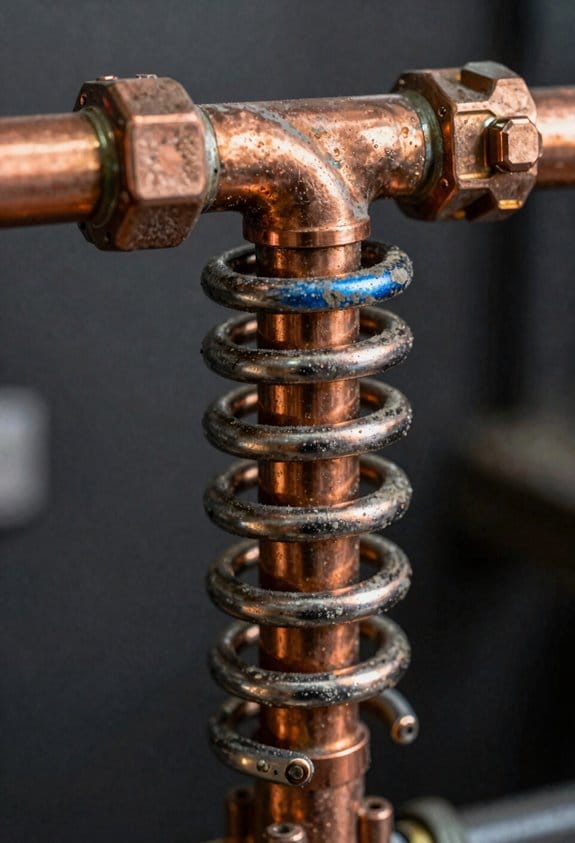
While you might think a small leak in your home’s plumbing is just a minor inconvenience, it can actually drain your wallet far faster than the water drains from your pipes. A single dripping faucet wastes thousands of gallons annually, inflating your water bill markedly. Beyond immediate costs, hidden corrosion develops within your pipes when moisture persists unchecked, requiring expensive replacements. Burst damage from frozen or deteriorating pipes can cost $5,000 to $25,000 in repairs alone. Water seeping into walls and foundations creates mold, demanding professional remediation that drains savings quickly. Appliance failures from slow leaks add hundreds more in replacement expenses. Early detection through connected water systems prevents these cascading financial disasters, protecting your home’s structural integrity and your budget simultaneously.
How Automatic Shut-Offs Stop Water Damage?

Once you’ve understood how expensive water leaks can become, you’ll want to know how automatic shut-off valves work to stop them before they cause serious damage. These valves use valve automation to respond instantly when sensors detect unusual water flow or pressure changes. When a leak occurs, the system triggers rapid shutoff, closing the main water supply within seconds. This immediate action prevents water from flowing through damaged pipes or burst hoses, stopping potential thousands of dollars in damage. The valve automation technology works continuously without your involvement, protecting your home even while you’re away. By combining flow sensors with automatic shut-offs, you’ve created an all-encompassing defense system that eliminates the risk of catastrophic water damage.
Real Savings: What You’ll Actually Cut From Your Water Bill?

Because most homeowners don’t realize how much water they’re wasting through hidden leaks and inefficient usage patterns, a connected home water system can reveal surprising opportunities to lower your monthly bill. By detecting and fixing leaks as small as one drop per minute, you’ll reduce leakage markedly, preventing the waste of thousands of gallons annually. Many utility companies offer tiered pricing, meaning lower consumption puts you in cheaper rate brackets. Real savings depend on your current usage and local water rates, but systems like Flo have helped homeowners identify hidden drips that waste substantial amounts. Combined with automatic shut-offs preventing burst pipe damage and usage tracking showing consumption patterns, these systems typically deliver measurable bill reductions within months of installation.
Installing Your Water Monitoring System in 5 Steps
Setting up a connected home water system doesn’t require professional plumbing skills, though you’ll want to follow manufacturer instructions carefully to guarantee proper installation. First, locate your main water supply near the water heater and turn off the valve, then drain remaining pipes. Next, secure the shut-off valve onto your main pipe following specific guidelines. After connecting to Wi-Fi and pairing with your app, proceed with sensor placement in vulnerable areas like basements, under tanks, and near appliances. Valve calibration makes certain accurate pressure readings and leak detection. Finally, slowly restore water flow while checking all connections for leaks. Testing confirms your system functions properly before relying on it for protection.
Is a Home Water Monitor Worth the Investment?
When you’re deciding whether to install a home water monitor, you’re really asking yourself if the investment will pay off through leak prevention and water savings. Most systems cost between $500 and $1,000 initially, which seems expensive until you consider the long term ROI. A single burst pipe can cost $10,000 in repairs, while continuous leaks waste thousands of gallons annually. Many insurance companies offer insurance discounts for homes with monitoring systems installed, potentially saving you $100 to $300 yearly. Additionally, detecting hidden drips reduces your water bill markedly. When you factor in damage prevention, lower water usage, and insurance savings, the system typically pays for itself within two to three years.
Frequently Asked Questions
Do Connected Water Systems Work During Internet Outages or Wi-Fi Failures?
Yes, I’m telling you that most systems maintain local autonomy through fallback protocols. They’ll continue monitoring and can automatically shut off water during emergencies even without internet connectivity, though you won’t receive remote notifications.
Can I Integrate My Water Monitor With Existing Smart Home Platforms?
I’ll cut to the chase: yes, you can integrate your water monitor with existing smart home platforms. Most systems offer smart integration through platform compatibility with popular ecosystems like Google Home and Amazon Alexa for seamless control.
How Often Do I Need to Replace Sensors or System Batteries?
I’d recommend checking your system’s manual, as battery lifespan typically ranges from two to five years depending on usage. Most sensors don’t require replacement unless damaged, though you’ll eventually need new batteries for wireless devices.
What Happens if the Automatic Shut-Off Valve Malfunctions During Emergency?
If you’re wondering what’d happen if your valve fails—don’t worry. I’ve got you covered. You’ll find manual override options and redundant safeguards built in, ensuring you’re never left vulnerable during an emergency.
Are There Privacy Concerns With Continuous Water Usage Data Collection?
I’d recommend checking your system’s privacy policy regarding data ownership. Most providers offer anonymized reporting options, so you’re not sharing identifiable personal information. You’ll retain control over what data’s collected and shared.