As an Amazon Associate, we earn from qualifying purchases. Some links on this site are affiliate links at no extra cost to you. Our recommendations are based on thorough research and editorial judgment.


What Causes a Water Heater to Leak Around the Base?

A water heater leaks around its base for several common reasons. Your drain valve might be loose or partially open, which you can often fix by tightening the handle. Sediment buildup from minerals hardens at the tank bottom, trapping water that weakens the metal and creates holes. If your anode rod fails, rust eats through the steel tank walls. A faulty temperature and pressure valve may discharge water during normal heating. Understanding which issue you’re facing helps determine whether you’ll need repairs or a full replacement.
Key Takeaways
- Drain valve issues—loose handles, cracks, or wear prevent proper sealing and cause localized leaks at the base.
- Sediment buildup hardens at tank bottom, traps water underneath, creates pressure that weakens metal and causes holes.
- Failed anode rod allows rust to corrode steel tank walls, creating small holes that leak water around base.
- Faulty T&P valve releases water when temperature or pressure exceeds safe limits, discharging near the tank base.
- Loose inlet/outlet fittings, condensation, and faulty heating element gaskets allow water to seep downward and pool at base.
Leaking Drain Valve: The Easiest Diagnosis and Fix
When you spot water pooling around your water heater’s base, the drain valve often turns out to be the culprit, and here’s why that’s actually good news: this is frequently the easiest problem to diagnose and fix. The drain valve sits near the tank’s bottom for maintenance and sediment removal. During your valve inspection, check whether the handle is fully closed or partially open, which commonly causes localized leaks. If tightening the handle doesn’t resolve the issue, you’ll likely need a handle replacement or complete valve replacement if cracks have formed. Wear over time causes improper sealing, allowing water to escape. Unlike internal tank deterioration, addressing a faulty drain valve requires minimal expense and can often be completed quickly.
Sediment Buildup: The Most Common Culprit in Hard Water Areas

Sediment buildup stands as the most frequent cause of water heater leaks in hard water regions, where minerals like calcium and magnesium naturally accumulate inside your tank. As water heats, these mineral deposits settle at the tank bottom and gradually harden into a crusty layer. This buildup traps water underneath, which boils and creates pressure that weakens the metal base, eventually causing small holes and leaks.
Hard water accelerates this process markedly. I recommend tank flushing every six months as a maintenance frequency that prevents excessive sediment accumulation. Regular flushing removes mineral deposits before they cause damage. Without consistent maintenance, the hardened sediment insulates the tank bottom from proper heat distribution, intensifying corrosion and structural failure, making prevention essential for extending your water heater’s lifespan.
Corrosion and Rust: How Your Tank’s Anode Rod Fails
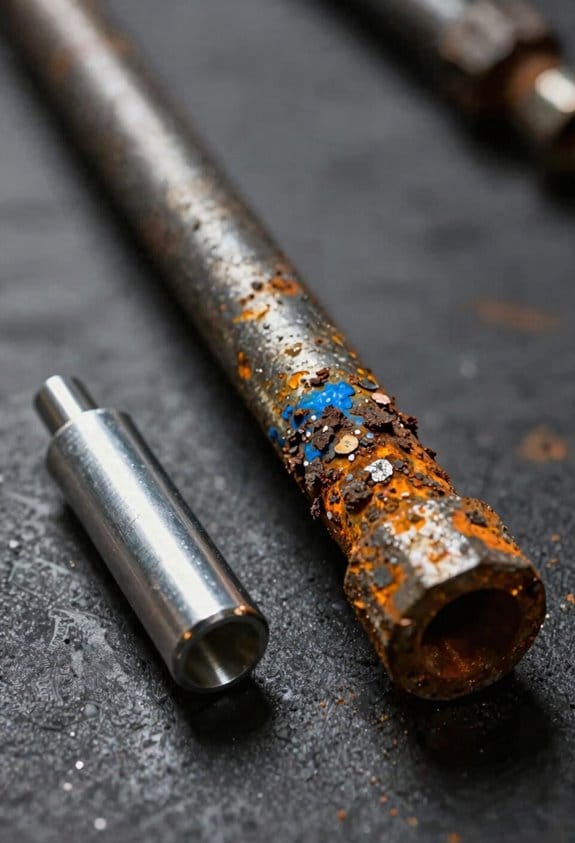
Rust develops inside your water heater tank when the protective anode rod deteriorates and can no longer shield the steel walls from corrosion. This sacrificial protection system works by attracting corrosive elements, preventing them from attacking the tank’s metal lining. When your anode rod fails—which happens faster in hard water areas—rust begins eating away at the steel, creating small holes that leak from the base.
You’ll notice rust-colored water or recurring leaks as warning signs. Age, mineral buildup, and lack of maintenance accelerate this damage. Anode replacement before complete failure is your best defense. However, once internal rust becomes severe, patching won’t work effectively. If your tank’s over ten years old with visible rust problems, replacement is typically safer than attempting repairs, preventing potential ruptures and water damage to your home.
Faulty Temperature & Pressure Valve: When Safety Releases Create Leaks
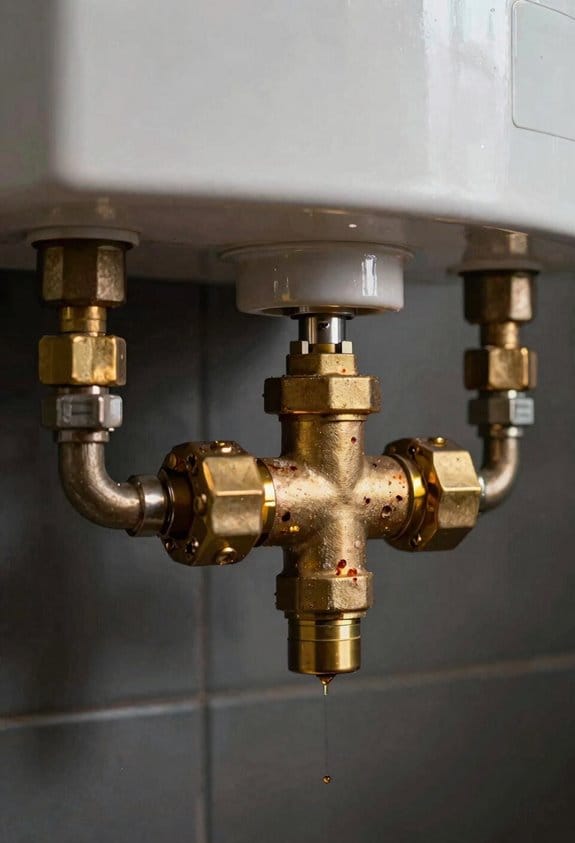
Because your water heater’s temperature and pressure valve serves as a critical safety feature, it’s designed to release water automatically when conditions inside the tank exceed safe limits. When thermal expansion occurs during heating, pressure builds inside the tank. Your T&P valve’s job is releasing this excess pressure to prevent dangerous situations.
However, a faulty valve malfunctions and discharges water near the base, creating what appears to be a leak. Sediment blockage, wear over time, or high pressure triggers these false leaks. You’ll notice a wet discharge tube if your valve isn’t functioning properly.
Operating your water heater above 140-145°F or exceeding its rated PSI risks tank rupture. If you suspect a faulty T&P valve, contact a plumber for replacement rather than attempting repairs yourself.
Cracked Tank Lining: When Replacement Is Your Only Option
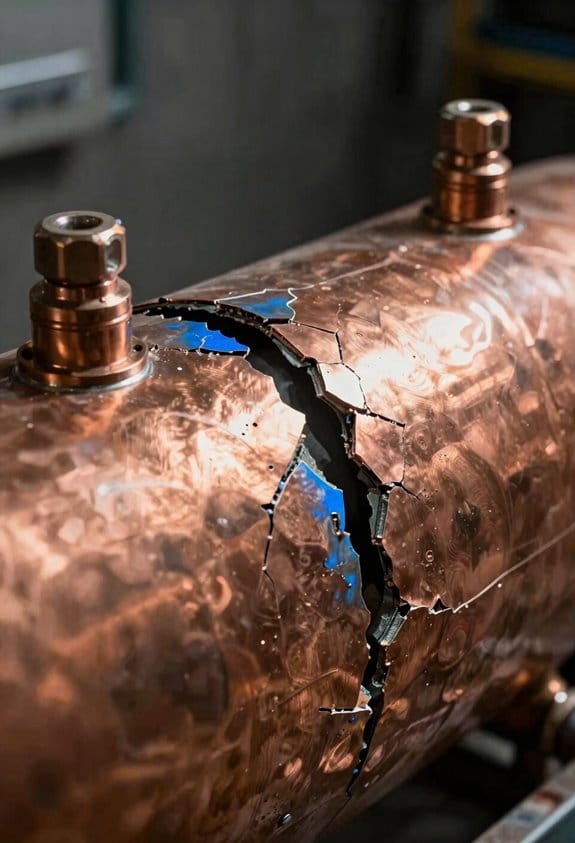
While some water heater problems can be fixed with adjustments or replacements of individual parts, a cracked or deteriorated tank lining represents a different level of damage entirely. I want you to understand that when your water heater’s inner lining fails, it causes structural failure that can’t be repaired effectively. You might notice bubbling or seeping from the base, which signals that water’s escaping through cracks in the tank itself. Patching doesn’t work because the damage runs too deep. If you’ve owned your water heater for over a decade and experience recurring leaks or rust, replacement is your safest option. Gravity pulls water downward, pooling at the base where you’ll see it. Don’t delay addressing this issue, as it could lead to rupture.
Loose Connections, Condensation, and Heating Element Gaskets: Hidden Leak Sources
Not all water heater leaks originate from the tank itself, and that’s actually good news because some of the most common leak sources are far easier to fix than a failing tank. Loose fittings at inlet and outlet connections allow water to seep downward, pooling at the base where you’ll notice it first. Condensation pooling occurs when temperature differences between the hot tank and surrounding air create moisture that drips down the exterior. In electric water heaters, a faulty heating element gasket can leak internally, causing water to travel downward through the tank. Identifying these hidden sources matters because tightening connections or replacing a gasket costs considerably less than tank replacement, and you’ll resolve the problem quickly.
Why Older Water Heaters Leak More Easily
As water heaters age past the ten-year mark, they’re considerably more prone to leaking because multiple internal and external components deteriorate simultaneously. The anode rod, which protects your tank’s steel lining from rust, gradually depletes over time, leaving the metal vulnerable to corrosion. Sediment accumulation accelerates damage at the tank’s base, trapping water that causes cracking and weakening.
Age-related weakening affects seals, valves, and connections throughout the system. Additionally, manufacturer obsolescence means replacement parts become harder to find, forcing you to choose between costly repairs and replacement. Heating elements develop faulty gaskets, drain valves lose their grip, and pipe connections loosen more easily. After a decade, your water heater’s structural integrity markedly declines, making leaks almost inevitable without preventative maintenance or replacement.
Repair or Replace: Making the Right Call
When you discover a leak around your water heater’s base, you’ll face a practical decision: invest in repairs or replace the entire unit. A cost comparison helps guide your choice. If your water heater’s under ten years old and the leak stems from a faulty drain valve or T&P valve, repairs make financial sense. However, if corrosion or internal tank failure caused the leak, replacement becomes necessary since patching proves ineffective. Consider installation timing when planning replacements, as scheduling during off-peak seasons may reduce labor costs. Generally, if repair expenses exceed fifty percent of a new unit’s price, replacement offers better long-term value. Older units nearing or exceeding ten years warrant replacement regardless, preventing future costly emergency repairs.
Frequently Asked Questions
How Can I Tell if My Water Heater Leak Is an Emergency Requiring Immediate Shutdown?
I’d watch for safety indicators like pooling water near electrical components, gas leaks’ rotten egg smell, or rapid shutdown needs. If you notice these, turn off your heater immediately and call a plumber.
What Is the Typical Cost Difference Between Repairing Versus Replacing a Leaking Water Heater?
Would you rather spend $150-$300 on repair costs now or $800-$1,500 on replacement costs later? I’d say repair costs are cheaper upfront, but replacement costs often prove more economical long-term for older units.
Can I Use a Temporary Sealant or Epoxy to Patch a Leaking Water Heater Tank?
I don’t recommend using temporary epoxy or adhesive patching on your leaking water heater tank. These solutions fail under constant heat and pressure. You’ll need professional replacement to prevent catastrophic rupture and water damage.
How Long Does a Water Heater Typically Last Before Leak Problems Become Inevitable?
Most water heaters last 8-12 years before leak problems become inevitable. I’d say the expected lifespan varies based on your water’s corrosion rate and maintenance habits. Hard water accelerates deterioration markedly.
What Maintenance Schedule Prevents Most Water Heater Leaks From Occurring in the First Place?
I’ve found that 80% of leaks are preventable with proper maintenance. I recommend annual inspections and replacing your sacrificial anode every 3-5 years. Flushing every six months in hard water areas markedly extends your heater’s lifespan.