As an Amazon Associate, we earn from qualifying purchases. Some links on this site are affiliate links at no extra cost to you. Our recommendations are based on thorough research and editorial judgment.

What Does a Water Softener Actually Remove From Water?

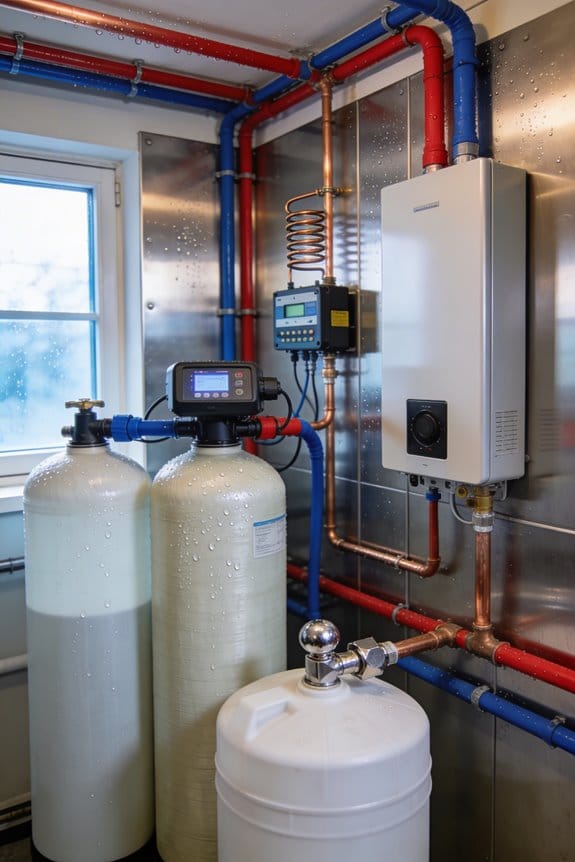
Water softeners remove calcium and magnesium, the minerals that make water hard. They use resin beads coated with sodium ions that attract and trap these hardness minerals through a process called ion exchange. When the resin becomes saturated, salt brine regenerates it, restoring the softener’s capacity. However, softeners don’t remove chlorine, fluoride, bacteria, viruses, or heavy metals—you’ll discover what additional filtration you might need as you explore further.
Key Takeaways
- Water softeners remove calcium and magnesium ions through ion exchange technology, eliminating the primary causes of hard water.
- Softeners replace hardness minerals with sodium ions, preventing scale buildup in pipes, appliances, and fixtures throughout your home.
- Water softeners do not remove chlorine, fluoride, lead, bacteria, viruses, pesticides, or volatile organic compounds from water.
- Salt-based softeners completely eliminate hardness minerals, while salt-free systems neutralize minerals without removing them from the water.
- Additional filtration systems are needed to address contaminants beyond hardness, such as heavy metals, microorganisms, and chemical pollutants.
What Minerals Do Water Softeners Remove
Water softeners work by targeting and removing specific minerals that make water “hard,” with calcium and magnesium being the two primary culprits responsible for most water hardness issues. I’ll explain how this mineral removal transforms your water quality and protects your home.
When calcium and magnesium accumulate in your pipes and appliances, they create mineral deposition that reduces efficiency and lifespan. Water softeners eliminate nearly all these hardness minerals through ion exchange technology, providing scale prevention across your entire plumbing system. This hardness mapping—understanding your water’s mineral content—helps determine whether softening will benefit you.
The household impacts are significant: you’ll notice eliminated white spots on dishes, improved soap lathering, and reduced buildup in water heaters and pipes. Additionally, softened water extends appliance longevity by preventing mineral accumulation damage.
How Water Softeners Remove Hardness

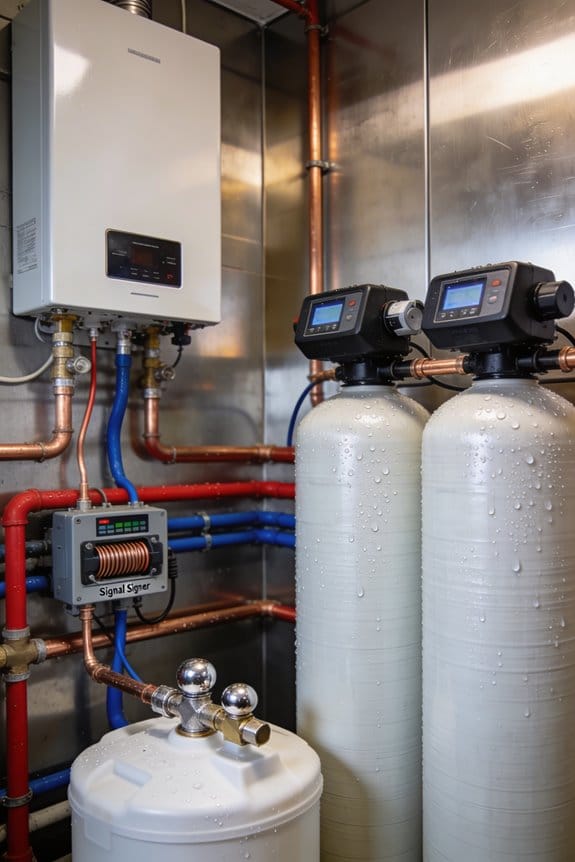
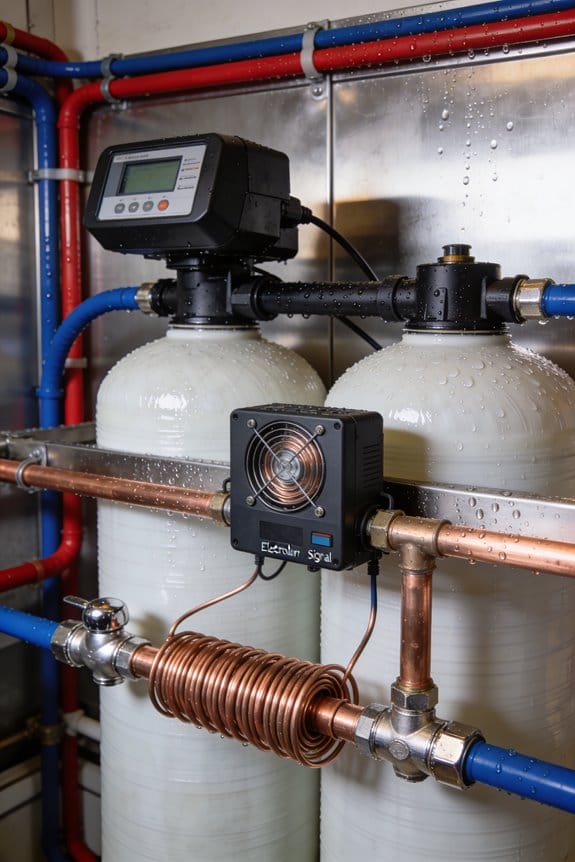
Ion exchange technology powers the mineral removal process, drawing hardness minerals from your water through a carefully engineered chemical reaction. Inside the softener’s tank, small resin beads coated with sodium ions attract calcium and magnesium ions as water flows through. This exchange happens instantly, replacing hard minerals with sodium while maintaining consistent flow rate. Over time, the resin becomes saturated with hardness minerals and loses effectiveness, requiring regeneration. During this resin maintenance cycle, concentrated salt brine from a separate tank flushes through the resin bed, stripping away accumulated calcium and magnesium. Fresh sodium ions coat the beads again, restoring the softener’s capacity. This continuous regeneration process keeps your system working efficiently, typically occurring automatically based on water usage patterns.
Why You Need a Water Softener (Benefits for Appliances and Pipes)

Because hard water damages your plumbing and appliances over time, installing a water softener protects one of your home’s most important systems. When calcium and magnesium accumulate inside pipes, water heaters, and washing machines, they form scale deposits that reduce efficiency and create costly repairs. A water softener prevents this buildup, directly contributing to plumbing longevity by keeping your pipes clear and flowing properly.
The appliance savings you’ll experience are significant. Softened water allows your dishwasher, washing machine, and water heater to operate at peak performance without mineral interference. These appliances last longer and require fewer maintenance calls when they’re not fighting mineral deposits. By removing hardness minerals before they cause damage, a water softener becomes a practical investment that protects your home’s infrastructure and extends equipment lifespan.
Test Your Water Before Buying a Softener

Before you invest in a water softener system, I recommend testing your water to determine whether you actually have a hard water problem and, if so, how severe it is. Home testkits offer an affordable starting point for checking calcium and magnesium levels in your tap water. These kits provide quick results that tell you whether softening is necessary. I suggest performing seasonal testing because water hardness can vary throughout the year due to changes in water sources and underground mineral deposits. Professional lab testing offers more detailed analysis if you need thorough information about other contaminants beyond hardness minerals. Understanding your specific water composition makes certain you’ll purchase the right system for your needs and avoid unnecessary expenses on equipment you don’t require.
Salt-Based vs. Salt-Free Softening Systems

Once you’ve determined that you need a water softener, you’ll face a key decision between salt-based and salt-free systems, each using different methods to handle hard water minerals. Salt-based systems use ion exchange, replacing calcium and magnesium with sodium ions through resin beads. They’re highly effective at removing hardness minerals completely.
Salt-free systems work differently by neutralizing minerals rather than removing them, preventing scaling without adding sodium. However, salt free misconceptions exist—these systems don’t actually soften water in the traditional sense. Magnetic effectiveness remains debated among experts; while some claim magnetic systems prevent mineral binding, scientific evidence supporting their performance is limited.
Your choice depends on whether you prioritize maximum mineral removal or prefer avoiding sodium addition to your water supply.
Sodium in Softened Water: Is It Safe?
When you choose a salt-based water softener, you’re trading hard water minerals for sodium ions, which naturally raises a concern: Is the sodium added to my drinking water safe?
The answer is reassuring. An 8-ounce glass of softened water contains less than 12.5 milligrams of sodium, meeting FDA standards for “very low sodium” classification. This minimal addition doesn’t make your water taste salty or pose health risks for most people.
However, if you have specific dietary considerations, like sodium-restricted diets, you might explore sodium alternatives. Some systems use potassium ions instead, reducing sodium intake further. Discussing your water treatment options with your doctor guarantees your softening system aligns with your health needs.
What Water Softeners Can’t Remove (And When to Add Filtration)
While water softeners excel at removing hardness minerals, they have significant limitations that many people don’t realize until they’ve already installed one. Your softener won’t remove chlorine, fluoride, lead, bacteria, or viruses that contaminate your water supply. Pesticides and volatile organic compounds pass through untreated. If you need thorough protection, consider point-of-entry systems that treat water throughout your home or point-of-use filters at specific faucets. For well water, soil remediation and stormwater treatment concerns make additional testing essential. Heavy metals like arsenic also require separate filtration methods. I’d recommend having your water tested to identify specific contaminants, then choosing appropriate supplementary filters to address what your softener can’t handle.
Choosing the Right System for Your Needs
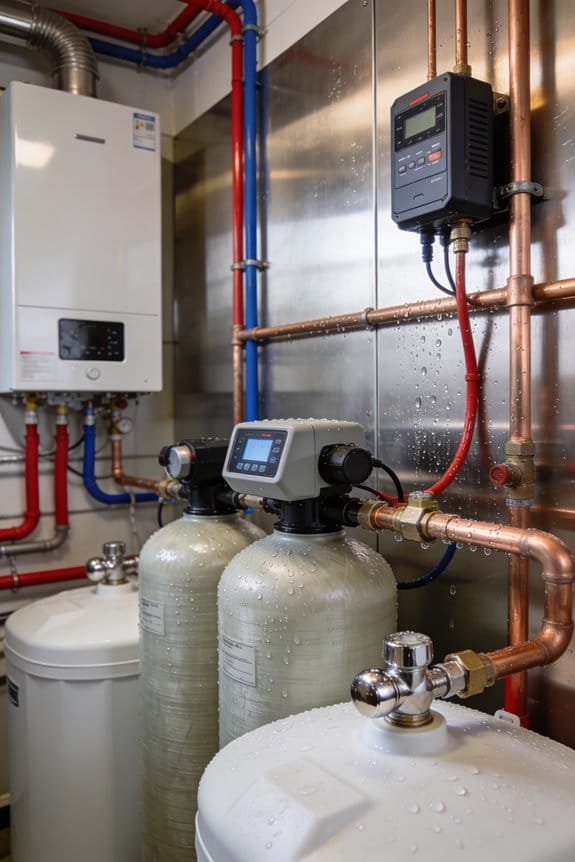
Now that you understand what water softeners remove and their limitations, selecting the right system depends on your specific water quality issues and household needs. If you’re dealing only with hard water, a salt-based system works well and offers affordable installation costs. However, if your water contains chlorine, bacteria, or heavy metals, you’ll need a full filtration system combining softening with additional filtration stages. Consider your maintenance schedule carefully—salt-based systems require regular brine tank refills, while salt-free alternatives need less frequent upkeep. Dual-tank systems cost more initially but provide continuous soft water without interruption. Evaluate your budget, water quality test results, and how much maintenance you’re willing to perform before making your final decision.
Frequently Asked Questions
How Often Does a Water Softener System Need Regeneration or Maintenance?
I’d recommend scheduling checks every few months to monitor salt levels and resin condition. You’ll want seasonal adjustments based on water hardness changes, typically regenerating every few days to weekly depending on usage.
Can Water Softeners Remove Bad Taste or Odor From Tap Water?
I’ll paint you a picture: a water softener’s like a bouncer at a club—it stops minerals, not unwanted guests of flavor. While it doesn’t remove taste or odor, you’ll need carbon filters for odor reduction and taste removal.
What Is the Environmental Impact of Using Salt-Based Water Softening Systems?
Salt-based systems generate brine discharge containing excess sodium and chloride, which I’d note can contribute to chloride pollution in waterways when not properly managed. You’ll want to take into account environmental impacts before installation.
How Long Do Water Softener Resin Tanks Typically Last Before Replacement?
You’re probably wondering the same thing I did—resin lifespan typically spans 10-15 years. Replacement timing depends on water hardness levels and regeneration frequency. I’ve found that regular maintenance extends your tank’s longevity considerably.
Does Softened Water Require Special Consideration for Plants or Pets?
Yes, I’d recommend caution. Some plants show plant sensitivity to softened water’s sodium content, though it’s generally safe for pet hydration. I’d consider using unsoftened water for sensitive plants occasionally.