As an Amazon Associate, we earn from qualifying purchases. Some links on this site are affiliate links at no extra cost to you. Our recommendations are based on thorough research and editorial judgment.

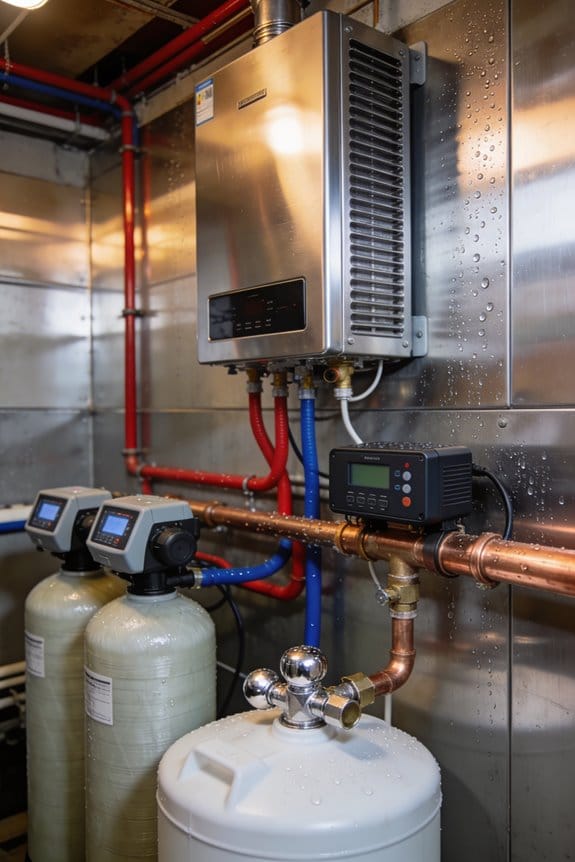
What Does “Energy Factor” (UEF) Mean on a Water Heater Label?

UEF, or Uniform Energy Factor, measures how efficiently your water heater converts energy into hot water. The Department of Energy standardized this rating in 2017 to help you compare models easily. Higher UEF numbers mean less wasted energy and lower utility bills. Tank water heaters typically score 0.60–0.70, while tankless units reach 0.85–0.97, and heat pump models achieve 3.0–4.1. Understanding your household’s hot water needs helps determine which UEF rating works best for your situation.
Key Takeaways
- UEF measures how efficiently a water heater converts energy into usable hot water for your home.
- Higher UEF ratings indicate less wasted energy, resulting in lower utility bills and reduced energy consumption.
- Tank models typically have UEF around 0.60–0.70, while tankless units achieve 0.85–0.97 and heat pumps reach 3.0–4.1.
- The U.S. Department of Energy standardized UEF in 2017 to enable straightforward comparisons between different brands and models.
- UEF combines usage category and First Hour Rating to calculate overall efficiency for your household’s hot water needs.
What Is UEF and Why It Matters for Your Water Heater
Efficiency—the concept of getting more value from the energy you use—plays a crucial role in choosing a water heater, and that’s where Uniform Energy Factor, or UEF, comes in. I’ll explain: UEF measures how effectively your water heater converts energy into hot water, with higher ratings indicating less wasted energy and lower utility bills. The U.S. Department of Energy standardized UEF in 2017 to replace outdated metrics, making comparisons between brands straightforward. Understanding your water heater’s UEF helps you make informed purchasing decisions. Many utility companies offer rebate programs for high-efficiency models, reducing your upfront costs. Combined with basic maintenance tips like regular flushing, selecting a water heater with strong UEF ratings maximizes your long-term savings and performance.
Why UEF Ratings Vary Across Water Heater Types

Because different water heaters operate using distinct technologies and designs, their UEF ratings reflect these fundamental differences in how they heat and deliver water. Traditional tank models store heated water, which means they experience standby heat loss, resulting in lower UEF ratings around 0.60-0.70. Tankless water heaters heat water on demand without storage, achieving higher ratings between 0.85-0.97. Heat pump water heaters use advanced technology to extract ambient heat, delivering exceptional UEF ratings of 3.0-4.1. These variations have material impact on your long-term energy costs and installation complexity. Understanding these differences helps you choose the right system for your home’s hot water needs and budget considerations.
Tank vs. Tankless vs. Heat Pump: The UEF Comparison

When you’re shopping for a new water heater, you’ll quickly notice that the three main types—tank, tankless, and heat pump—have dramatically different UEF ratings, and understanding these differences can help you make a smarter choice. Traditional tank models typically score between 0.60 and 0.70 UEF, meaning they lose considerable energy keeping water hot continuously. Tankless water heaters perform markedly better at 0.85 to 0.97 UEF because they heat water only when needed. Heat pump water heaters lead the pack with ratings between 3.0 and 4.1 UEF, using ambient air to heat water efficiently. While installation costs and maintenance differences vary considerably among these types, the UEF rating reveals which option will deliver the lowest long-term energy expenses for your household.
How UEF Translates to Real Annual Energy Savings

Understanding how UEF ratings translate into your actual annual energy bill requires looking beyond the simple number and considering your household’s hot water usage patterns. A heat pump water heater with a 3.5 UEF rating uses markedly less energy than a traditional tank model rated 0.65 UEF, resulting in substantial annual savings. Your lifecycle cost depends on the water heater’s purchase price, installation expenses, and long-term operational costs. While heat pump models cost more upfront, their superior efficiency often recovers that investment within five to seven years through reduced energy consumption. A family using 80 gallons daily could save $200-$400 annually by upgrading from a standard tank to a high-efficiency model, making UEF ratings practical indicators for financial decision-making.
Understanding Usage Categories and First Hour Rating

To make sense of your water heater’s efficiency rating, you’ll need to break down how UEF scores connect to two key measurements: usage categories and first hour rating (FHR).
The DOE divides water heaters into four usage categories based on typical household consumption patterns. Your water heater’s category determines which delivery metrics apply to it. First hour rating measures how much hot water your system delivers during peak demand, usually the first hour after heating.
These delivery metrics directly influence your UEF calculation. A higher FHR combined with excellent UEF means your heater efficiently handles your family’s usage patterns. Understanding these connections helps you select equipment that matches your actual hot water needs while maximizing efficiency gains throughout the year.
Reading the Numbers: What Your UEF Rating Actually Means
Now that you understand how usage categories and first hour rating work together, you’re ready to interpret what that UEF number on your water heater actually tells you about real-world performance. A higher UEF means your water heater wastes less energy and converts more fuel into usable hot water. For example, a heat pump water heater with a 3.5 UEF markedly outperforms a traditional tank model rated at 0.65 UEF. You’ll notice lower energy bills with higher ratings. To maximize your water heater’s efficiency, follow recommended installation tips from the manufacturer and adhere to maintenance schedules. Regular upkeep makes certain your unit operates at peak performance, helping you achieve the efficiency gains that the UEF rating promises.
Choosing the Right UEF for Your Household’s Hot Water Needs
Several factors determine which UEF rating works best for your home, and selecting the right one depends on your family’s hot water usage patterns and budget constraints. Start with household profiling, which means analyzing how many people live in your home and their daily hot water consumption habits. Usage forecasting helps you estimate future needs, whether you’re planning to expand your family or install new appliances requiring hot water.
If your family uses modest amounts of hot water, a traditional tank water heater with a 0.60-0.70 UEF may suffice. Conversely, larger households or those wanting significant energy savings should consider tankless models (0.85-0.97 UEF) or heat pump water heaters (3.0-4.1 UEF). Higher UEF ratings mean lower energy bills over time, though upfront costs vary considerably.
Making Your Final Decision: UEF and Beyond
After analyzing your household’s hot water needs and comparing UEF ratings across different water heater types, you’re ready to weigh the factors that extend beyond efficiency numbers. While a higher UEF saves you money over time through reduced energy consumption, lifecycle costs matter considerably. Consider the initial purchase price alongside long-term operating expenses and potential replacement costs. Installation considerations also deserve attention since tankless and heat pump models may require modifications to your home’s plumbing or electrical systems. These upgrades add upfront expenses but often result in greater savings later. Factor in your local energy rates, how long you’ll stay in your home, and available rebates or tax credits. Balancing UEF efficiency with practical installation realities guarantees you’ll make a financially sound choice.
Frequently Asked Questions
When Did Manufacturers Have to Start Reporting UEF Instead of the Older EF Metric?
I’ll tell you manufacturers faced a June 2017 deadline for reporting UEF instead of the older EF metric. This regulatory shift marked the manufacturing timeline when the Department of Energy’s new testing procedures became mandatory for all residential water heaters.
How Do Real-World Testing Conditions for UEF Differ From Laboratory Measurements?
I’d love to tell you UEF testing’s revolutionary—it’s not. Here’s the truth: labs use controlled conditions, but real-world field studies show ambient variation dramatically affects performance. You’re getting averaged results, not your actual home’s efficiency.
Does UEF Apply to Commercial or Only Residential Water Heater Units?
I’ll tell you that UEF applies only to residential water heaters, not commercial applicability or institutional systems. The DOE’s standardized metric doesn’t extend to larger commercial or institutional water heating equipment.
What Is the Minimum UEF Requirement for New Residential Water Heaters Sold Today?
I’ll tell you there’s no single minimum—ironically, it depends on your water heater type. Regulatory Thresholds vary: tankless require 0.81 UEF minimum, while tanks differ. Minimum UEF standards guarantee efficiency, though your specific requirement hinges on the unit you’re buying.
How Does Storage Capacity Affect a Water Heater’s UEF Rating Calculation?
I’ll tell you that storage capacity directly impacts UEF because larger tank sizes experience greater standby losses. Your water heater’s UEF rating factors in how much energy escapes from the tank during idle periods.