As an Amazon Associate, we earn from qualifying purchases. Some links on this site are affiliate links at no extra cost to you. Our recommendations are based on thorough research and editorial judgment.


Why Does My Water Heater Make a Popping or Rumbling Noise?

Your water heater makes popping and rumbling noises because sediment accumulates at the tank bottom, trapping water beneath the mineral layer. When you heat your water, that trapped water superheats and rapidly turns to steam, creating bubbles that force their way upward through the compacted sediment. As these steam bubbles escape and burst, they produce the popping and crackling sounds you’re hearing. Hard water accelerates this sediment buildup since minerals like calcium and magnesium collect faster. The good news is that flushing your tank annually removes this sediment layer and restores efficiency, though understanding the full scope of solutions and when professional help’s needed requires exploring further.
Key Takeaways
- Sediment buildup at the tank bottom traps water that superheats, creating steam bubbles that pop and rumble.
- Hard water minerals accelerate sediment formation, which compacts into a dense barrier preventing proper water circulation.
- Rapidly forming steam bubbles escape upward through compacted sediment, producing crackling and popping noises as they burst.
- Thermal expansion and air pockets within sediment layers contribute to rumbling sounds during heating cycles.
- An annual tank flush removes sediment buildup, eliminating noise and restoring heater efficiency as first-line maintenance.
What Causes Popping and Rumbling Noises in Water Heaters?
If you’ve noticed your water heater making popping or rumbling sounds, sediment buildup is likely the culprit behind the noise. Minerals from hard water, including calcium and magnesium, accumulate at your tank’s bottom, creating a thick layer that traps water pockets beneath it. When your heating element or burner activates, it boils this trapped water, generating steam bubbles that escape upward through the sediment. This process creates the popping and crackling sounds you hear. Additionally, thermal expansion occurs as water heats, and air pockets within the sediment layer contribute to the noise. The sediment fundamentally acts like a barrier, forcing water to superheat before steam bubbles can break through, intensifying the audible rumbling and popping throughout your water heater system.
How Sediment Buildup Creates the Sound

The popping and rumbling you hear from your water heater stems from a specific physical process that occurs when sediment traps water at the tank’s bottom. As minerals accumulate, they create sediment compaction, forming a dense layer that prevents water from circulating freely. When your heating element activates, it boils the trapped water underneath this barrier. Steam bubbles form rapidly and force their way upward through the compacted sediment. As these bubbles escape and burst through the hardened layer, they produce the popping and crackling sounds you notice. This acoustic transmission—the way sound travels through the tank’s metal walls—amplifies these noises, making them more noticeable. The thicker the sediment buildup becomes, the louder and more frequent these sounds typically are.
Why Hard Water Speeds Up Sediment Accumulation

Hard water contains high concentrations of minerals, primarily calcium and magnesium, that accelerate sediment formation in your water heater tank. When hard water heats, these dissolved minerals don’t stay suspended; instead, they settle and solidify at the tank’s bottom. This process, called mineral scaling, creates layers of buildup that trap water beneath them.
In areas with particularly hard water, you’ll notice sediment accumulates faster than in soft water regions. The ion exchange process—where minerals replace water molecules—intensifies this problem. Without treatment like water softeners, mineral scaling worsens rapidly, thickening the sediment layer and trapping more water pockets. These trapped pockets superheat and create steam bubbles, producing those characteristic popping and rumbling sounds you’re hearing from your water heater.
Flush Your Water Heater: Step-by-Step Instructions

Flushing your water heater removes the sediment layer that causes popping and rumbling noises, restores heating efficiency, and extends your tank’s lifespan. Here’s how I’d do it:
First, I turn off the power or gas supply to my heater. Next, I connect a hose to the drain valve at the tank’s bottom, directing the other end toward a safe drainage area. I open the pressure relief valve and a hot faucet upstairs to allow air in, which speeds draining.
Once the tank empties completely, I flush it with cold water until the discharge runs clear, ensuring all sediment disposal. Finally, I close the drain valve, remove hose attachments, and restart my heater after confirming clean water flows from my faucets.
Lower Your Thermostat to 120°F to Reduce Strain

While flushing removes existing sediment, adjusting your thermostat to 120°F (49°C) helps prevent the conditions that cause sediment buildup and strain on your water heater in the first place. When you lower thermostat settings from higher temperatures, you reduce overheating, which decreases mineral precipitation at the tank bottom. This simpler adjustment offers multiple benefits beyond noise reduction. Lower temperatures mean your heating element or burner operates less frequently, directly resulting in energy savings on your utility bills. Additionally, reducing strain on internal components extends your water heater’s lifespan by preventing accelerated corrosion and damage. Most experts recommend 120°F as the ideal temperature, providing adequate hot water for household needs while minimizing sediment formation and operational stress on your system.
Install a Water Softener for Long-Term Prevention
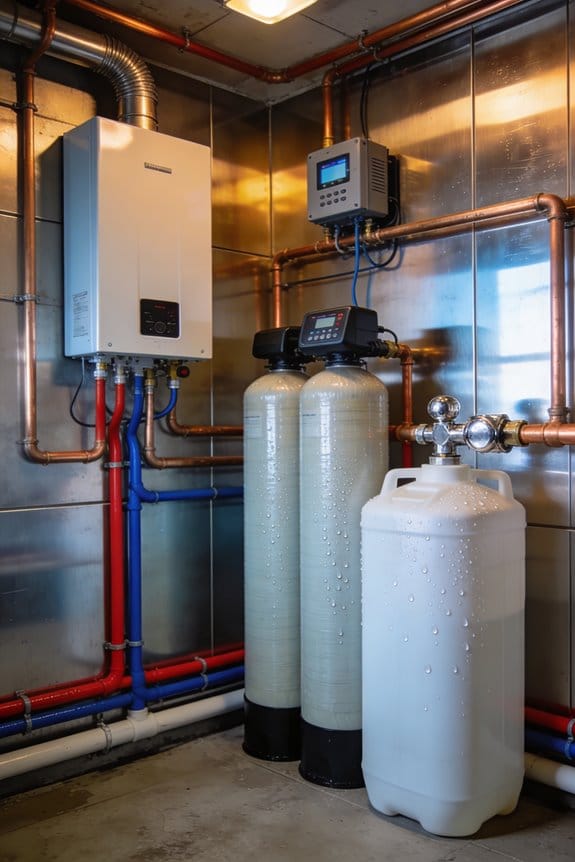
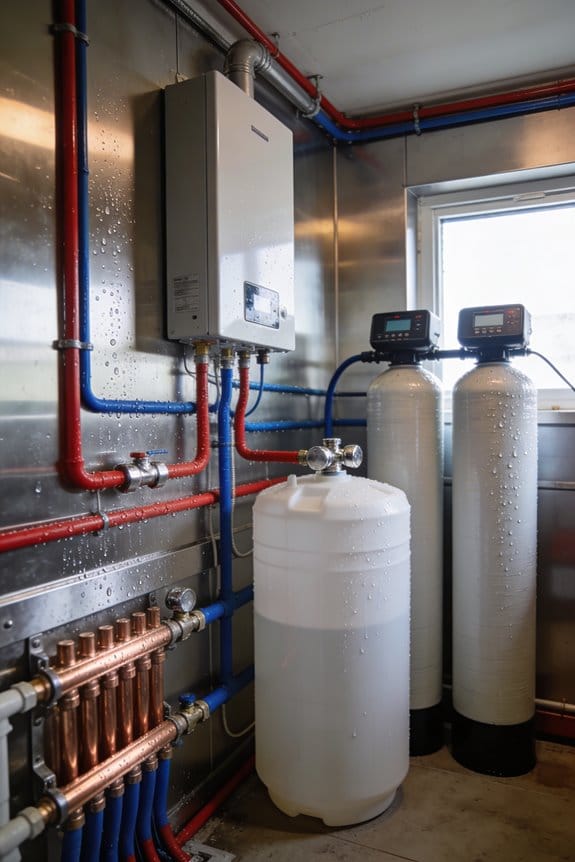
Because minerals in your water are the root cause of sediment buildup, installing a water softener represents one of the most effective long-term solutions you can implement. A water softener uses ion exchange technology, which replaces hard minerals like calcium and magnesium with sodium ions, preventing sediment formation in your tank.
When considering installation tips, I recommend having your water tested first to determine hardness levels. Proper system sizing depends on your household’s water usage and mineral concentration. A professional can assess your needs and recommend an appropriately sized unit.
The ion exchange process continuously filters your incoming water supply, protecting your heater from mineral accumulation. While initial installation requires investment, you’ll experience reduced energy bills, fewer repairs, and extended heater lifespan, making it worthwhile long-term protection.
Annual Maintenance Tasks to Keep Noise at Bay
Regular maintenance tasks performed once a year can markedly reduce the popping and rumbling noises your water heater produces, and I recommend scheduling these activities during the same month each year to establish a reliable routine. I suggest flushing your tank annually to remove accumulated sediment that traps water and creates steam bubbles. During seasonal inspections, I check the anode replacement status, since this metal rod corrodes to protect the tank interior. When the anode deteriorates considerably, corrosion accelerates, promoting uneven heating and sediment formation. I also verify that your thermostat remains set at 120°F maximum. These straightforward tasks prevent mineral buildup, extend your heater’s lifespan, and eliminate the bothersome noises that indicate underlying problems.
When to Call a Plumber (Red Flags to Watch)
Although annual maintenance prevents many water heater problems, certain warning signs indicate you’ll need professional plumbing assistance. An emergency leak near your tank’s base signals potential internal damage that requires immediate attention, as water damage can harm your home’s structure. Strange odors, particularly rotten egg smells, suggest bacterial growth or serious corrosion inside the tank. If you notice rusty or discolored water coming from your hot faucets, this indicates deterioration of the inner lining. Loud banging sounds that persist after flushing may mean sediment has hardened into concrete-like buildup requiring professional removal. Additionally, if your heater’s age exceeds twelve years or repairs become frequent, replacement often proves more cost-effective than continued service calls. Professional plumbers possess specialized equipment and expertise for thorough inspections and safe repairs.
Signs Your Water Heater Has Reached the End
Even with professional plumbing assistance and regular maintenance, water heaters eventually reach the end of their usable life, and recognizing when replacement is necessary can save you money and prevent costly water damage. If your water heater is over 10 years old, inspect it for tank corrosion, which appears as rust spots or discoloration on the exterior. Check your warranty status, since expired warranties mean you’re responsible for all repair costs. When repair expenses approach 50% of a new unit’s price, replacement becomes more economical. Additionally, if your heater continues producing popping noises despite flushing, leaks persistently, or provides insufficient hot water, these indicate internal deterioration. Professional inspectors can assess whether your tank requires replacement rather than repair.
Repair vs. Replace: How to Make the Right Call
When you’re facing a noisy or malfunctioning water heater, you’ll need to decide whether fixing it makes sense or if replacement is the better choice. Consider a cost comparison between repair expenses and a new unit’s price. If your heater’s over 10 years old, replacement often proves more economical since repairs become frequent and costly. Check whether your warranty transfer to cover future issues, as newer models typically include better coverage. Calculate energy savings from modern, efficient units against repair costs. If sediment buildup causes the noise, flushing might solve the problem affordably. However, if corrosion or a failing heating element exists, replacement becomes necessary. Weigh immediate repair costs against long-term reliability and efficiency gains when making your decision.
Frequently Asked Questions
Can Sediment Buildup in My Water Heater Cause Health Problems or Contaminated Water?
While sediment doesn’t directly contaminate water, I’ve found it creates conditions where bacterial growth thrives and mineral leaching occurs, potentially compromising your water’s safety and taste quality over time.
How Long Does It Typically Take to Flush a Water Heater Tank Completely?
I’d recommend you budget 30 to 45 minutes for a complete flush. The typical duration depends on your tank size and sediment buildup severity. I suggest you flush annually—that’s the standard flush frequency for peak maintenance.
Will Flushing My Water Heater Improve Hot Water Pressure or Temperature Consistency?
I’ll disappoint you—flushing won’t dramatically boost pressure, but it’ll enhance improved circulation and reduce thermal stratification. You’ll notice more consistent temperature delivery as sediment no longer blocks efficient heating distribution throughout your tank.
Can I Flush My Water Heater Myself, or Do I Need Professional Help?
You can flush your water heater yourself, but I’d consider DIY risks like improper drainage causing water damage. Warranty concerns matter too—professionals make certain proper procedures, protecting your coverage and preventing costly mistakes.
What’s the Average Cost to Professionally Clean or Flush a Water Heater Tank?
Professional water heater flushing typically costs $150–$300, depending on your location and tank size. Service costs vary by region, while labor rates generally range $75–$150 per hour for experienced technicians.