As an Amazon Associate, we earn from qualifying purchases. Some links on this site are affiliate links at no extra cost to you. Our recommendations are based on thorough research and editorial judgment.

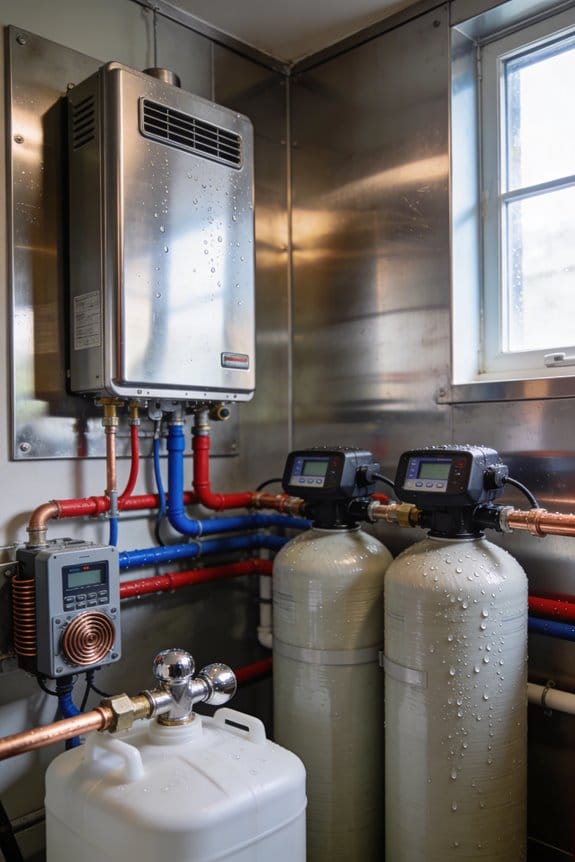
Does a Tankless Water Heater Work Well in Cold Climates?

Yes, tankless water heaters work well in cold climates. Over 100,000 gas units sell annually in Canada, where groundwater temperatures drop to 38°F. Gas models deliver high BTU input, raising frigid water to 120°F while maintaining 5+ gallons per minute. The key is right-sizing your unit based on actual groundwater temperature and your home’s flow demands. Proper indoor installation with freeze protection, combined with regular maintenance, guarantees reliable winter performance. Understanding these factors reveals why many cold-climate homeowners choose tankless systems successfully.
Key Takeaways
- Over 100,000 gas tankless units sell annually in Canada, proving real-world viability in extreme cold climates.
- Gas models deliver higher BTU input than electric, handling 40°F groundwater while producing 120°F water at 5+ GPM.
- Right-sizing based on actual groundwater temperature and required flow rate prevents undersizing, the leading performance problem.
- Indoor installation with freeze protection, backup power, and pipe insulation protects units from winter freezing risks.
- Annual flushing, descaling, and inlet screen cleaning maintain peak performance and remove mineral deposits from cold groundwater.
Does Tankless Work in Cold Climates? What the Data Shows
When I look at the data on tankless water heaters in cold climates, the evidence clearly shows they can work effectively if you choose the right model and install it properly. Over 100,000 gas tankless units sell annually in Canada, where groundwater temperatures drop to 38°F, demonstrating real-world viability in extreme conditions. Gas models outperform electric versions because they deliver higher BTU input and maintain better temperature rise capability. Most quality gas tankless heaters handle groundwater as cold as 40°F while producing 120°F water at 5+ gallons per minute. When you prioritize fuel efficiency and verify warranty coverage before purchasing, you’re investing in reliable performance. The key isn’t whether tankless works in cold climates—it’s selecting equipment rated for those specific conditions and ensuring professional installation that matches your local groundwater temperature.
Right-Sizing Your Tankless Heater: Flow Rate and Temperature Rise
Because undersizing is the number one mistake that leads to poor tankless performance in cold climates, I want to walk you through the two critical measurements you’ll need to understand: flow rate and temperature rise.
Flow rate measures how many gallons per minute your heater delivers. Temperature rise is the temperature increase from your cold groundwater to the hot water coming out of your tap. In regions where groundwater reaches only 40–50°F, you’ll need a unit capable of raising that temperature to 120°F while maintaining adequate flow for multiple fixtures simultaneously.
Load matching guarantees your unit handles your household’s actual demands. Most homes need 5+ gallons per minute. Adding pipe insulation further protects performance by reducing heat loss through your lines, maximizing the hot water reaching your fixtures.
Why Freezing Risks Matter and Where to Install Your Unit
Unlike traditional tank water heaters that store hot water as a buffer against freezing temperatures, tankless units face greater risk in cold climates because they lack this thermal reserve. I’d recommend installing your tankless heater indoors or in heated spaces rather than outdoors, where freezing damage becomes likely. During winter months, keep your unit plugged in so built-in freeze protection functions work properly. If power outages occur, negative building pressure from backdrafting can still cause freezing inside your home. To minimize risk further, I suggest adding pipe insulation around water lines connected to your tankless system. Having backup power available guarantees your freeze protection stays active when the grid fails, protecting your investment.
Understanding Groundwater Temperature and Its Impact on Output
The temperature of groundwater in your region directly determines how hard your tankless water heater must work to deliver hot water, and I should explain why this matters for your system’s performance. Unlike surface temperature, which fluctuates with seasons, groundwater temperature remains consistent year-round, typically ranging from 38°F to 50°F in cold climates like New Jersey. This stable baseline means your heater needs sufficient power to raise water from that cold starting point to your desired 120°F. Before purchasing a unit, consider source testing to measure your area’s actual groundwater temperature. Understanding this critical factor helps you select properly sized equipment that maintains reliable output regardless of seasonal variability, ensuring your household receives adequate hot water throughout winter months.
Troubleshooting Low Water Pressure and Temperature Fluctuations
Why does your tankless water heater sometimes deliver inconsistent temperatures or reduced pressure, even when you’ve sized it correctly? Several factors can cause these frustrating issues. Airlocks troubleshooting is essential—trapped air in your lines prevents water from flowing smoothly. You’ll want to check your pressure regulators, which control how much water enters your system; a faulty regulator can restrict flow markedly. Sediment buildup in inlet screens also reduces pressure and heating efficiency. I recommend opening your shower fixture slightly to increase flow, which sometimes resolves temperature inconsistencies. Verify your mixing valve functions properly, as malfunctioning valves cause cold-water surges mid-shower. If problems persist after checking these components, descaling your unit may restore normal performance by removing mineral deposits that block water passages.
Descaling and Maintenance to Restore Peak Performance
When mineral deposits accumulate inside your tankless water heater over time, they create a barrier that prevents heat from transferring efficiently to your water, which reduces both temperature output and overall system performance. I recommend scheduling preventive flushing annually to remove these mineral buildup deposits, especially in cold-climate regions where hard water is common. This maintenance task involves running a descaling solution through your system for several hours, which dissolves scale and restores heating efficiency.
Beyond flushing, I suggest checking inlet screens and verifying sensor calibration to make certain your unit functions at peak performance. Dirty screens restrict water flow, while miscalibrated sensors produce inaccurate temperature readings. These straightforward maintenance steps restore your tankless heater’s ability to deliver consistent hot water at proper temperatures throughout your home.
Frequently Asked Questions
Can I Install a Tankless Water Heater Outdoors in Freezing Temperatures With Proper Insulation?
As they say, an ounce of prevention’s worth a pound of cure. I’d advise against outdoor installation in freezing temperatures—it’s not recommended. You’ll need freeze proofing and indoor placement to prevent costly damage and guarantee reliable performance.
What Temperature Should I Set My Tankless Heater to Prevent Scalding While Maximizing Efficiency?
I’d recommend setting your tankless heater to 120°–125°F for ideal scald prevention and efficiency. These setpoint recommendations balance safety while maximizing hot water output without excessive energy consumption or scalding risks.
How Do Tankless Water Heaters Compare to Traditional Tank Heaters in Cold Climate Recovery Time?
Tankless heaters triumph tremendously over traditional tanks in cold climates. You’ll enjoy unlimited hot water with superior flow rate and energy efficiency, while tank heaters require 30 minutes to recover—a significant disadvantage in freezing conditions.
Will a Power Outage Affect My Tankless Heater’s Freeze Protection During Winter Months?
Yes, a power outage will disable your tankless heater’s freeze protection since built-in functions require continuous electrical power. I’d recommend establishing emergency protocols and considering electrical redundancy options to maintain winter protection during outages.
How Often Should I Descale My Tankless Unit in Areas With Extremely Cold Groundwater?
I’d recommend descaling every 6-12 months in extremely cold groundwater areas. Cold water contains more minerals, so you’ll experience accelerated scale buildup. Regular descaling prevents mineral buildup and maintains your unit’s heating efficiency and performance.