As an Amazon Associate, we earn from qualifying purchases. Some links on this site are affiliate links at no extra cost to you. Our recommendations are based on thorough research and editorial judgment.

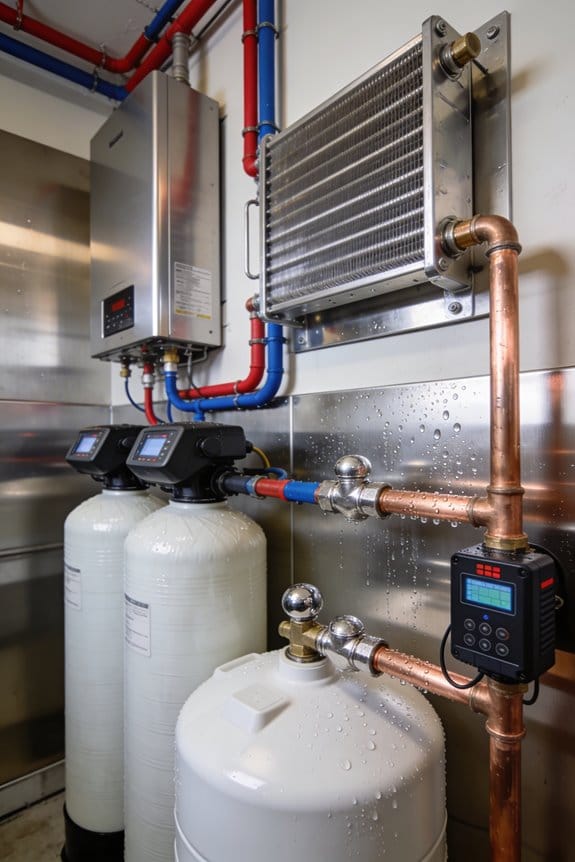
How Water Heaters Account for 18% of Your Home’s Energy Use

Water heaters account for 18% of your home’s energy costs because they work almost constantly. Your water heater maintains hot water temperature even when you’re not using it, which drains energy continuously. This “standby loss” represents 20–25% of total water heating consumption. A typical household uses about 64 gallons of hot water daily, costing roughly $600 annually. Understanding what drives these costs reveals multiple opportunities to cut your expenses markedly.
Key Takeaways
- Water heaters consume 18% of total home energy costs due to continuous temperature maintenance and daily hot water demand.
- Typical households use 64 gallons of hot water daily, translating to approximately $600 in annual heating costs.
- Standby losses account for 20–25% of water heating consumption while maintaining temperature even when hot water isn’t actively used.
- Larger households (four persons) dedicate 24% of total energy consumption to water heating versus 16% for two-person homes.
- Older, poorly insulated units and sediment buildup intensify energy waste, making equipment condition a significant factor in overall consumption rates.
Why Water Heating Costs So Much: Energy Consumption Breakdown
Heating water accounts for 18% of your home’s total energy costs, making it one of the largest energy expenses you’ll face after heating and cooling your home. A typical household consumes 64 gallons of hot water daily, which costs approximately $600 annually. Standard electric tank water heaters operate about three hours daily, consuming 13-17 kilowatt-hours or roughly $2.10 per day. Your flow rates and temperature setbacks markedly impact these expenses. When you adjust your thermostat lower or reduce water flow through faucets and showerheads, you decrease energy consumption substantially. Additionally, standby losses—the energy required to maintain water temperature—represent 20-25% of total consumption, while active heating during demand accounts for 75-80% of usage.
How Standby Losses Drain 20-25% of Your Water Heating Budget
Even when you’re not actively using hot water, your water heater’s energy consumption doesn’t stop—it keeps working to maintain the temperature inside the tank. This constant energy drain, called standby losses, accounts for 20-25% of your total water heating costs. While active heating uses 75-80% of energy during demand periods, your heater loses heat through the tank walls continuously.
Older units experience greater standby losses due to deteriorating insulation and sediment buildup, which reduces efficiency. You can address this through standby mitigation strategies like insulation upgrades, which add protective layers around your tank and pipes. These improvements markedly reduce heat loss, lowering your annual operating costs without requiring a complete system replacement.
Water Heating Costs by Household Size
While reducing standby losses helps lower your water heating expenses, the actual amount you spend depends largely on how many people live in your home. A two-person household uses approximately 12.5 million Btu annually for water heating, representing 16% of total home energy consumption. In contrast, a four-person household consumes 22.7 million Btu yearly, accounting for 24% of energy use. This occupancy impact reflects increased hot water demand from showers, laundry, and dishwashing. The fixture distribution across your home also matters—multiple bathrooms and kitchens create greater water heating requirements. Understanding your household size helps predict realistic costs and identify savings opportunities through efficient appliances and behavioral changes.
Electric vs. Gas: Which Type Costs Less to Run?
When you’re deciding between an electric or gas water heater, the operating costs break down quite differently, and understanding these differences can help you make a smarter choice for your household. Electric units typically cost $400-800 annually to operate, while gas water heaters run $200-400 yearly. This difference stems from fuel conversion efficiency: electric heaters achieve 60-80% efficiency, whereas gas models reach 95-98% efficiency. Though gas water heaters cost more upfront ($750-2,000 versus $500-1,500 for electric), their superior fuel conversion means lower long-term operating costs. If you’re in a region with affordable natural gas, a gas heater often provides better financial returns over time. Conversely, where electricity rates are low, electric units might prove more economical.
Heat Pump Water Heaters: Cut Water Heating Costs 60-70
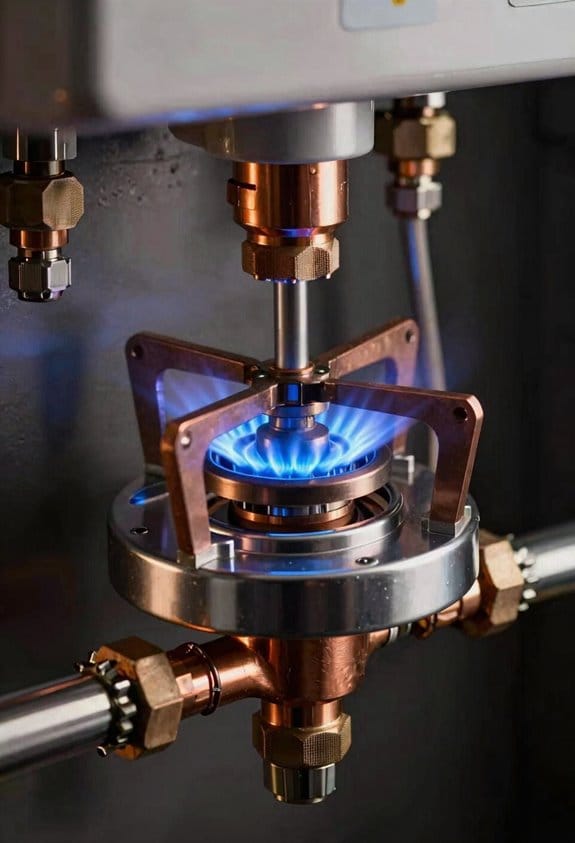
If you’re looking for ways to slash your water heating expenses even further beyond choosing between electric and gas models, heat pump water heaters offer a compelling solution that can reduce your energy consumption by 60-70%. These innovative units operate 2-3 times more efficiently than standard electric heaters, consuming only 3-5 kWh daily instead of 9-15 kWh. Your annual operating costs could drop dramatically to $150-300, compared to $400-800 for conventional electric models. Heat pump water heaters require minimum space requirements of at least 40+ gallons capacity and need adequate air circulation. While noise levels from the compressor may concern some homeowners, the substantial energy savings typically justify the investment, with most systems paying for themselves within 2-4 years through reduced utility bills.
Heat Pump Water Heater Costs: Installation, Payback, and Rebates
Since heat pump water heaters deliver such impressive energy savings, you’re probably wondering what they’ll cost you upfront and how long it’ll take to recoup that investment. Installation typically ranges from $1,500 to $3,000, which is higher than standard electric units but justified by long-term savings. Most homeowners recoup this investment within 2-4 years through reduced energy bills. Many utility companies offer rebates of $300-$1,000, markedly lowering your initial expense. When installing a heat pump water heater, consider ductless integration options that minimize space requirements. Noise mitigation features, like vibration insulators, can reduce operational sound. Combined with available incentives and monthly savings of $25-$50, heat pump water heaters represent a financially sound upgrade for energy-conscious households.
How Aging Water Heaters Waste More Energy and Money
While upgrading to a heat pump water heater makes financial sense for many households, the real savings opportunity might be sitting in your garage or basement right now: your existing water heater. As water heaters age, insulation degradation markedly increases energy waste. The outer tank’s insulation breaks down over time, causing more heat to escape into surrounding spaces. Additionally, sediment buildup inside the tank reduces heating efficiency and forces your system to work harder. These combined factors mean older units lose more energy during standby periods, when they’re simply maintaining temperature rather than heating water. If your water heater’s over ten years old, these efficiency losses likely cost you hundreds extra annually. Inspecting and maintaining your current unit might reveal opportunities to reduce waste before replacement becomes necessary.
Five Immediate Changes That Cut Water Heating Costs 15-30
You don’t need to wait for a new water heater to start saving money on energy costs, because several straightforward adjustments can cut your water heating expenses by 15-30% immediately. Installing low flow fixtures reduces hot water demand without sacrificing functionality. Lowering your thermostat by just a few degrees decreases standby losses markedly. Insulating exposed pipes minimizes heat loss as water travels through your home. Using Energy Star appliances for laundry and dishes cuts water heating needs considerably. Consider graywater recycling systems that reuse greywater from sinks and showers for landscaping, eliminating unnecessary heating cycles. These changes work together to reduce your consumption dramatically, directly lowering monthly utility bills while conserving resources.
Water Heater Rebates and Tax Credits Available Now
After you’ve made those immediate changes to cut your water heating costs, it’s worth looking into the financial incentives that can help you save even more when you’re ready to upgrade your system. Many utility companies offer utility incentives, including rebates for installing energy-efficient water heaters like heat pump models. Federal credits may also apply when you purchase qualifying equipment that meets specific efficiency standards. These incentives can markedly reduce your upfront installation costs, making the switch to a more efficient system more affordable. Since heat pump water heaters typically pay for themselves within 2-4 years through lower operating costs, combining rebates with long-term savings creates substantial financial benefits for homeowners committed to reducing their energy consumption.
Frequently Asked Questions
How Does Water Heater Placement in Unconditioned Spaces Affect Energy Consumption?
I’ve found that when you place your water heater in unconditioned spaces like garages, you’ll experience increased energy consumption. Cold temperatures force your unit to work harder. Adding pipe insulation helps minimize thermal bridging losses markedly.
What Is an Energy Factor and How Does It Measure Water Heater Efficiency?
I’ll explain Energy Factor to you: it’s a rating measuring your water heater’s thermal efficiency by evaluating recovery efficiency, standby losses, and cycling losses based on 64 gallons daily use—higher scores mean better performance.
Why Do Single-Family Homes Use More Water Heating Energy Than Apartments?
Single-family homes consume nearly three times more energy than apartments because they typically house larger households with standalone water heating systems that serve only one unit, compared to shared apartment infrastructure.
How Much Energy Does a Five-Minute Running Faucet Actually Consume?
I’ll picture that steaming cascade down your drain—your five-minute faucet run consumes energy equivalent to running a 60-watt bulb for 14 hours. That’s hot flow wastage, plus standby loss heating replacement water.
Can I Combine Multiple Water-Saving Methods for Greater Than 30% Savings?
Yes, you can exceed 30% savings by combining methods. I’d recommend installing low flow fixtures, using shower timers, lowering your thermostat, and switching to Energy Star appliances for cumulative efficiency gains.