As an Amazon Associate, we earn from qualifying purchases. Some links on this site are affiliate links at no extra cost to you. Our recommendations are based on thorough research and editorial judgment.

Can a Tankless Water Heater Run Out of Hot Water?

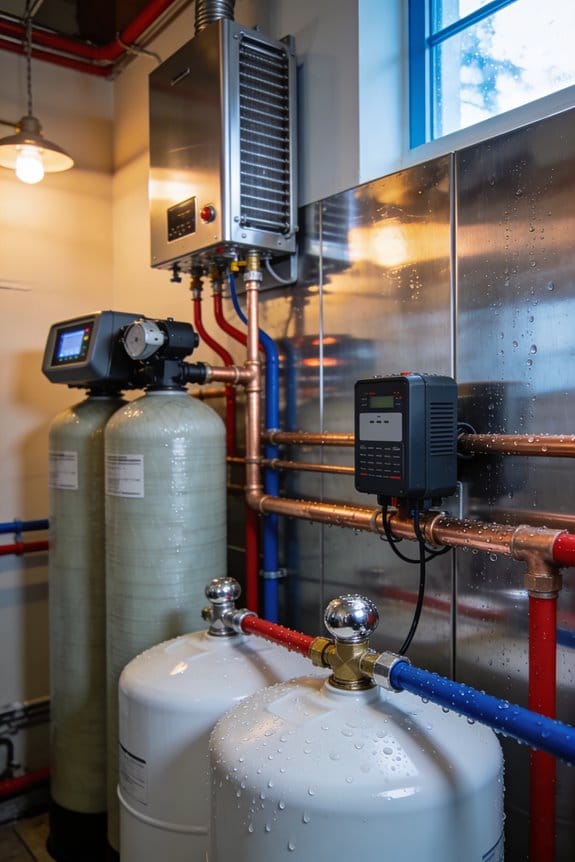
A tankless water heater won’t completely run out of hot water like a tank unit, but it’ll deliver progressively lukewarm water when you exceed its flow rate capacity. If your unit handles 3.5 gallons per minute and you run a shower plus dishwasher simultaneously, the heater can’t maintain its rated temperature rise, so your shower becomes uncomfortably cool. Proper sizing prevents this issue, and understanding how flow rate works reveals why some households need multiple units or strategic fixture prioritization.
Key Takeaways
- Tankless units don’t run out of hot water; they provide continuous supply within their rated flow capacity limits.
- Exceeding maximum GPM causes progressive temperature drops rather than sudden cutoff of hot water delivery.
- Properly sized units matched to household peak demand eliminate hot water shortage during normal simultaneous usage.
- Thermal lag prevents sufficient temperature rise when flow rate exceeds the heater’s capacity specifications.
- Temperature fluctuations during peak use indicate undersizing, not depletion; upgrading unit capacity resolves the issue.
The Short Answer: Temperature Drops, Not Complete Cutoff
Unlike traditional tank water heaters that can completely run out of hot water after you’ve depleted their stored supply, tankless water heaters don’t work that way, and I’ll explain why. When you exceed your tankless unit’s maximum flow rate, you won’t experience a sudden loss of hot water. Instead, the water temperature drops gradually because the heater can’t raise the incoming water temperature enough to meet demand. This phenomenon, called thermal lag, occurs when simultaneous fixtures pull more gallons per minute than your unit handles. However, control strategies like prioritizing fixtures or using multiple units prevent this issue. Understanding that you’ll get lukewarm water rather than cold water helps you size your system appropriately for your household’s needs.
Why Flow Rate Replaces Tank Capacity
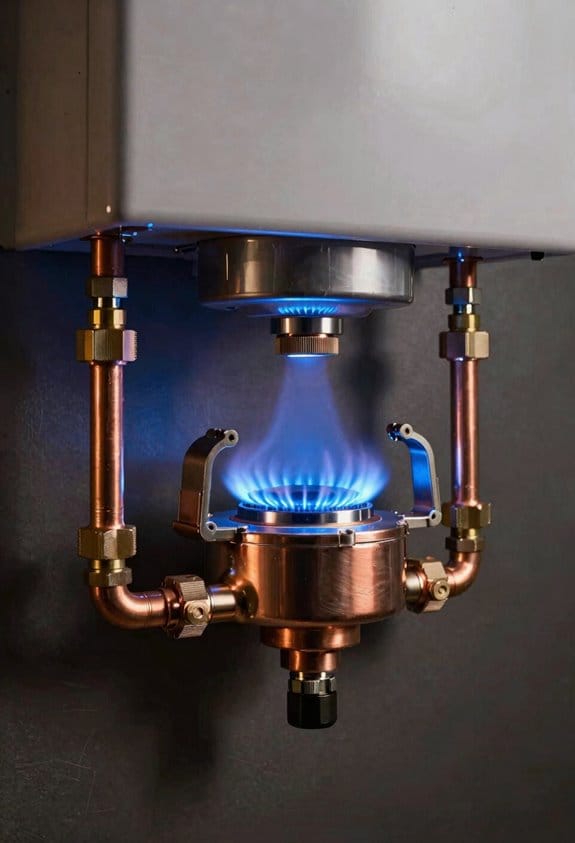
Because tankless water heaters heat water on demand rather than storing it in a tank, they’re measured by flow rate instead of tank capacity. This fundamental difference shifts how we think about hot water availability. Instead of worrying about depleting a 40-gallon reserve, you’re concerned with gallons per minute (GPM)—typically ranging from 5-10 GPM for most homes.
This shift matters because flow rate determines continuous hot water delivery. A properly sized unit provides endless hot water as long as simultaneous demand stays within its rated GPM. While installation cost may be higher initially, the energy efficiency advantage makes tankless systems attractive. You’re not heating water you won’t use immediately, reducing standby losses markedly compared to traditional tanks.
Calculate Your Required GPM by Fixture and Household Size
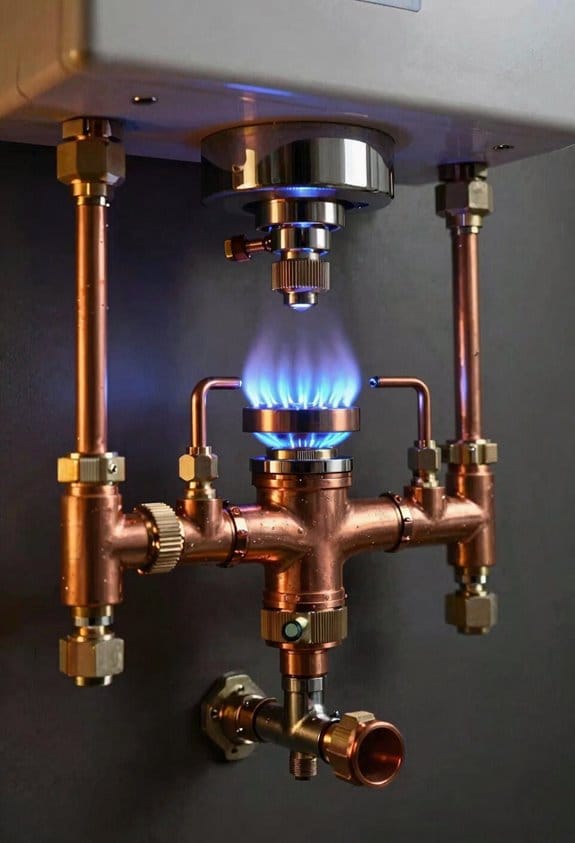
To find the right tankless water heater for your home, you’ll need to determine how much hot water your household uses simultaneously, which means adding up the GPM from all fixtures you’d likely run at the same time. Start with fixture mapping by listing every faucet, shower, dishwasher, and washing machine in your home. Next, assign each a typical GPM value: sinks use about 1 GPM, showers around 2.5 GPM, dishwashers 3 GPM, and washers 3 GPM. Through demand profiling, identify your peak usage scenario. For example, a household of four people might run a shower plus a faucet simultaneously, requiring approximately 3.5 GPM. Match this total to your heater’s capacity for proper sizing.
What Happens When Multiple Fixtures Run Simultaneously?
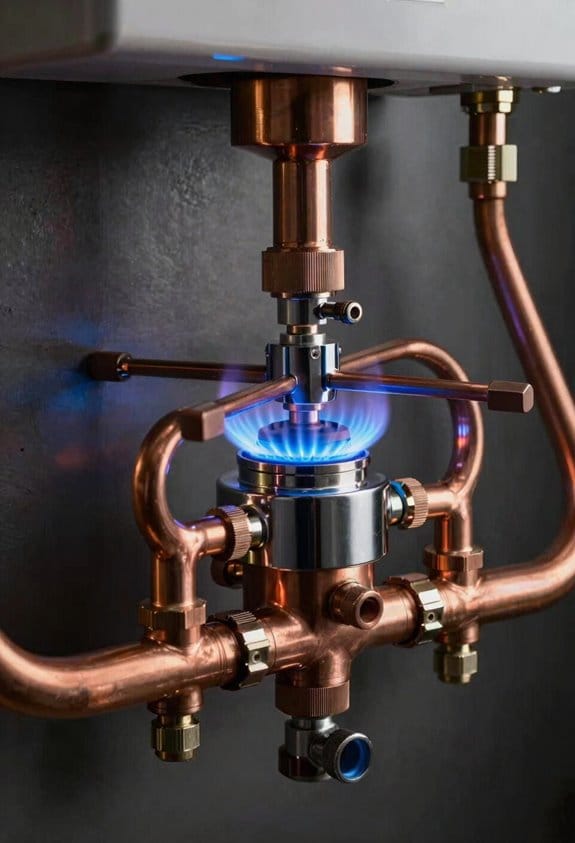
When you’re running a shower, faucet, and washing machine all at the same time, your tankless water heater faces a real challenge, since it must heat water for each fixture simultaneously rather than drawing from a stored reserve. Your unit’s GPM capacity becomes the limiting factor here. If your combined demand exceeds your heater’s rated flow rate, pressure fluctuations occur, causing temperature drops across all fixtures. The water won’t shut off completely; instead, it’ll turn lukewarm. Some systems use priority sequencing to allocate hot water to the most essential fixture first. This is why calculating your household’s peak simultaneous usage matters critically. A properly sized unit prevents these conflicts entirely, ensuring consistent temperature when multiple fixtures operate together.
Recognize Undersizing: Temperature Drops During Peak Use
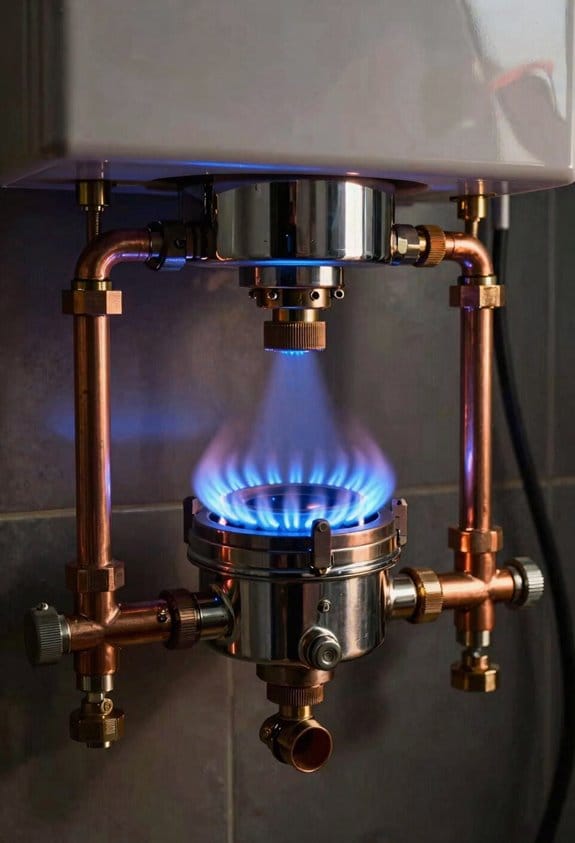
Understanding whether your tankless water heater‘s undersizing causes those temperature drops requires recognizing the telltale signs during peak usage times. When you’re running multiple fixtures simultaneously—like a shower and dishwasher together—you might notice the water turning lukewarm instead of staying hot. This happens because your unit can’t maintain its rated temperature rise when flow exceeds its capacity. Modern tankless heaters use cold sensors to detect incoming water temperature and adjust performance accordingly, but they can’t overcome fundamental sizing limits. If you experience frequent temperature fluctuations during peak demand, your system’s undersized. Addressing this through proper sizing guarantees consistent hot water delivery throughout your home.
Frequently Asked Questions
How Does Incoming Water Temperature Affect My Tankless Unit’s Actual Output Capacity?
Your inlet temp directly reduces your output capacity. When incoming water’s colder, I need more energy to reach desired temperatures, so my unit delivers fewer gallons per minute than its rated maximum specification allows.
Can I Install Multiple Tankless Water Heaters to Increase My Home’s Hot Water Supply?
Yes, you can install multiple tankless water heaters in a cascading setup to boost your home’s hot water supply. I’d recommend this for larger households experiencing peak demand issues that exceed a single unit’s capacity.
What BTU Input Rating Do I Need for My Household’s Peak Water Demand?
Like a bridge must match its traffic flow, your BTU input rating needs to match your peak demand. I’d calculate simultaneous fixture GPM, then consult manufacturer charts linking BTU requirements to your demand profiling for accurate sizing.
How Does Pipe Sizing Impact the Flow Rate My Tankless Heater Can Deliver?
Your pipe diameter directly affects flow rate through friction losses. Undersized pipes restrict water velocity, reducing GPM delivery to your fixtures. I’d recommend consulting a plumber who’ll size your pipes to minimize resistance and maximize your heater’s capacity.
Are Tankless Water Heaters More Energy-Efficient Than Traditional Tank Water Heaters Long-Term?
Yes, tankless heaters are markedly more energy-efficient long-term. I’d say they deliver 8-34% higher efficiency than tank models, reducing your operational costs substantially since they don’t maintain standby heating losses.